Weekly Oversight Report – March 2, 2026
LOVED ONES COALITION Weekly Oversight Report
Documenting Systemic Violations Across the Federal Bureau of Prisons
March 2, 2026
This week’s reporting reflects a clear and escalating pattern across multiple Bureau of Prisons regions: restrictive housing conditions—especially SHU—are repeatedly appearing at the center of serious harm, medical breakdown, and retaliation fears, while basic environmental and administrative failures continue to spread across entire institutions.
Loved Ones Coalition received corroborating reporting describing prolonged lockdown practices, inadequate access to hygiene and water, disrupted medical and mental health care, and conditions that suppress communication with families and outside oversight. Multiple facilities reflected environmental failures that directly impact health and safety, including discolored or unsafe water, mold and ventilation concerns, prolonged hot water outages, and extreme temperature exposure tied to HVAC breakdowns.
A consistent thread across this week’s submissions is the use of restriction as the default operational response—collective lockdowns, shut down recreation, communication limits, delayed movement, and prolonged confinement—often affecting entire housing units or camps rather than addressing issues in a targeted and policy-compliant manner. In several facilities, reporting also raises concerns regarding administrative opacity: delayed reentry processing, disputed documentation affecting halfway house placement decisions, case management continuity failures, and barriers to administrative remedy access.
This week’s report also documents a particularly urgent oversight concern: when harm occurs in SHU, visibility drops, safeguards appear inconsistent, and accountability becomes harder to verify. Reporting from USP Lee includes a custodial death following prior reports of audible distress, alleged prolonged assault, and broader allegations of deprivation and retaliation climate. Other facilities similarly reflect restrictive housing overlap with deterioration indicators, extended confinement, and suppressed grievance access. These patterns raise serious questions about SHU monitoring, medical escalation, mental health access, use-of-force review mechanisms, and evidence preservation practices.
When the most basic necessities—safe water, sanitation, adequate medical care, humane housing conditions, and protected access to communication and grievance processes—are disrupted, the response must be immediate, transparent, and corrective. Prolonged degradation of living conditions and normalization of restrictive responses are not operational “inconveniences.” They are oversight failures with predictable harm.
The cumulative reporting in this week’s oversight report suggests not isolated incidents, but structural vulnerabilities in restrictive housing safeguards, environmental health compliance, administrative integrity, and supervisory accountability. These concerns warrant formal clarification, documented corrective timelines, and regional-level oversight review to ensure compliance with federal standards governing safety, sanitation, humane conditions of confinement, and protected communication with oversight bodies.
MID-ATLANTIC REGION
USP Lee (Virginia)
1. SUMMARY OF EVENTS & REPORTING TIMELINE
In early February 2026, Loved Ones Coalition members began receiving urgent reports regarding a young Black male incarcerated in the Special Housing Unit (SHU) at USP Lee.
At that time:
- His full name was unknown.
- He was described as being in his 30s.
- Members reported being told that his screams were audible throughout SHU.
- Multiple loved ones stated he was close to release.
- Reports referenced prolonged assault over multiple days.
- The institution reportedly entered lockdown following the incident.
Loved Ones Coalition was unable to verify identity prior to confirmation of death.
It was later confirmed that the individual was:
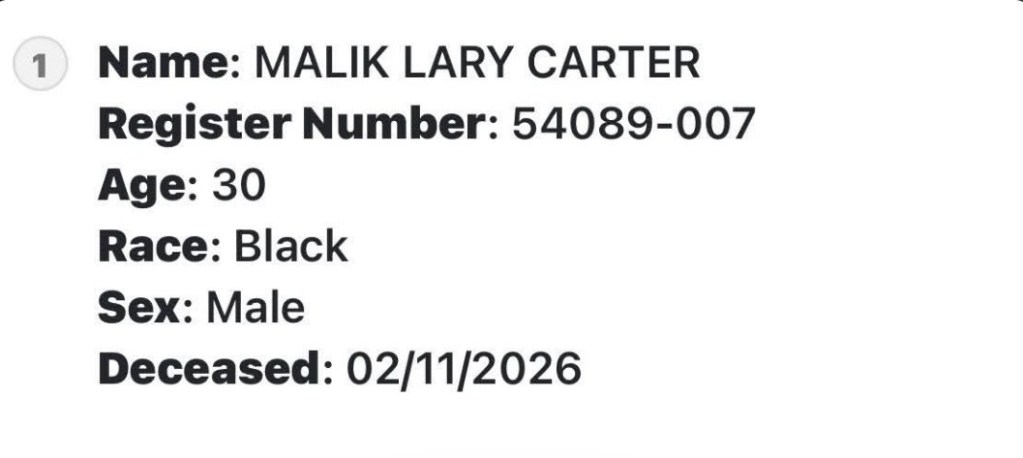
Malik Lary Carter
Register Number: 54089-007
Age: 30
Date of Death: February 11, 2026
Projected Release Date: March 2026
He was approximately one month from release.
Family reporting indicates:
- He was housed alone in SHU.
- They were told he was found “unresponsive.”
- They allege repeated abuse prior to death.
- His body was returned to his mother already embalmed.
- They are pursuing independent review.
- The official cause of death has not been publicly released.
Loved Ones Coalition members report that allegations of prolonged assault were circulating prior to identity confirmation.
The timeline raises serious concerns regarding supervision, intervention, medical response, and custodial safeguards.
2. CONDITIONS & ADDITIONAL SYSTEMIC REPORTING
Separate and ongoing reporting from Loved Ones Coalition members regarding USP Lee includes:
- Extended compound-wide lockdowns lasting weeks.
- Collective punishment practices following isolated incidents.
- Allegations of restraint use in SHU.
- Allegations of water deprivation.
- Limited hygiene access.
- Restricted communication with families.
- Alleged baton use during physical encounters.
- Placement in SHU following alleged assault.
- Mental health service denial despite documented need.
- Alleged threats discouraging contact with regional authorities.
- Reports of inadequate wound care.
- Confiscation of property and placement in paper undergarments in SHU.
This reporting predates and extends beyond the death referenced above.
The consistency of allegations suggests potential systemic vulnerabilities in:
- SHU monitoring practices
- Medical escalation procedures
- Use-of-force review mechanisms
- Mental health access
- Retaliation safeguards
- Leadership oversight
3. KEY ALLEGATION & LEGAL IMPLICATION TABLE
| Allegation | Legal / Policy Framework Implicated |
| Failure to protect from foreseeable harm | 18 U.S.C. § 4042(a); Eighth Amendment |
| Alleged prolonged assault without intervention | Eighth Amendment – Failure to Protect |
| Alleged excessive force | Eighth Amendment; BOP Use of Force Policy |
| Delay or denial of medical care | Eighth Amendment – Deliberate Indifference; BOP Program Statement 6031.04 |
| Alleged deprivation of water | Eighth Amendment – Basic Human Necessities |
| Mental health denial despite documented need | Eighth Amendment; Rehabilitation Act |
| Retaliation for contacting oversight authorities | First Amendment Retaliation Protections; BOP Administrative Remedy Policy |
| Collective lockdown practices | BOP Operational & Restrictive Housing Policy |
| Embalming prior to independent review | Death Investigation & Evidence Preservation Standards |
Under federal law, the Bureau of Prisons has a non-delegable duty to ensure the safety, care, and protection of individuals in its custody.
Failure to intervene in known risk, failure to provide basic necessities, or deliberate indifference to serious medical or mental health needs may constitute constitutional violations.
4. SYSTEMIC PATTERN CONCERNS
USP Lee has been repeatedly characterized by Loved Ones Coalition members as:
- A high-force, high-restriction environment.
- An institution where SHU placement is used aggressively.
- A facility where lockdown is a frequent operational response.
- An environment where grievances are discouraged through intimidation.
The reported death must be evaluated within this broader institutional climate.
When reports of prolonged assault circulate prior to a custodial death — and the institution enters lockdown — questions of supervisory awareness and response become unavoidable.
The embalming concern raises additional transparency and evidence preservation issues.
These are oversight concerns requiring structured review.
5. SYSTEMIC RISK ANALYSIS
The convergence of:
- SHU confinement,
- Allegations of prolonged assault,
- Reported audible distress,
- Delayed confirmation of identity,
- Lockdown following incident,
- Broader reporting of force and deprivation,
- Alleged retaliation climate,
creates elevated constitutional exposure risk.
Special Housing Units require heightened monitoring due to:
- Isolation vulnerability,
- Increased mental health risk,
- Higher force exposure probability,
- Reduced external visibility.
Where supervision, medical escalation, and use-of-force review mechanisms fail simultaneously, systemic breakdown is indicated rather than isolated misconduct.
Failure-to-protect and deliberate indifference claims present significant liability exposure when custodial awareness is reasonably inferable.
6. FORMAL OVERSIGHT NOTICE — USP LEE
Loved Ones Coalition formally requests documentation and clarification regarding:
- Full timeline of events preceding February 11, 2026.
- SHU monitoring logs and staff round documentation.
- Medical response timeline and escalation procedures.
- Use-of-force documentation within 72 hours preceding death.
- Surveillance preservation status for relevant housing areas.
- Embalming authorization and family consent documentation.
- Current SHU staffing levels and supervisory ratios.
- Number of SHU deaths within the past 36 months.
- Mental health staffing ratios at the time of the incident.
- Retaliation safeguards protecting individuals who contact oversight authorities.
Failure to respond to oversight concerns does not negate them.
It expands the documented record of inquiry.
MID-ATLANTIC REGION
FCI Hazleton (West Virginia)
1. SUMMARY OF SYSTEMIC REPORTING
Loved Ones Coalition members have submitted multiple reports describing ongoing systemic concerns at FCI Hazleton involving sanitation access, snow and ice removal failures, medical access barriers, disability accommodation deficiencies, program cancellations, and account restrictions imposed without documented due process.
The consistency of reporting suggests recurring operational deficiencies rather than isolated incidents.
Allegations describe:
- Inadequate distribution of cleaning chemicals for large housing units.
- Unequal access to sanitation supplies between work units and housing units.
- Walkways not properly cleared of snow and ice.
- Hazardous conditions for mobility-impaired individuals.
- Failure to pre-salt or adequately de-ice compound paths.
- Prior fall-related injuries attributed to unsafe walkways.
- Program cancellations without explanation.
- Routine cancellation of education, vocational, medical, and pharmacy movements.
- Disabled individuals denied appropriate assistive devices.
- Shower areas lacking proper handicap accommodations.
- Account restrictions and encumbrances imposed without formal notice.
- Restrictions preventing access to communications and commissary funds.
- Lack of written investigation documentation prior to account action.
These reports reflect potential systemic breakdowns in safety compliance, accessibility standards, sanitation protocols, and administrative due process.
2. CONDITIONS & OPERATIONAL BREAKDOWN AREAS
A. Sanitation & Cleaning Supply Disparities
Loved Ones Coalition members report that certain housing units receive limited cleaning chemicals — allegedly as little as one partial mop bucket per week for large populations — while other work units receive significantly greater daily allocations.
Concerns raised include:
- Insufficient disinfectant for high-density housing environments.
- Conflict over scarce supplies.
- Inability to sanitize shared facilities.
- Unequal distribution across units.
In correctional environments, adequate sanitation is not discretionary. It is a basic custodial obligation.
B. Walkway Safety & Winter Conditions
Multiple reports describe:
- Failure to pre-salt walkways.
- Failure to adequately clear snow and ice.
- Compact ice persisting for extended periods.
- Mobility-impaired individuals unable to navigate safely.
- Prior fall-related injury attributed to ice conditions.
- Narrow pathways cleared insufficiently for wheelchair access.
Failure to maintain safe walkways presents:
- Slip-and-fall risk.
- ADA accessibility concerns.
- Deliberate indifference exposure if hazardous conditions are known and unaddressed.
C. Disability Accommodation Concerns
Loved Ones Coalition members report:
- Denial of braces, canes, or stabilizers.
- Mobility-impaired individuals required to traverse icy walkways.
- Handicap-designated showers lacking adequate safety rails or seating.
Failure to provide reasonable accommodation may implicate:
- Rehabilitation Act requirements.
- ADA compliance standards.
- Eighth Amendment medical obligations.
D. Programming & Medical Access Interruptions
Reports describe recurring cancellation of:
- Education classes.
- Vocational training.
- Programming classes.
- Medical appointments.
- Pharmacy pickups.
Concerns include:
- Interruptions affecting sentence reduction eligibility.
- Interrupted medication access.
- Lack of explanation for cancellations.
Repeated disruption may implicate:
- First Step Act programming requirements.
- Due process concerns where earned time credits are impacted.
- Continuity-of-care obligations.
E. Account Restrictions & Encumbrances Without Notice
Loved Ones Coalition members report account restriction or encumbrance status imposed without:
- Written notice of investigation.
- Disciplinary charge.
- Administrative remedy documentation.
- Clear resolution timeline.
Reported impacts include:
- Inability to purchase messaging credits.
- Inability to purchase digital media.
- Restricted commissary spending.
- Inability to view balances.
- Delayed or denied access to basic items.
Administrative restrictions without process raise due process and transparency concerns.
3. KEY ALLEGATION & LEGAL IMPLICATION TABLE
| Systemic Concern | Legal / Policy Framework Implicated |
| Inadequate sanitation supply distribution | Eighth Amendment – Basic Human Necessities |
| Unsafe snow and ice conditions | Eighth Amendment – Conditions of Confinement |
| ADA non-compliant walkways and showers | Rehabilitation Act; ADA Standards |
| Denial of assistive devices | Rehabilitation Act; Deliberate Indifference Standard |
| Cancellation of education/programming | First Step Act Implementation Requirements |
| Medical and pharmacy interruption | Eighth Amendment – Deliberate Indifference |
| Account restriction without notice | Due Process Protections |
| Encumbrance without disciplinary documentation | BOP Disciplinary Policy & Administrative Remedy Standards |
4. SYSTEMIC PATTERN CONCERNS
The pattern presented is not a single complaint — it reflects recurring breakdown across multiple basic institutional obligations:
- Sanitation
- Safe movement
- Disability accommodation
- Medical continuity
- Programming access
- Administrative transparency
When these failures occur simultaneously, they create predictable instability:
- Increased injury risk
- Increased conflict
- Delayed medical intervention
- Barriers to reentry progress
5. SYSTEMIC RISK ANALYSIS
When a facility fails to maintain safe walkways during winter conditions while also restricting assistive devices and accessible showers, the risk becomes foreseeable: injury, delayed medical escalation, and disability discrimination exposure.
When programming and pharmacy movement are repeatedly cancelled, predictable harm results to sentence progression and health continuity.
When funds are restricted without notice, due process concerns expand into daily living impacts — hygiene access, communication ability, and commissary access.
The cumulative reporting reflects structural deficiencies that warrant documented corrective timelines and regional oversight review.
6. FORMAL OVERSIGHT NOTICE — FCI HAZLETON
Loved Ones Coalition requests institutional clarification regarding:
- Cleaning supply allocation policy by housing unit.
- Winter weather mitigation protocol and documentation.
- ADA compliance audits of showers and walkways.
- Assistive device approval procedures.
- Education and programming cancellation rates.
- Pharmacy pickup interruption logs.
- Account restriction and encumbrance policy.
- Written notice requirements for administrative restrictions.
- Time-to-resolution standards for account review.
- Internal oversight review conducted within the past 12 months.
Silence in response to systemic concerns does not diminish their seriousness.
It contributes to the oversight record.
NORTHEAST REGION
FCI Schuylkill (Pennsylvania)
1. SUMMARY OF SYSTEMIC REPORTING
Loved Ones Coalition members report significant operational changes at FCI Schuylkill following the recent arrival of a new Warden (name redacted for public version).
Reports indicate that immediately upon arrival, new security measures were implemented affecting daily movement, housing access, communication, and environmental safety conditions within the camp facility.
According to reporting received:
• Housing unit doors are now being locked during daytime hours.
• The building is reportedly secured at approximately 3:00 PM daily.
• Individuals are allegedly locked within their respective ranges overnight.
• Evening and overnight access to phone calls and electronic messaging is reportedly suspended during lock-in hours.
• The camp building reportedly lacks air conditioning.
• Concerns have been raised about limited access to water and ice during overnight confinement.
• Staff members reportedly expressed safety concerns regarding the lock implementation but were directed to proceed.
• These changes reportedly followed a town hall meeting during which incarcerated individuals raised concerns regarding First Step Act (FSA) credits and diesel heater exhaust issues.
Loved Ones Coalition members report statements were allegedly made indicating the facility would be operated “like a low” going forward.
The cumulative effect raises serious questions regarding security posture, living conditions, environmental safety, and potential retaliatory operational posture.
2. CONDITIONS & OPERATIONAL SHIFT CONCERNS
A. Lockdown-Style Restrictions in a Camp Setting
Loved Ones Coalition members describe a shift from traditional minimum-security camp operations toward structured lockdown-style confinement, including:
• Daily building lockdown.
• Overnight range confinement.
If implemented without formal reclassification, these restrictions raise concerns regarding:
• Institutional designation integrity.
• Procedural transparency.
• Functional imposition of higher-custody conditions without documented authority.
Minimum-security camps are not designed to operate under low-security restrictive housing models.
B. Communication Restrictions
Reports indicate that phone and electronic messaging access may be suspended during overnight lock-in periods.
While temporary restrictions may occur during emergencies, routine suspension of communication in a camp setting warrants clarification regarding:
• Policy authority.
• Duration limits.
• Regional approval.
Communication access is central to family stability and reentry preparation.
C. Environmental & Safety Conditions
Reports indicate the camp building lacks air conditioning.
Concerns include:
• Overnight lock-ins during warmer months creating elevated heat conditions.
• Limited access to water and ice during confinement periods.
• Environmental control limitations combined with movement restriction.
Prior concerns were reportedly raised regarding diesel heater exhaust and fume-related discomfort.
Environmental safety standards require reasonable protection from excessive heat and hazardous air exposure.
D. Retaliatory Context Allegations
Reporting indicates these operational changes followed a town hall during which concerns were raised regarding:
• First Step Act credit calculation.
• Diesel heater exhaust exposure.
Subsequent statements allegedly indicated stricter operational posture going forward.
If operational tightening follows collective expression of concerns, retaliation safeguards become an immediate oversight issue. The right to raise programmatic and environmental concerns should not trigger punitive structural changes.
3. KEY ALLEGATION & LEGAL IMPLICATION TABLE
Reported Systemic Concern | Legal / Policy Framework Implicated
Daily building lockdown at a camp facility | Institutional Designation Standards
Overnight range confinement | Eighth Amendment – Conditions of Confinement
Restricted communication access | First Amendment; BOP Communication Policy
Environmental heat and ventilation concerns | Eighth Amendment – Environmental Safety
Diesel exhaust exposure concerns | Occupational & Environmental Health Standards
Potential retaliatory operational changes | First Amendment Retaliation Protections
Functional security reclassification without notice | Due Process Considerations
4. SYSTEMIC PATTERN CONCERNS
Minimum-security camp facilities are structured to promote:
• Work participation.
• Programming access.
• Lower custody movement.
• Transitional preparation.
Operational restructuring that resembles low-security confinement without formal reclassification:
• Undermines designation integrity.
• Increases institutional tension.
• Restricts movement autonomy.
• Creates foreseeable environmental health risks where HVAC and water access are limited.
If such measures become normalized, the facility’s operational classification may no longer reflect its functional reality.
5. SYSTEMIC RISK ANALYSIS
Where a camp facility is locked down daily and confined overnight in a building without air conditioning, foreseeable harm includes:
• Heat-related illness.
• Dehydration risk if water or ice access is limited.
• Escalation risk among medically vulnerable individuals.
• Increased tension and instability.
When restrictions follow a town hall raising FSA and environmental concerns, the chilling effect on communication and grievance participation becomes predictable.
If these measures are being normalized, the oversight issue is not discipline — it is a structural custody shift requiring documented regional authority and policy justification.
6. FORMAL OVERSIGHT NOTICE — FCI SCHUYLKILL
Loved Ones Coalition respectfully requests clarification regarding:
- The policy basis for implementing daily building lockdown in a camp setting.
- Whether formal security level adjustments were authorized.
- Environmental safety review regarding summer heat conditions.
- Air quality review relating to diesel heater concerns.
- Communication access restrictions during overnight confinement.
- Whether the Northeast Regional Office reviewed or approved operational changes.
- Whether changes were implemented in response to town hall concerns.
- Documentation of safety assessments conducted prior to overnight lock implementation.
Operational transparency ensures stability. Sudden structural shifts in confinement practices without explanation create avoidable institutional and constitutional risk.
NORTHEAST REGION
Metropolitan Detention Center (MDC) Brooklyn (New York)


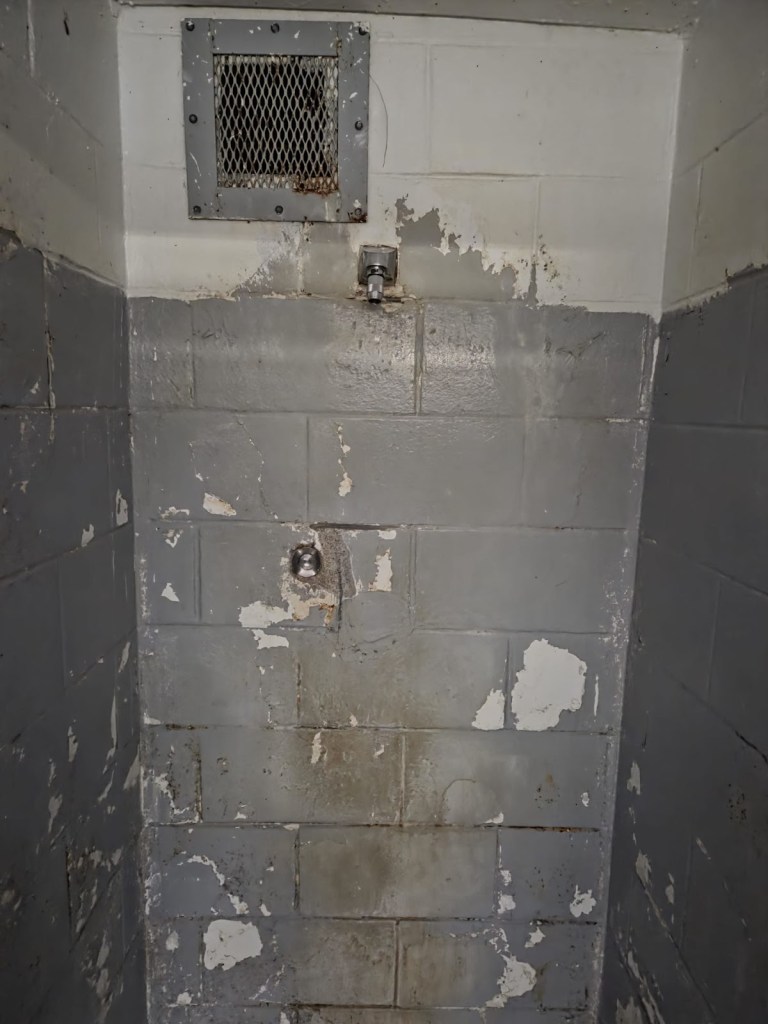
1. SUMMARY OF REPORTING
Loved Ones Coalition has received multiple testimonies and documentation regarding environmental conditions, food portions, temperature control, and administrative conduct at MDC Brooklyn.
Reporting describes:
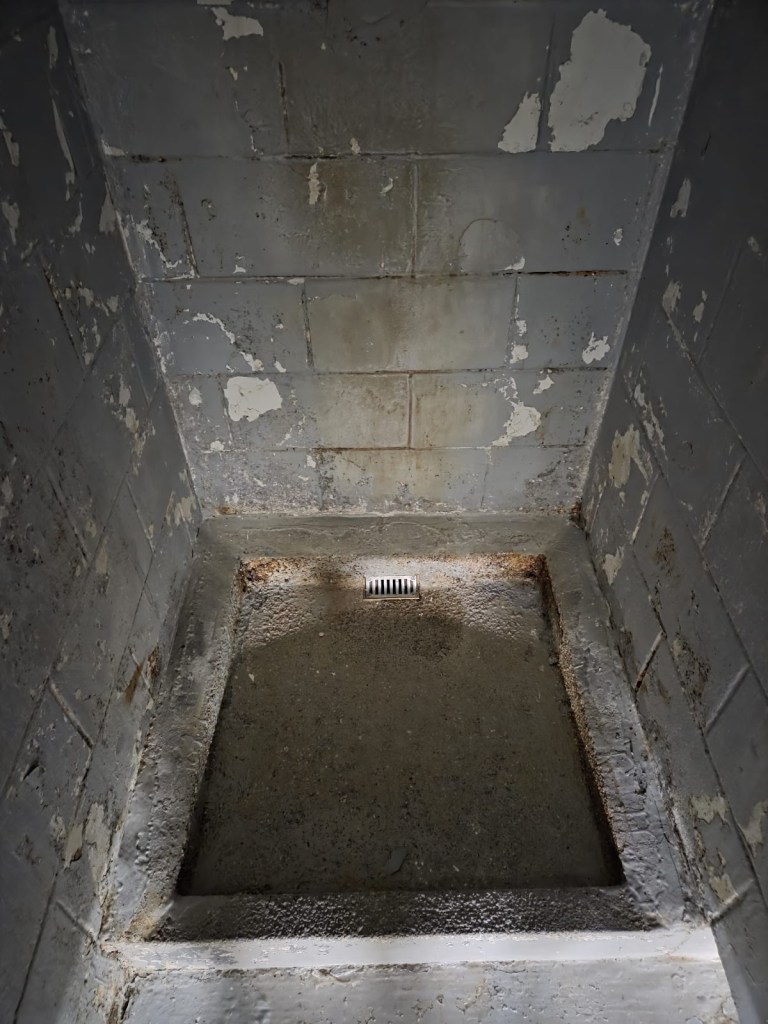
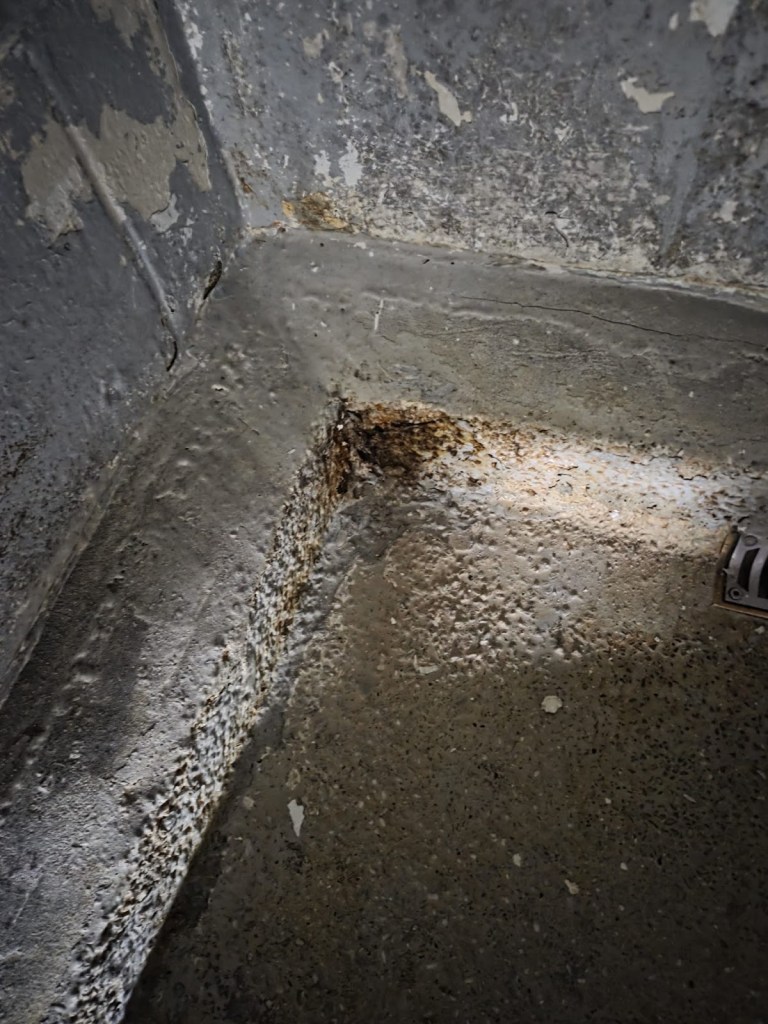
• Severely deteriorated shower facilities
• Rusted drains and corroded fixtures
• Peeling paint and compromised masonry
• Poor ventilation in shower areas
• Inconsistent and extreme temperature control
• Minimal meal portions
• Case management refusal or failure to address concerns
Documentation reviewed by Loved Ones Coalition reflects structural degradation and food portions that warrant oversight review for compliance with federal detention standards.
2. CONDITIONS & OPERATIONAL BREAKDOWN AREAS
A. Sanitation & Structural Conditions
Documentation reviewed reflects:
• Rust accumulation at shower drainage points
• Corroded ventilation grates
• Flaking paint exposing block surfaces
• Cracked masonry and deteriorated grout
• Staining consistent with prolonged moisture exposure
• Shower bases showing mineral buildup and surface breakdown
These conditions raise concerns regarding:
• Mold or fungal growth
• Respiratory exposure risk
• Infection control failure
• Slip hazards
• Long-term deferred maintenance
Pretrial detention facilities are required to maintain sanitary living environments.
B. Temperature Control Instability
Testimony indicates:
• Cold housing conditions followed by excessive heating adjustments
• Overheated cells after temperature increases
• Inconsistent climate control
Extreme temperature fluctuation creates predictable health risk, particularly for medically vulnerable individuals. Environmental control stability is a core custodial obligation.
C. Food Portion Concerns
Documentation reviewed depicts a meal tray containing:
• Two hard-boiled eggs
• A small portion of potatoes
• Two single-serve maple syrup packets
• No visible fruit
• No visible vegetables
• No visible additional protein source beyond the eggs
• No visible beverage accompaniment in the documented meal
While a single documented meal does not independently establish systemic caloric deficiency, repeated reporting of minimal portions warrants review of:
• Daily caloric totals
• Protein requirements
• Produce inclusion
• Menu compliance
• Portion-control practices
Adequate nutrition is a constitutional requirement under established conditions-of-confinement standards.
D. Case Management Conduct
Loved Ones Coalition has received testimony alleging that a Case Manager (name redacted for public version) has:
• Refused to address assigned responsibilities
• Failed to respond to administrative concerns
• Displayed conduct described as unprofessional
• Contributed to unresolved casework issues
Functional case management is essential to:
• Sentence administration
• Program placement
• Legal access coordination
• Administrative remedy processing
Non-responsiveness compounds systemic failures by limiting internal corrective mechanisms.
3. KEY ALLEGATION & LEGAL IMPLICATION TABLE
Reported Concern | Legal / Policy Framework Implicated
Unsanitary shower conditions | Eighth Amendment – Conditions of Confinement
Mold and ventilation concerns | Environmental Health & Safety Standards
Extreme temperature fluctuation | Eighth Amendment – Environmental Protections
Limited food portions | Nutritional Adequacy Requirements
Administrative non-responsiveness | Due Process & Professional Conduct Standards
4. SYSTEMIC PATTERN CONCERNS
The pattern presented reflects degradation across multiple foundational detention obligations:
• Sanitation
• Ventilation
• Stable temperature control
• Adequate nutrition
• Functional administrative response
When these categories deteriorate simultaneously, detainees and families lose meaningful access to internal remedies because the administrative interface itself is reported as unresponsive. Simultaneous breakdown across infrastructure and case management increases the likelihood that deficiencies persist.
5. SYSTEMIC RISK ANALYSIS
In a dense pretrial detention environment, sanitation and ventilation failures amplify communicable health risks. Temperature instability creates foreseeable harm, particularly for medically vulnerable populations. Minimal portions raise nutritional adequacy concerns when reporting is repeated and corroborated. Where case management is alleged to be non-responsive, systemic failures become harder to correct internally and more likely to persist.
This convergence of infrastructure degradation and administrative stagnation reflects a profile requiring formal oversight review and documented corrective timelines.
6. STAFF IDENTIFIED IN REPORTING (Public Version)
• Case Manager (name redacted for public version) (identified in testimony)
7. FORMAL OVERSIGHT NOTICE — MDC BROOKLYN
Loved Ones Coalition respectfully requests clarification regarding:
- Date of last sanitation and maintenance audit.
- Mold inspection and remediation records.
- HVAC inspection and calibration documentation.
- Shower repair and renovation schedule.
- Nutritional audit records and caloric compliance verification.
- Portion size standards for meal service.
- Review of case management conduct standards.
- Most recent Northeast Regional Office inspection findings.
Correctional facilities are constitutionally obligated to provide safe living conditions and adequate nutrition. Documented deterioration combined with reported administrative inaction warrants formal oversight review.
SOUTHEAST REGION
FCI Jesup (Georgia)
1. SUMMARY OF SYSTEMIC REPORTING
Loved Ones Coalition has received reporting alleging irregularities in the administration and documentation of Second Chance Act (SCA) placement decisions at FCI Jesup.
According to reporting received, incarcerated individuals who were previously scheduled for Residential Reentry Center (RRC) placement were informed shortly before projected transfer that their placement had been delayed by approximately one year.
In at least one documented account:
- An individual was informed late in the calendar year that previously scheduled RRC placement would not occur as planned.
- The projected transfer date was moved forward by approximately twelve months.
- The stated reason, as later relayed through administrative channels, was that the individual had allegedly “refused” Second Chance Act placement.
- The individual reportedly denies refusing placement.
- A regional official reviewing the matter reportedly indicated such refusal documentation would be highly unusual given the benefit of earlier release.
The allegation is that institutional records may reflect “refusal” annotations in cases where individuals did not decline placement, thereby delaying or eliminating eligibility for reentry benefits.
Loved Ones Coalition is treating this as a potential systemic documentation concern rather than an isolated case.
2. SECOND CHANCE ACT FRAMEWORK
Under 18 U.S.C. § 3624(c), the Bureau of Prisons is required, to the extent practicable, to ensure eligible individuals spend a portion of the final months of their sentence under conditions that facilitate reentry into the community.
RRC placement decisions must be:
- Individually assessed.
- Documented accurately.
- Based on statutory factors.
- Free from arbitrary or retaliatory influence.
- Properly recorded in case management systems.
Inaccurate documentation indicating refusal of placement, if occurring, would undermine statutory compliance and reentry integrity.
3. REPORTED PATTERN CONCERNS
Loved Ones Coalition has received reporting that:
- Individuals are allegedly being told their Second Chance Act placement has been removed or delayed.
- Institutional documentation may reflect that the individual “refused” RRC placement.
- Individuals contest the accuracy of that documentation.
- Such documentation prevents timely halfway house transfer.
- Administrative challenges to these annotations are difficult to resolve once entered.
If accurate, this practice raises concerns regarding:
- Record integrity.
- Due process.
- Statutory compliance.
- Reentry fairness.
- Potential manipulation of placement eligibility.
The issue presented is not simply discretionary delay — it is the integrity of documentation controlling liberty-relevant placement decisions.
4. KEY SYSTEMIC CONCERN & LEGAL FRAMEWORK TABLE
| Reported Concern | Legal / Policy Framework Implicated |
| Removal or delay of RRC placement without clear justification | 18 U.S.C. § 3624(c) – Second Chance Act |
| Documentation of alleged “refusal” disputed by individual | Fifth Amendment – Due Process Protections |
| Inaccurate case management records | BOP Case Management Policy |
| Inconsistent application of reentry benefits | Equal Protection & Administrative Fairness Principles |
| Barriers to correcting placement records | Administrative Remedy Program Standards |
5. SYSTEMIC RISK ANALYSIS
If individuals are being recorded as having “refused” Second Chance Act placement when no refusal occurred, the consequences are predictable and severe:
- Extended incarceration in secure custody.
- Deprivation of congressionally mandated reentry transition opportunities.
- Loss of community reintegration time.
- Erosion of trust in case management integrity.
- Increased grievance volume and litigation exposure.
This is not a minor paperwork discrepancy — it is a statutory compliance issue.
Placement documentation directly affects liberty interests and must be auditable, reviewable, and verifiable.
Where refusal documentation exists, it should be supported by signed acknowledgment or documented advisement procedures.
If such safeguards are absent, systemic correction is required.
6. FORMAL OVERSIGHT NOTICE — FCI JESUP
Loved Ones Coalition respectfully requests clarification regarding:
- The procedure for documenting refusal of RRC placement.
- Whether written acknowledgment of refusal is required.
- Whether individuals must sign refusal documentation.
- How disputes regarding refusal notation are reviewed.
- Regional oversight procedures for auditing RRC denials.
- The number of individuals at FCI Jesup whose RRC placement was removed or delayed within the past 24 months.
- Whether internal audits have reviewed documentation accuracy.
- Documentation retention standards for RRC refusal entries.
Accurate documentation of reentry decisions is essential to statutory compliance and public accountability.
Where placement documentation affects liberty, oversight must be structured and transparent.
SOUTHEAST REGION
FCI Tallahassee (Florida)
1. SUMMARY OF SYSTEMIC REPORTING
Loved Ones Coalition has received multiple reports describing unsafe and unsanitary conditions at FCI Tallahassee.
Reporting alleges:
- Severe sanitation deficiencies in shower areas
- Absence of shower curtains
- Inadequate or unsafe water quality
- Mold accumulation on ventilation systems
- Plumbing leaks around toilet fixtures
- Lack of reliable access to potable drinking water
- Failure to issue shower footwear
- Deteriorating cell conditions
- Limited or delayed maintenance response
Reports indicate these concerns may affect multiple housing areas within the facility.
2. CONDITIONS & OPERATIONAL BREAKDOWN AREAS
A. Shower & Hygiene Conditions
Reports describe:
- Showers operating without curtains
- Water described as discolored or unsafe
- No shower shoes being issued
- Exposure to unsanitary surfaces
Failure to provide basic hygiene protections raises concerns regarding:
- Infection-control risk
- Slip and fall hazards
- Sanitation compliance
- Privacy and dignity standards
Access to sanitary shower facilities is a basic custodial obligation.
B. Plumbing & Water Access
Reporting alleges:
- Leaks occurring around toilet fixtures
- No functional cold-water access in some areas
- Inconsistent or absent drinking water access
- Plumbing not being timely repaired
Water access is a non-discretionary constitutional requirement.
Degradation of potable water access implicates:
- Eighth Amendment protections
- Environmental health standards
- Facility maintenance compliance
- Basic human necessities doctrine
C. Mold & Ventilation
Reports describe:
- Black mold accumulation on air vents
- Lack of visible remediation
- Poor ventilation circulation
Prolonged mold exposure raises serious environmental health concerns, particularly for individuals with respiratory conditions or chronic medical vulnerabilities.
Ventilation integrity is essential in congregate detention environments.
3. KEY SYSTEMIC CONCERNS & LEGAL FRAMEWORK TABLE
| Reported Concern | Legal / Policy Framework Implicated |
| Mold accumulation in ventilation | Eighth Amendment – Environmental Safety |
| Lack of potable drinking water | Basic Human Necessities Doctrine |
| Plumbing leaks and fixture failure | Facility Maintenance Standards |
| Failure to issue shower footwear | Sanitation & Infection Control Standards |
| Unsafe shower conditions | Conditions of Confinement Jurisprudence |
| Inadequate water access | Environmental Health Compliance |
4. SYSTEMIC PATTERN CONCERNS
The pattern presented reflects reported deferred maintenance and environmental health neglect in areas that are non-negotiable in federal custody:
- Safe water
- Functional plumbing
- Sanitary showers
- Mold-free ventilation
When these conditions persist, the risk becomes foreseeable and escalating rather than incidental.
Simultaneous degradation across these categories suggests systemic maintenance and oversight deficiencies rather than isolated fixture failure.
5. SYSTEMIC RISK ANALYSIS
Water insecurity and mold exposure are high-liability, high-harm conditions because they affect entire housing populations and cannot be mitigated by individuals in custody.
Where potable water is unreliable and showers lack basic sanitation protections, predictable outcomes include:
- Increased illness
- Infection risk
- Chronic respiratory exposure
- Escalation of medical complaints
If maintenance response is delayed, the oversight issue becomes not a single broken fixture — but institutional tolerance of unsafe baseline living conditions.
In congregate confinement settings, environmental degradation amplifies public health risk.
6. FORMAL OVERSIGHT NOTICE — FCI TALLAHASSEE
Loved Ones Coalition respectfully requests clarification regarding:
- Date of last mold inspection and remediation audit.
- Potable water testing results.
- Maintenance logs for plumbing repairs.
- Policy regarding issuance of shower footwear.
- Timeline for remediation of reported sanitation deficiencies.
- Most recent Southeast Regional Office inspection findings.
- Documentation of environmental health compliance reviews within the past 12 months.
Environmental health and sanitation standards are not discretionary.
Documented deterioration and water access concerns warrant formal review and corrective timeline transparency.
SOUTHEAST REGION
Federal Prison Camp (FPC) Talladega (Alabama)
1. SUMMARY OF SYSTEMIC REPORTING
Loved Ones Coalition has received multiple reports regarding recreation access restrictions and alleged staff intimidation at the Federal Prison Camp (FPC) Talladega.
Reporting describes:
- Closure of the recreation yard
- Removal of improvised exercise materials
- Lack of proper gym equipment at the camp
- Statements allegedly made by staff indicating recreation would remain closed at staff discretion
- Allegations that staff are attempting to identify and intimidate individuals believed to be communicating with outside advocacy organizations
These concerns raise questions regarding recreation policy consistency, proportional administrative response, and retaliation safeguards within a minimum-security camp environment.
2. CONDITIONS & OPERATIONAL BREAKDOWN AREAS
A. Recreation Access & Equipment Concerns
Reports indicate the camp does not provide adequate gym equipment.
Individuals reportedly resorted to improvised exercise materials due to the absence of standard equipment. Following discovery of these materials, recreation access was reportedly closed.
Statements were allegedly made indicating recreation would not reopen “until staff felt like it.”
Recreation serves critical correctional purposes:
- Physical health maintenance
- Stress reduction
- Institutional stability
- Behavioral regulation
- Violence prevention
Extended or discretionary closure of recreation in a camp setting warrants formal review of policy authority and duration limits.
B. Collective Restriction Concerns
Reporting suggests recreation access was restricted for the broader population following discovery of improvised materials.
If accurate, this raises concerns regarding:
- Collective restriction without individualized assessment
- Proportionality of administrative response
- Consistency with minimum-security operational standards
Camp facilities are structured around lower custody intensity and broader movement autonomy. Restrictions resembling higher-custody discipline frameworks require documented justification.
C. Allegations of Retaliation & Source Intimidation
Loved Ones Coalition has received reporting that staff have:
- Publicly stated intentions to “ship out” individuals suspected of communicating with outside advocacy organizations
- Conducted questioning to identify suspected information sources
- Attempted to pressure individuals to disclose who is sharing information externally
- Allegedly offered inducements to obtain information regarding outside reporting
If accurate, such conduct raises serious concerns regarding:
- First Amendment retaliation protections
- Protected communication rights
- Abuse of transfer authority
- Chilling effect on reporting unsafe or unlawful conditions
The right to communicate concerns to oversight bodies must not result in intimidation, coercion, or retaliatory transfer threats.
3. KEY SYSTEMIC CONCERNS & LEGAL FRAMEWORK TABLE
| Reported Concern | Legal / Policy Framework Implicated |
| Extended recreation closure | Eighth Amendment – Conditions of Confinement |
| Lack of standard gym equipment | Institutional Program & Recreation Standards |
| Collective restriction practices | Due Process & Proportionality Principles |
| Threatened transfer for reporting | First Amendment Retaliation Protections |
| Attempts to identify information sources | Protected Communication & Whistleblower Safeguards |
| Discretionary recreation reopening | Administrative Oversight Standards |
4. SYSTEMIC PATTERN CONCERNS
At a minimum-security camp, recreation access is a stabilizing function, not an optional privilege administered arbitrarily.
Where basic equipment is absent and recreation is shut down broadly, the facility creates avoidable health, morale, and tension consequences.
When staff are alleged to be actively attempting to identify and deter outside communication, the institutional posture shifts from operational management to suppression of reporting.
That pattern warrants oversight review.
5. SYSTEMIC RISK ANALYSIS
The combination of:
- Inadequate recreation resources
- Discretion-based yard closure
- Alleged source-identification efforts
- Threatened custody transfers
creates a predictable risk profile:
- Suppressed reporting of unsafe conditions
- Increased institutional tension
- Potential retaliatory transfer exposure
- Civil rights litigation risk
- Erosion of transparency
In a camp environment, retaliatory transfer threats are especially coercive because custody level change materially impacts liberty conditions.
This is not merely a recreation issue — it is a communication and oversight integrity issue.
6. FORMAL OVERSIGHT NOTICE — FPC TALLADEGA
Loved Ones Coalition respectfully requests clarification regarding:
- Recreation closure authority and documented duration limits at the camp.
- Availability of standard gym equipment and procurement policy.
- Policy governing improvised exercise materials.
- Whether recreation reopening may be determined at individual staff discretion.
- Safeguards preventing retaliation against individuals who report concerns externally.
- Review process for transfers alleged to be retaliatory.
- Whether any internal inquiry has been conducted regarding alleged source-identification efforts.
- Documentation retention requirements for transfer decisions following external reporting activity.
Retaliation against individuals for communicating with oversight bodies is a serious civil rights concern and undermines institutional integrity.
SOUTHEAST REGION
FCI Bennettsville (South Carolina)
1. SUMMARY OF SYSTEMIC REPORTING
Loved Ones Coalition has received reporting regarding environmental safety concerns, medical deterioration indicators, restrictive housing duration, sentence computation disputes, and administrative remedy access issues at FCI Bennettsville.
Reporting describes:
- Brown and at times black-colored water within housing units.
- Alleged failure to provide consistent alternative potable water.
- Individuals with documented medical conditions reporting concern regarding water safety.
- Significant unexplained weight loss reported by incarcerated individuals.
- Extended placement in Special Housing Unit (SHU) status.
- Uncertainty and delays regarding Residential Reentry Center (RRC) placement.
- Allegations that pretrial jail credit ordered by sentencing courts has not been properly applied in some cases.
- Alleged refusal or obstruction in providing BP-8 administrative remedy forms.
The reporting reflects overlapping environmental, medical, custodial, and administrative concerns that warrant structured oversight review.
2. CONDITIONS & OPERATIONAL BREAKDOWN AREAS
A. Potable Water & Environmental Safety Concerns
Reports indicate that water within certain housing areas has appeared brown and, at times, black in color. Reporting further alleges inconsistent provision of alternative drinking water when discoloration occurs.
Discolored water in a custodial setting raises serious concerns regarding:
- Potable water safety compliance.
- Infrastructure maintenance standards.
- Environmental health protocols.
- Institutional testing and documentation practices.
Reliable access to safe drinking water is a non-discretionary constitutional obligation.
B. Medical Monitoring & Significant Weight Loss
Reporting describes substantial unexplained weight loss among incarcerated individuals.
Unexplained weight loss in a custodial setting raises concerns regarding:
- Failure to monitor weight trends.
- Delayed or absent laboratory testing.
- Nutritional adequacy.
- Access to Health Services.
- Continuity of chronic care management.
- Early intervention protocols.
Where measurable physical decline is reported, institutional duty requires timely evaluation and documentation.
C. Extended SHU Placement
Reporting indicates individuals have experienced extended placement in SHU while awaiting reentry placement or administrative processing.
Extended restrictive housing placement raises oversight concerns regarding:
- Mental health monitoring.
- Medical continuity.
- Proportionality of confinement.
- Conditions-of-confinement compliance.
- Supervisory review of ongoing SHU status.
When restrictive housing overlaps with reported medical decline, escalation risk increases.
D. Residential Reentry Center (RRC) Placement Transparency
Reporting reflects uncertainty and delay regarding RRC placement decisions, including inconsistent communication regarding projected timelines.
Reentry placement administration implicates:
- 18 U.S.C. § 3624(c) (Second Chance Act framework).
- Case management documentation accuracy.
- Transparency in reentry decision-making.
- Equitable application of transitional placement standards.
Where placement timelines are unclear or inconsistently communicated, reentry integrity is compromised.
E. Sentence Computation & Jail Credit Concerns
Reporting alleges that pretrial jail credit ordered by sentencing courts may not be consistently applied in certain cases.
Sentence computation concerns implicate:
- BOP sentence calculation standards.
- Due process protections.
- Access to sentence computation review procedures.
- Administrative remedy access rights.
Accurate application of jail credit is a statutory obligation, not a discretionary courtesy.
F. Administrative Remedy Access
Reports allege difficulty obtaining BP-8 informal resolution forms in certain circumstances.
Administrative remedy access is foundational to institutional accountability. Alleged obstruction in providing forms raises concerns regarding:
- Administrative Remedy Program compliance.
- Due process protections.
- Grievance system integrity.
- Retaliation risk perception.
Without functional access to remedy procedures, internal correction mechanisms are undermined.
3. KEY ALLEGATION & LEGAL IMPLICATION TABLE
| Reported Concern | Legal / Policy Framework Implicated |
| Discolored water | Eighth Amendment – Basic Human Necessities |
| Failure to provide potable water alternative | Environmental Health & Safety Standards |
| Significant unexplained weight loss | Eighth Amendment – Deliberate Indifference |
| Extended SHU confinement | Conditions of Confinement Jurisprudence |
| RRC placement delays or opacity | 18 U.S.C. § 3624(c) – Second Chance Act |
| Failure to apply jail credit | Sentence Computation Due Process Standards |
| Refusal to provide BP-8 forms | Administrative Remedy Program Protections |
4. SYSTEMIC PATTERN CONCERNS
The convergence of:
- Environmental safety complaints,
- Reported physical deterioration,
- Extended restrictive housing,
- Reentry placement uncertainty,
- Sentence computation disputes,
- Administrative remedy access concerns,
creates a cumulative institutional risk profile.
When environmental, medical, and administrative breakdown areas intersect, the issue is structural — not isolated.
5. SYSTEMIC RISK ANALYSIS
Discolored water reports combined with alleged failure to provide consistent potable alternatives create predictable health risk exposure across housing populations.
Unexplained weight loss without documented intervention elevates medical liability risk.
Extended SHU placement overlapping with medical and administrative disputes increases instability and escalation exposure.
Where access to remedy forms is reportedly obstructed, the internal corrective pathway is weakened, increasing the likelihood that unresolved conditions persist.
The cumulative reporting suggests potential breakdown in environmental compliance oversight, medical monitoring, case management transparency, and grievance system integrity.
6. FORMAL OVERSIGHT NOTICE — FCI BENNETTSVILLE
Loved Ones Coalition respectfully requests clarification regarding:
- Most recent potable water testing results for affected housing areas.
- Protocol for providing alternative drinking water during discoloration events.
- Institutional procedures for monitoring and documenting weight changes.
- Medical escalation protocols triggered by significant weight decline.
- Justification standards for extended SHU placement.
- RRC placement documentation and regional oversight review procedures.
- Sentence computation audit procedures for pretrial jail credit.
- Administrative remedy form distribution policies and compliance review.
- Any recent environmental or medical compliance audits.
- Southeast Regional Office review findings within the past 12 months.
Environmental safety, medical monitoring, accurate sentence computation, and access to administrative remedies are foundational custodial obligations.
Where multiple categories of risk intersect, oversight is required — not optional.
SOUTH CENTRAL REGION
FCC Pollock (Louisiana)
1. SUMMARY OF SYSTEMIC REPORTING
Loved Ones Coalition has received reporting regarding recurring loss of hot water across housing units at FCC Pollock, including both FCI and USP components.
Reporting describes:
- Entire housing compounds reportedly without hot water for multiple consecutive days.
- Recurring outages where hot water is restored briefly and then fails again.
- Allegations that this is not an isolated event but a repeated pattern.
- Confusion among families regarding whether outages affect FCI, USP, or the full complex.
- Reports that complaints have been submitted externally with limited response transparency.
The reporting reflects infrastructure instability and potential environmental health compliance concerns.
2. CONDITIONS & OPERATIONAL BREAKDOWN AREAS
A. Loss of Hot Water – Facility-Wide
Reports indicate that housing units within FCC Pollock have experienced repeated periods without hot water, sometimes lasting multiple days.
Allegations suggest:
- Entire compound outages.
- Temporary restoration followed by renewed failure.
- Lack of consistent communication regarding cause or repair timeline.
Reliable access to hot water is required for:
- Hygiene
- Sanitation
- Disease prevention
- Kitchen and food service safety compliance
Recurring failure suggests possible infrastructure degradation rather than isolated malfunction.
B. Infrastructure Maintenance & Repair Transparency
Reporting reflects uncertainty regarding:
- Whether outages are mechanical failure, boiler malfunction, or maintenance backlog.
- Whether repairs are temporary patches versus permanent correction.
- Whether regional facilities management has conducted formal infrastructure review.
Where outages repeat, systemic maintenance concerns are implicated.
C. Health & Sanitation Implications
Extended lack of hot water may impact:
- Shower sanitation standards
- Laundry sanitation
- Food preparation areas
- Infection control protocols
- Environmental health inspection compliance
In a congregate setting, sanitation disruption elevates communicable disease risk.
D. Administrative Escalation & Oversight Transparency
Reporting reflects that external complaints have been filed, yet families report limited clarity regarding investigation status or findings.
This raises oversight concerns regarding:
- Complaint intake tracking
- Internal facility response documentation
- Regional Office review procedures
- Corrective action transparency
When environmental complaints recur without visible resolution, confidence in oversight diminishes.
3. KEY ALLEGATION & LEGAL IMPLICATION TABLE
| Reported Concern | Legal / Policy Framework Implicated |
| Multi-day loss of hot water | Eighth Amendment – Basic Human Necessities |
| Repeated infrastructure failure | Environmental Health & Safety Standards |
| Temporary repairs without sustained fix | Institutional Maintenance Compliance |
| Sanitation disruption | Public Health & Communicable Disease Protocols |
| Limited complaint transparency | Oversight & Accountability Standards |
4. SYSTEMIC PATTERN CONCERNS
The convergence of:
- Repeated hot water outages,
- Temporary restoration followed by failure,
- Facility-wide impact,
- Limited repair transparency,
- Ongoing family reporting,
suggests potential infrastructure degradation or maintenance backlog concerns.
Where outages recur across housing units and affect multiple custody levels (FCI/USP), systemic infrastructure review may be warranted.
5. SYSTEMIC RISK ANALYSIS
Loss of hot water across a correctional compound impacts sanitation, infection control, and hygiene standards.
Repeated failures indicate potential:
- Boiler system instability
- Deferred maintenance
- Infrastructure lifecycle expiration
- Inadequate repair oversight
In congregate confinement settings, sanitation failures carry elevated operational and public health risk exposure.
If recurring outages are documented without sustained resolution, institutional compliance risk increases.
6. FORMAL OVERSIGHT NOTICE — FCC POLLOCK
Loved Ones Coalition respectfully requests clarification regarding:
- Cause of recent hot water outages.
- Duration and scope of impact (FCI, USP, or full complex).
- Date of most recent boiler system inspection.
- Infrastructure maintenance records for the past 12 months.
- Corrective action plan to prevent recurrence.
- Environmental health inspection findings related to sanitation compliance.
- Regional Office review of facility maintenance backlog.
- Documentation of complaints received and response timelines.
Access to consistent hot water is a basic custodial obligation, not a discretionary amenity.
Where outages are repeated and compound-wide, infrastructure oversight review is warranted.
NORTH CENTRAL REGION
Thomson Federal Prison Camp (Illinois)
1. SUMMARY OF SYSTEMIC REPORTING
Loved Ones Coalition has received reporting regarding abrupt property restriction enforcement, confiscation practices, strip searches, commissary limitations, fire code justifications, restricted emergency exit access, and leadership instability at the Thomson Federal Prison Camp.
Reporting describes:
- Acting administration implementing rapid policy changes.
- Forced property reduction requiring items to fit within limited storage parameters.
- Confiscation of property exceeding revised limits.
- Strip searches conducted during enforcement actions.
- Reports of food and personal items missing following searches.
- Fire code cited as justification for property reduction.
- Allegations that certain emergency exits may be restricted.
- Commissary spending limits reduced.
- Elevated institutional tension following enforcement changes.
The convergence of these reports reflects a period of intensified enforcement during administrative transition.
2. CONDITIONS & OPERATIONAL BREAKDOWN AREAS
A. Leadership Instability
Reporting indicates enforcement measures began during a period of acting administration.
Leadership transitions in correctional environments can result in:
- Rapid policy shifts
- Uneven enforcement
- Reduced transparency
- Heightened disciplinary posture
Oversight continuity is critical during administrative vacancy periods.
B. Forced Property Reduction & Confiscation
Reports indicate implementation of a mandate limiting personal property to a restricted storage threshold.
Allegations include:
- Removal of previously authorized items.
- Confiscation tied to revised fire code interpretation.
- Enforcement deadlines requiring disposal of “excess” property.
Property restrictions must comply with:
- BOP Program Statement 5580.08 (Inmate Personal Property)
- Inventory documentation standards
- Consistent and non-arbitrary application
- Due process protections in property deprivation
C. Search Procedures & Missing Property
Reporting describes:
- Strip searches conducted during enforcement sweeps.
- Personal property and food items missing from lockers after searches.
- Limited clarity regarding confiscation documentation.
Search procedures must include:
- Inventory recording
- Receipt issuance where property is confiscated
- Proper documentation of disposal or storage
Failure to document confiscation creates accountability risk.
D. Fire Safety Justification vs. Exit Accessibility
Property reductions were reportedly justified under fire safety rationale.
However, reporting also alleges restricted access to certain emergency egress points.
Fire code enforcement requires consistency across:
- Personal storage limitations
- Clear evacuation pathways
- Accessible emergency exits
- Structural compliance
Selective enforcement raises compliance contradiction concerns.
E. Commissary Restrictions
Reports indicate implementation of reduced commissary spending limits.
Commissary restrictions implicate:
- Access to hygiene items
- Nutritional supplementation
- Financial equity
- Institutional stability
Abrupt reductions without transition transparency may elevate tension levels.
3. KEY ALLEGATION & LEGAL IMPLICATION TABLE
| Reported Concern | Legal / Policy Framework Implicated |
| Forced property reduction | BOP Program Statement 5580.08 |
| Confiscation without documentation | Fifth Amendment Due Process |
| Strip searches during enforcement | Fourth & Eighth Amendment Considerations |
| Fire code justification inconsistency | Institutional Safety Compliance Standards |
| Restricted emergency exits | Fire Safety & Life Safety Codes |
| Commissary limit reduction | Institutional Equity & Access Standards |
4. SYSTEMIC PATTERN CONCERNS
The convergence of:
- Leadership transition
- Rapid enforcement escalation
- Property confiscation
- Strip searches
- Fire code justification
- Exit restriction reporting
- Reduced commissary access
suggests potential institutional overcorrection or enforcement volatility during administrative vacancy.
When enforcement increases while transparency decreases, institutional tension risk rises.
5. SYSTEMIC RISK ANALYSIS
Rapid policy shifts during leadership gaps create:
- Elevated grievance risk
- Increased staff-inmate friction
- Procedural due process exposure
- Safety compliance liability
If property is confiscated without proper documentation, due process risk increases.
If fire code enforcement is applied inconsistently, compliance integrity is weakened.
If emergency exits are restricted while property reductions are justified on safety grounds, structural oversight review is warranted.
7. FORMAL OVERSIGHT NOTICE — THOMSON CAMP
Loved Ones Coalition respectfully requests clarification regarding:
- The authority under which the property reduction mandate was implemented.
- Written policy or memorandum authorizing revised property limits.
- Inventory documentation procedures for confiscated property.
- Disposition protocol for confiscated items (storage, destruction, return).
- Fire code inspection reports supporting property reduction rationale.
- Verification that all emergency exits are compliant and accessible.
- Date of most recent Life Safety Code inspection.
- Documentation supporting commissary limit adjustments.
- Regional Office review of enforcement changes during administrative transition.
- Corrective action plan, if any, addressing search documentation concerns.
Property rights, safety compliance, and procedural integrity are non-discretionary institutional obligations.
Where enforcement escalation intersects with leadership transition, oversight review is warranted.
FCI Thomson (Illinois)
1. SUMMARY OF SYSTEMIC REPORTING
Loved Ones Coalition has received reporting regarding prolonged case management vacancy, stalled administrative dispositions, and absence of interim reassignment at FCI Thomson.
Reporting describes:
- Assigned caseworker absent for extended period.
- No documented reassignment to alternate case management staff.
- Administrative and court-related matters reportedly delayed for months.
- Individuals instructed to wait for return of original staff member.
- Letters sent externally without resolution progress.
The reporting reflects potential structural breakdown in case management continuity.
2. CONDITIONS & OPERATIONAL BREAKDOWN AREAS
A. Case Management Vacancy
Extended absence of case management personnel without reassignment implicates:
- Sentence progression documentation
- Court communication
- Reentry planning
- Administrative processing timelines
- Program eligibility review
Continuity of case management is required for institutional functionality.
B. Disposition & Administrative Delay
Reports indicate prolonged unresolved administrative matters.
Administrative stagnation may impact:
- Sentence computation adjustments
- Court-directed updates
- Release preparation processes
- Program credit documentation
- Transitional placement planning
Delayed processing increases due process exposure.
C. Supervisory Oversight & Contingency Protocols
When case management vacancies occur, supervisory chain-of-command is responsible for interim coverage.
Prolonged failure to reassign cases may indicate:
- Staffing shortages
- Supervisory lapse
- Lack of contingency planning
- Breakdown in administrative continuity safeguards
3. KEY ALLEGATION & LEGAL IMPLICATION TABLE
| Reported Concern | Legal / Policy Framework Implicated |
| Caseworker vacancy without reassignment | BOP Case Management Policy |
| Prolonged administrative delay | Fifth Amendment Due Process |
| Unresolved court-related matters | Access to Courts Jurisprudence |
| Failure to provide interim coverage | Institutional Management Standards |
4. SYSTEMIC PATTERN CONCERNS
The convergence of:
- Extended staff absence
- No reassignment
- Months-long delays
- Stalled dispositions
- Lack of communication transparency
suggests potential administrative breakdown rather than isolated oversight.
Case management continuity is foundational to sentence integrity.
5. SYSTEMIC RISK ANALYSIS
When case management processes stall:
- Sentence accuracy may be compromised.
- Court directives may go unaddressed.
- Reentry preparation timelines may be delayed.
- Due process exposure increases.
- Grievance volume and tension escalate.
Administrative continuity safeguards must function even during staffing shortages.
Failure to implement interim coverage protocols increases institutional liability exposure.
6. FORMAL OVERSIGHT NOTICE — FCI THOMSON
Loved Ones Coalition respectfully requests clarification regarding:
- Current staffing levels within Case Management.
- Duration of identified caseworker vacancy.
- Interim reassignment procedures for affected caseloads.
- Supervisory review protocols during staffing shortages.
- Timeline benchmarks for disposition processing.
- Number of unresolved cases currently pending reassignment.
- Regional Office oversight of case management vacancy.
- Contingency protocols triggered during extended staff absence.
- Documentation of corrective measures taken to prevent backlog.
- Audit review of delayed administrative and court-related matters.
Sentence administration and case management continuity are non-discretionary operational obligations.
Where prolonged vacancy results in delayed processing, oversight intervention is warranted.
WESTERN REGION
USP Victorville (California)
1. SUMMARY OF SYSTEMIC REPORTING
Loved Ones Coalition has received reporting regarding prolonged loss of air conditioning within at least one housing unit at USP Victorville.
Reporting describes:
- Housing unit without functioning air conditioning for multiple consecutive days.
- Elevated indoor temperatures described as extreme and difficult to sleep in.
- Limited or no outdoor access during the period of heat exposure.
- Individuals reporting inability to access fresh air for relief.
- Conditions described as “oven-like” within the unit.
The reporting reflects potential environmental control and heat exposure concerns within a high-security setting.
2. CONDITIONS & OPERATIONAL BREAKDOWN AREAS
A. Loss of Air Conditioning
Reports indicate that a housing unit has been without functioning AC for multiple consecutive days.
Air conditioning failure in a custodial environment raises concerns regarding:
- Indoor heat index levels.
- Ventilation system integrity.
- Infrastructure maintenance response time.
- Environmental control compliance.
- Temperature monitoring protocols.
Prolonged exposure to elevated temperatures may pose health risks.
B. Heat Exposure & Sleep Deprivation
Reporting indicates individuals are unable to sleep due to excessive indoor heat.
Excessive heat exposure can contribute to:
- Dehydration risk.
- Heat exhaustion.
- Aggravation of chronic health conditions.
- Increased irritability and institutional tension.
- Disrupted sleep cycles.
Sleep deprivation in high-security environments elevates safety risk.
C. Restricted Outdoor Access During Heat Event
Reports indicate individuals were not permitted outdoor access for fresh air during the AC outage period.
Limited access to ventilation during heat exposure raises concerns regarding:
- Heat mitigation protocols.
- Emergency response standards.
- Custodial environmental safety safeguards.
- Balance between security restrictions and environmental health needs.
When mechanical cooling fails, mitigation measures should be documented.
D. Infrastructure & Maintenance Oversight
Repeated or prolonged AC outages may indicate:
- HVAC system degradation.
- Deferred maintenance.
- Delayed repair response.
- Insufficient infrastructure investment.
- Regional maintenance backlog.
Extreme climate regions require reliable environmental control systems.
3. KEY ALLEGATION & LEGAL IMPLICATION TABLE
| Reported Concern | Legal / Policy Framework Implicated |
| Multi-day AC failure | Eighth Amendment – Conditions of Confinement |
| Excessive heat exposure | Deliberate Indifference Standards |
| Lack of mitigation during outage | Environmental Health Compliance |
| Restricted access to fresh air | Conditions of Confinement Jurisprudence |
| Infrastructure instability | Institutional Maintenance Standards |
4. SYSTEMIC PATTERN CONCERNS
The convergence of:
- Multi-day loss of air conditioning,
- Elevated indoor heat levels,
- Restricted ventilation access,
- Lack of mitigation transparency,
suggests potential breakdown in environmental control safeguards.
In high-security institutions, heat-related environmental failures increase:
- Medical risk
- Behavioral escalation risk
- Staff-inmate tension
- Liability exposure
5. SYSTEMIC RISK ANALYSIS
Prolonged exposure to excessive indoor heat without adequate mitigation may implicate constitutional standards.
Courts have recognized that extreme temperatures — both hot and cold — can constitute unconstitutional conditions when:
- Exposure is prolonged,
- Health risk is foreseeable,
- Mitigation efforts are inadequate,
- Administrative response is delayed.
HVAC system failure in extreme climate zones requires immediate repair response and documented contingency protocols.
Failure to provide adequate heat mitigation may elevate deliberate indifference exposure risk.
6. FORMAL OVERSIGHT NOTICE — USP VICTORVILLE
Loved Ones Coalition respectfully requests clarification regarding:
- Duration and scope of the AC outage.
- Indoor temperature readings during the outage period.
- Mitigation steps implemented (fans, ice, hydration access, ventilation).
- Outdoor access modifications during the heat event.
- Date of most recent HVAC inspection.
- Maintenance repair timeline and contractor involvement.
- Regional Office notification and oversight review.
- Heat emergency protocol activation status.
- Any documented medical complaints associated with the outage.
- Corrective action plan to prevent recurrence.
Environmental temperature control is a non-discretionary custodial obligation.
When mechanical cooling fails in extreme heat conditions, documented mitigation and rapid repair response are required.