Weekly Oversight Report – March 30, 2026
Documenting Systemic Concerns Across the Federal Bureau of Prisons
March 30, 2026
This week’s reporting reflects a reduced volume of submissions relative to prior reporting periods. This appears to be due, in part, to increased responsiveness from certain Bureau of Prisons institutions and more timely resolution of reported concerns following outreach.
Across institutions in the South Central, North Central, Western, Mid-Atlantic, and Southeast regions, Loved Ones Coalition continues to receive corroborated reporting from incarcerated individuals, family members, and individuals with direct knowledge of institutional operations describing concerns related to medical care access, food service adequacy, continuity of care during transfer, infrastructure-related disruptions, and application of prerelease policies.
This week’s reporting reflects a combination of ongoing systemic concerns and instances in which institutional response resulted in partial or full improvement of conditions. While responsiveness in certain situations is noted, reporting continues to raise recurring concerns regarding consistency in implementation, access to essential services, and institutional oversight across facilities.
A continued pattern reflected in this reporting involves the intersection of basic-needs concerns—including access to water, hygiene, medical care, and food—with operational decision-making and contingency response. While temporary infrastructure disruptions may occur, the adequacy and consistency of institutional response, including resource distribution and access to sanitation, remain critical considerations.
As in prior reporting periods, the concerns documented do not appear in isolation. Reporting frequently reflects overlapping issues involving access to care, environmental conditions, resource availability, and communication, suggesting broader considerations related to staffing capacity, policy implementation, and institutional management practices.
Loved Ones Coalition respectfully submits this report as part of its ongoing documentation of corroborated reporting from across the federal prison system. These reports are intended to preserve the record, support transparency, and ensure that recurring concerns involving conditions of confinement, access to services, and institutional practices remain visible to the public and to oversight bodies responsible for monitoring the Bureau of Prisons.
SOUTH CENTRAL REGION
FCC Forrest City (Arkansas) — Food Quality Concerns and Delays in Access to Dental Care
1. SUMMARY OF ALLEGATIONS
Loved Ones Coalition has received reporting from family members and individuals with direct knowledge of institutional operations regarding conditions at FCC Forrest City, including the low-security facility.
Reporting raises concerns related to food quality and adequacy, as well as access to dental care.
Sources report that incarcerated individuals have experienced:
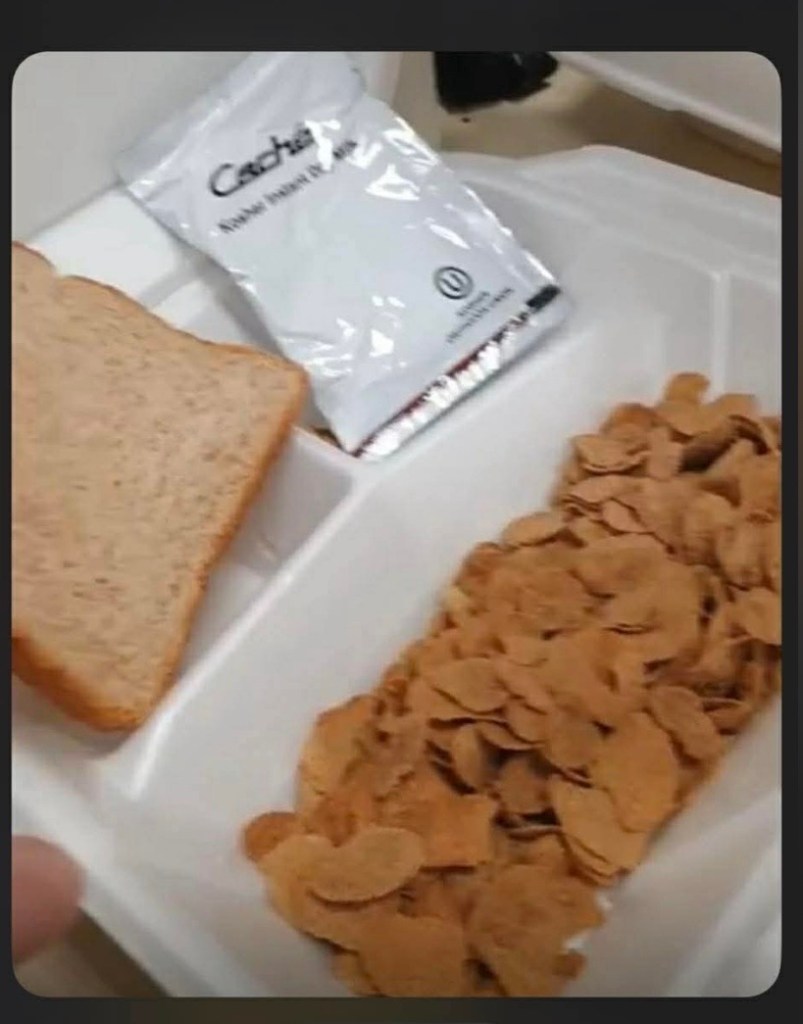
- ongoing concerns regarding food quality and portion size
- meals described as lacking sufficient nutritional adequacy
- repeated dissatisfaction with food service over time, consistent with prior reporting
- prolonged delays in access to dental care services
- extended wait times for dental evaluation, with some individuals reportedly advised of delays of several months
- untreated dental conditions impacting daily functioning, including difficulty eating
Loved Ones Coalition has reviewed visual documentation provided by sources depicting meals served within the facility. Based on this documentation, the meals appear limited in portion size and nutritional balance.
Taken together, the reporting raises broader concerns regarding food service practices, nutritional adequacy, and access to necessary dental care.
2. KEY ALLEGATION & VIOLATION TABLE
| Allegation | Policy / Statute Implicated |
| Inadequate food portions and nutritional concerns | BOP Food Service and Nutrition Standards |
| Repeated complaints regarding food quality | Institutional Food Service Oversight |
| Prolonged delays in access to dental care | 28 C.F.R. § 549 – Medical Services |
| Untreated dental conditions affecting daily functioning | Eighth Amendment – Medical Care Obligations |
3. DIRECT TESTIMONY / DIRECT QUOTES
- “The portions are small.”
- “He can’t eat because of his teeth.”
- “They said it would be months before he could see a dentist.”
4. SYSTEMIC CONCERNS
The reporting received regarding FCC Forrest City raises concerns that extend beyond isolated complaints and instead reflect potential ongoing issues related to food service and access to medical care.
Repeated reporting regarding food quality and portion size may raise questions regarding whether meals meet established nutritional standards. The visual documentation reviewed by Loved Ones Coalition may further support the need for evaluation of food service practices within the facility.
Delays in access to dental care raise additional concerns regarding the timeliness of treatment. Untreated dental conditions may worsen over time and may impact both health and nutritional intake.
Access to adequate food and timely medical care are fundamental components of institutional responsibility. Reporting suggesting limitations in these areas may warrant further review.
Taken together, the reporting raises broader concerns regarding food service adequacy, access to care, and institutional oversight of basic living conditions.
5. OVERSIGHT QUESTIONS FOR CLARIFICATION — FCC FORREST CITY (SOUTH CENTRAL REGION)
- What standards are used to evaluate food portion size and nutritional adequacy at FCC Forrest City?
- Have any recent inspections or reviews been conducted regarding food quality at the facility?
- What is the current average wait time for dental evaluation and treatment?
- What procedures are in place to address individuals experiencing active dental pain while awaiting care?
- What oversight mechanisms are in place to ensure that food service and medical concerns are addressed in a timely manner?
NORTH CENTRAL REGION
FCI Pekin (Illinois) — Medical Care Deficiencies, Mental Health Medication Discontinuation, Environmental Health Concerns, and Access to Basic Hygiene
1. SUMMARY OF ALLEGATIONS
Loved Ones Coalition has received reporting from incarcerated individuals, family members, and individuals with direct knowledge of institutional operations regarding conditions at the FCI Pekin Women’s Camp.
Reporting raises concerns related to medical care access, mental health treatment practices, environmental health conditions, access to basic hygiene supplies, and institutional response to reported concerns.
Sources report that incarcerated individuals have experienced:
- abrupt discontinuation of prescribed mental health medications, including medications related to depression, anxiety, bipolar disorder, and PTSD
- reports that medications were discontinued despite individuals indicating that prior treatment regimens were effective
- reported discontinuation of medications without gradual tapering, resulting in adverse physical and psychological effects
- seizure of previously authorized self-carry medications and reassignment to controlled pill-line distribution
- reported changes to medication administration timing inconsistent with intended treatment use (including medications for sleep or night-related conditions being administered during daytime hours)
Reporting further indicates significant concerns regarding medical staffing and access to care, including:
- lack of a full-time physician assigned to the facility
- reliance on a single Physician’s Assistant shared between the camp and the adjacent institution
- limited presence of medical staff, with reports indicating availability as infrequent as a few days per month
- delays in access to outside medical providers, with some individuals reportedly waiting six months or longer
- reports of inadequate monitoring of chronic medical conditions, including diabetes
- delays or dismissal of care for elderly or medically vulnerable individuals
Additional reporting raises concerns regarding environmental health conditions, including:
- presence of mold in housing unit bathrooms and ventilation systems
- reports that incarcerated individuals were directed to clean mold without corrective environmental measures
- subsequent reports of respiratory symptoms following exposure
Reporting also raises concerns regarding basic hygiene and sanitation, including:
- limited and reportedly insufficient distribution of sanitary napkins
- restricted access to toilet paper inconsistent with population needs
- reports that concerns regarding hygiene supply shortages have been raised without resolution
Additional reporting includes:
- concerns regarding food quality, including reports of expired food being served
- reported restrictions on communication, including removal of approved contact information and loss of communication privileges
Taken together, the reporting raises broader concerns regarding medical care delivery, mental health treatment practices, environmental safety, access to basic hygiene supplies, and institutional responsiveness to reported concerns.
2. KEY ALLEGATION & VIOLATION TABLE
| Allegation | Policy / Statute Implicated |
| Abrupt discontinuation of prescribed mental health medications | Eighth Amendment – Medical Care Obligations |
| Failure to taper psychiatric medications appropriately | Medical standard of care / deliberate indifference considerations |
| Seizure and reassignment of prescribed medications | Institutional medical policy and continuity of care |
| Inadequate medical staffing (no physician / limited PA access) | BOP Health Services Standards |
| Delayed access to outside medical providers (6+ months reported) | 28 C.F.R. § 549 – Medical Services |
| Inadequate monitoring of chronic conditions (e.g., diabetes) | Duty of care / chronic care standards |
| Presence of mold in housing units and ventilation systems | Environmental health and safety standards |
| Use of incarcerated individuals to remediate mold without corrective measures | Occupational and environmental safety concerns |
| Insufficient access to sanitary hygiene products | Basic sanitation and hygiene standards |
| Restricted access to toilet paper inconsistent with population needs | Conditions of Confinement Standards |
| Reports of expired food being served | BOP Food Service and safety standards |
| Reported restrictions on communication access | Communication access and administrative process protections |
3. DIRECT TESTIMONY / DIRECT QUOTES
- “They took all of my mental health medications at once.”
- “These medications worked for me, and they refused to put me back on them.”
- “We don’t have a doctor here.”
- “People are waiting months to see outside providers.”
- “There is mold in the bathrooms and vents.”
- “We don’t get enough sanitary products for the number of women here.”
4. SYSTEMIC CONCERNS
The reporting received regarding FCI Pekin raises concerns that extend beyond individual complaints and instead reflect potential systemic issues related to medical care delivery, environmental health conditions, and access to basic necessities.
The reported discontinuation of mental health medications without gradual tapering may raise serious concerns regarding continuity of care and adherence to accepted medical practices. Abrupt changes in psychiatric medication regimens may result in significant physical and psychological effects.
Reporting indicating limited access to medical providers, including the absence of a full-time physician and infrequent availability of a Physician’s Assistant, raises concerns regarding the facility’s capacity to meet basic healthcare needs. Delays in access to outside providers and reported gaps in monitoring chronic conditions may further impact overall health outcomes.
Environmental reporting regarding mold within housing areas, combined with reports that individuals were directed to clean affected areas without systemic remediation, raises concerns regarding environmental safety and potential exposure risks.
Limitations in access to sanitary hygiene products and basic supplies may raise concerns regarding sanitation, dignity, and basic living conditions, particularly within a women’s facility.
Additional concerns regarding food quality and communication access may further reflect broader issues related to institutional responsiveness and oversight.
Taken together, the reporting suggests broader concerns related to:
- adequacy and continuity of medical and mental health care
- staffing capacity within medical services
- environmental health and housing conditions
- access to basic hygiene and sanitation
- institutional responsiveness to reported concerns
5. OVERSIGHT QUESTIONS FOR CLARIFICATION — FCI PEKIN (NORTH CENTRAL REGION)
- What policies govern the discontinuation and tapering of mental health medications at FCI Pekin?
- Under what circumstances can prescribed psychiatric medications be discontinued, and what safeguards ensure continuity of care?
- What is the current medical staffing structure at the facility, including physician and mid-level provider availability?
- How frequently are medical providers physically present at the women’s camp?
- What is the current average wait time for access to outside medical providers?
- What protocols are in place to monitor and manage chronic conditions such as diabetes?
- What inspections or remediation efforts have been conducted regarding reported mold in housing units and ventilation systems?
- What standards govern the distribution of sanitary hygiene products within the facility?
- How does the facility ensure that hygiene supply distribution meets population needs?
- What quality control measures are in place to prevent expired food from being served?
- What policies govern communication access and removal of approved contacts or privileges?
WESTERN REGION
FCC Victorville (California) — Water Service Disruption, Access to Potable Water, and Conditions of Confinement Concerns (Women’s Unit)
1. SUMMARY OF ALLEGATIONS
Loved Ones Coalition has received reporting from family members and individuals with direct knowledge of institutional operations regarding conditions at FCC Victorville, including the women’s unit.
Reporting indicates that a water line disruption significantly impacted daily operations within the facility.
Sources report that incarcerated individuals experienced:
- loss of access to reliable running water following a reported water line break
- disruption of essential services, including laundry, ice, and access to filtered drinking water
- lack of consistent access to potable water during the disruption
- instructions to obtain water from bathroom sinks or other non-designated sources
- limited availability of alternative hydration resources
Sources further report that the disruption occurred in a high-temperature desert environment, raising concerns regarding hydration and health risks.
Additional reporting raises concerns regarding staff response during the disruption, including reports that the seriousness of the situation may not have been reflected in institutional response.
Taken together, the reporting raises broader concerns regarding access to potable water, continuity of essential services, and institutional response during infrastructure-related disruptions.
2. KEY ALLEGATION & VIOLATION TABLE
| Allegation | Policy / Statute Implicated |
| Loss of access to reliable potable water | Access to potable water standards |
| Disruption of essential services (laundry, ice, water) | Conditions of Confinement Standards |
| Instruction to obtain water from non-designated sources | Environmental health and safety standards |
| Limited access to hydration during high temperatures | Basic necessity and health protection standards |
| Institutional response to infrastructure failure | Maintenance and contingency planning policies |
3. DIRECT TESTIMONY / DIRECT QUOTES
- “They were told to drink water from the bathroom sink.”
- “There was no filtered water available.”
- “Basic services like laundry and ice were unavailable.”
4. SYSTEMIC CONCERNS
The reporting received regarding FCC Victorville raises concerns that extend beyond a temporary infrastructure failure and instead implicate broader conditions of confinement.
Access to potable water is a fundamental requirement within correctional facilities. Reporting indicating that individuals may have been directed to obtain water from bathroom sources raises concerns regarding environmental health, sanitation, and safety.
The reported disruption of essential services, including laundry and access to drinking water, may further impact hygiene, sanitation, and daily functioning.
These concerns may be heightened given the facility’s geographic location in a high-temperature desert environment, where consistent access to hydration is critical to maintaining health and safety.
While infrastructure failures may occur, the adequacy of institutional response and contingency planning during such disruptions remains a key consideration.
Taken together, the reporting raises broader concerns regarding infrastructure reliability, access to basic necessities, environmental health conditions, and institutional response to service disruptions.
5. OVERSIGHT QUESTIONS FOR CLARIFICATION — FCC VICTORVILLE (WESTERN REGION)
- What was the duration and scope of the reported water line disruption at FCC Victorville?
- What measures were implemented to ensure access to potable water during the outage?
- Were incarcerated individuals instructed to obtain water from non-designated sources, and if so, under what circumstances?
- What contingency protocols are in place to maintain essential services during infrastructure failures?
- How does the facility ensure adequate hydration and safety in high-temperature conditions during service disruptions?
- What steps have been taken to prevent similar disruptions in the future?
WESTERN REGION
FCI Sheridan Camp (Oregon) — Medical Continuity of Care Concerns Following Transfer from FCI Terminal Island
1. SUMMARY OF ALLEGATIONS
Loved Ones Coalition has received reporting from incarcerated individuals and individuals with direct knowledge of institutional operations regarding conditions at FCI Sheridan Camp following recent transfers from FCI Terminal Island.
Reporting raises concerns related to continuity of medical care, access to prescribed medications, and access to necessary medical equipment following transfer between facilities.
Sources report that individuals recently transferred experienced:
- failure of prescribed medications to transfer with them upon arrival
- delays in receiving previously prescribed medications
- lack of access to medically necessary equipment, including CPAP machines
- reported gaps in continuity of care for individuals with existing medical conditions
- reports that concerns raised regarding missing medications and equipment were met with responses indicating delays without clear timelines for resolution
Additional reporting indicates that some individuals also experienced loss or delay in access to personal property following transfer.
Taken together, the reporting raises broader concerns regarding continuity of medical care, coordination of medical records and prescriptions during transfer, and institutional response to medical needs following intake.
2. KEY ALLEGATION & VIOLATION TABLE
| Allegation | Policy / Statute Implicated |
| Failure of prescribed medications to transfer with individuals | Continuity of care standards |
| Delays in access to prescribed medications post-transfer | 28 C.F.R. § 549 – Medical Services |
| Lack of access to medically necessary equipment (e.g., CPAP) | Eighth Amendment – Medical Care Obligations |
| Gaps in medical care during intake following transfer | BOP Health Services Intake Procedures |
| Inadequate response to reported medical needs | Duty of care / institutional medical policy |
| Loss or delay of personal property during transfer (reported) | Inmate Property Policy |
3. DIRECT TESTIMONY / DIRECT QUOTES
- “Our medications didn’t follow us.”
- “We don’t have our CPAP machines.”
- “They told us we’ll get it when we get it.”
4. SYSTEMIC CONCERNS
The reporting received regarding FCI Sheridan Camp raises concerns that extend beyond individual transfer issues and instead implicate broader systemic concerns related to continuity of care within the Bureau of Prisons.
The transfer of incarcerated individuals between facilities requires coordination of medical records, prescriptions, and necessary medical equipment. Reporting indicating that medications and equipment did not transfer with individuals may raise concerns regarding whether established intake and transfer protocols are being followed.
Delays in access to prescribed medications may result in interruptions to treatment, particularly for individuals managing chronic or serious medical conditions. Similarly, lack of access to medically necessary equipment, such as CPAP machines, may pose health risks if not addressed in a timely manner.
The reported response indicating indefinite delays without clear timelines may further raise concerns regarding prioritization of medical needs during intake and institutional responsiveness to ongoing care requirements.
While transfer-related disruptions may occur, the absence of continuity in medication and equipment access may suggest gaps in coordination, intake procedures, and oversight.
Taken together, the reporting raises broader concerns regarding:
- continuity of medical care during inter-facility transfers
- coordination of prescriptions and medical equipment
- intake procedures and medical assessment upon arrival
- institutional responsiveness to ongoing medical needs
5. OVERSIGHT QUESTIONS FOR CLARIFICATION — FCI SHERIDAN CAMP (WESTERN REGION)
- What procedures are in place to ensure continuity of prescribed medications during inter-facility transfers?
- How are medical records, prescriptions, and necessary equipment coordinated prior to transfer from FCI Terminal Island?
- What is the expected timeframe for individuals to receive prescribed medications upon arrival at FCI Sheridan Camp?
- What protocols are in place to ensure timely access to medically necessary equipment such as CPAP machines?
- How are delays in medical intake addressed when individuals arrive without essential medications or equipment?
- What oversight mechanisms are in place to ensure continuity of care during large-scale or multi-person transfers?
MID-ATLANTIC REGION
FCC Petersburg (Virginia) — Reported Water Service Disruption, Institutional Response, and Contingency Protocol Clarification
1. SUMMARY OF ALLEGATIONS
Loved Ones Coalition received reporting from incarcerated individuals and family members indicating that individuals at FCC Petersburg experienced a temporary disruption in access to running water beginning on or about March 25, 2026.
Initial reports indicated that individuals had been without access to running water for several hours and requested access to bottled water and hygiene supplies.
Loved Ones Coalition conducted outreach to the facility regarding these concerns. In response, the institution indicated that the disruption was related to a local infrastructure issue outside of facility property and stated that water access had not been fully lost.
Subsequent reporting from individuals inside the facility indicated that:
- access to showers remained unavailable during portions of the disruption
- individuals were provided approximately one bottle of water per meal during the following day
- conditions began to improve after outreach and institutional response
Sources further reported that, while water service was restored, concerns remained regarding whether the quantity of distributed bottled water was sufficient to meet hydration and hygiene needs during the disruption.
Taken together, the reporting reflects a situation in which initial reports of limited water access were followed by institutional response and partial restoration of services, while also raising questions regarding contingency planning, communication, and adequacy of resource distribution during service interruptions.
2. KEY ALLEGATION & VIOLATION TABLE
| Allegation | Policy / Statute Implicated |
| Reported temporary loss or limitation of running water | Access to potable water standards |
| Limited access to showers during disruption | Institutional sanitation and hygiene standards |
| Implementation of bottled water distribution following disruption | Contingency response protocols |
| Reported limited quantity of bottled water (one per meal) | Hydration and basic necessity standards |
| Discrepancy between institutional reporting and individual experience | Institutional communication and verification practices |
| Reliance on external infrastructure during service disruption | Emergency preparedness and contingency planning |
3. DIRECT TESTIMONY / DIRECT QUOTES
- “We still don’t have showers.”
- “They are giving us one bottle of water with each meal.”
- “We didn’t have bottled water yesterday.”
- “It’s a step in the right direction, but it’s not enough.”
4. SYSTEMIC CONCERNS
The reporting received regarding FCC Petersburg reflects the challenges associated with infrastructure-related disruptions and highlights the importance of clear contingency planning and communication.
While the institution indicated that water service was not fully lost and attributed the disruption to an external sewer line issue, reporting from individuals inside the facility suggests that access to water and related services may have been limited in practice during portions of the incident.
The subsequent implementation of bottled water distribution and restoration of services reflects a level of institutional response. However, reports indicating that individuals initially lacked access to bottled water, and later received limited quantities, may raise questions regarding the timing and adequacy of contingency measures.
Access to water is necessary not only for drinking but also for hygiene, sanitation, and daily functioning. Limitations in shower access and reliance on bottled water distribution may impact overall living conditions during disruptions.
Differences between institutional statements and reported lived conditions may further raise questions regarding how service disruptions are assessed, communicated, and verified across housing units.
Taken together, the reporting raises broader considerations regarding:
- effectiveness and timing of contingency response protocols
- adequacy of hydration and hygiene resources during service disruptions
- consistency between institutional reporting and conditions experienced within housing units
- preparedness for infrastructure-related interruptions impacting essential services
5. OVERSIGHT QUESTIONS FOR CLARIFICATION — FCC PETERSBURG (MID-ATLANTIC REGION)
- What was the actual level of water access within housing units during the reported disruption?
- What criteria are used to determine whether water service is considered “maintained” during partial disruptions?
- What contingency protocols govern the distribution of bottled water and hygiene supplies during service interruptions?
- At what point are bottled water and hygiene kits deployed following disruption of services?
- What standards determine adequate quantities of water distribution per individual during outages?
- Why do reports indicate that bottled water distribution began after initial outreach rather than immediately upon disruption?
- What procedures are used to verify that all housing units have consistent access to water during infrastructure events?
- What steps are being taken to improve response time and resource distribution during future disruptions?
SOUTHEAST REGION
FCP Jesup (Georgia) — FSA Credit Application, Community Placement Concerns, and Case Management Practices
1. SUMMARY OF ALLEGATIONS
Loved Ones Coalition has received reporting from multiple individuals regarding concerns with the calculation and application of First Step Act (FSA) earned time credits and Second Chance Act (SCA) community placement at FCP Jesup.
Reporting indicates that individuals are not receiving clear or consistent explanations regarding how their FSA credits are calculated, including distinctions between earned versus projected credits and how those credits impact prerelease custody, home confinement, or release dates.
Sources report that community placement dates are frequently adjusted following review by case management, in some cases resulting in reduced time in prerelease custody or extended incarceration periods without clear, individualized justification.
Additional concerns include reports that individuals have been told they were submitted for community placement when no such submission had been made, as well as instances where individuals were later informed they had declined placement despite disputing that characterization.
Reporting further raises concerns regarding staff conduct within case management, including dismissive or unprofessional communication related to FSA credit application and prerelease placement processes.
Taken together, these reports raise questions regarding consistency, transparency, and adherence to policy in the administration of FSA credits and community placement determinations at FCP Jesup.
2. KEY ALLEGATION & VIOLATION TABLE
| Allegation | Policy / Statute Implicated |
| Lack of clarity in FSA credit calculation | First Step Act implementation guidance |
| Use of projected vs. earned credits without explanation | BOP FSA policy framework |
| Changes to community placement dates without clear rationale | Second Chance Act (SCA) requirements |
| Reported failure to submit individuals for RRC placement | Prerelease placement procedures |
| Conflicting information regarding “opt-out” status | Individualized assessment requirements |
| Reported unprofessional staff conduct | BOP staff conduct standards |
3. DIRECT TESTIMONY / DIRECT QUOTES
- “We’re not being told how our credits are calculated.”
- “They said I was submitted, but the halfway house said they never got anything.”
- “People are being told they opted out when they didn’t.”
- “They just go by whatever the computer says.”
4. SYSTEMIC CONCERNS
Reporting from FCP Jesup suggests potential inconsistencies in how FSA earned time credits are calculated, communicated, and applied to prerelease placement decisions.
A key concern involves the lack of transparency surrounding earned versus projected credits and how those figures translate into actual placement timelines. Without clear communication, individuals may be unable to verify whether credits are being applied correctly.
Additionally, reports of individuals arriving with established community placement timelines that are later reduced or modified without clear explanation raise concerns regarding adherence to individualized assessment requirements under the Second Chance Act.
Reports that individuals are told they have been submitted for Residential Reentry Center (RRC) placement when no submission has occurred, or that they declined placement when they dispute doing so, raise further concerns regarding documentation accuracy and communication between institutions and RRC providers.
Concerns regarding staff communication—specifically dismissive or inconsistent responses—may further impact individuals’ ability to understand and advocate for correct application of credits and placement eligibility.
Taken together, these concerns may reflect broader issues related to:
- transparency in FSA credit calculation
- consistency in application of prerelease placement policies
- accuracy of case management documentation and submissions
- adherence to individualized assessment requirements under SCA
- communication between institutions and RRC providers
5. OVERSIGHT QUESTIONS FOR CLARIFICATION — FCP JESUP (SOUTHEAST REGION)
- What procedures are used to calculate and communicate FSA earned versus projected credits?
- How are individuals informed of how their credits impact prerelease placement timelines?
- What documentation is required when individuals are submitted for RRC placement?
- How are discrepancies between institutional records and RRC reports addressed?
- What process exists to verify whether an individual has declined or “opted out” of placement?
- How are community placement dates reviewed and adjusted, and what criteria are used?
- What oversight mechanisms are in place to ensure individualized assessments under the Second Chance Act?
- What training or guidance is provided to case management staff regarding FSA and SCA implementation?
CONCLUSION
The reporting documented in this week’s submission reflects a combination of ongoing systemic concerns and instances in which institutional response resulted in partial or full improvement following outreach.
Across facilities, Loved Ones Coalition continues to receive corroborated reporting involving access to medical care, continuity of treatment during transfer, food service adequacy, infrastructure-related disruptions, and application of prerelease policies. While the overall volume of submissions is reduced relative to prior reporting periods, the nature of the concerns reported remains consistent with patterns previously documented.
In particular, reporting related to continuity of medical care, access to necessary treatment, and implementation of contingency protocols during service disruptions continues to raise questions regarding consistency in execution across institutions.
Additionally, concerns related to the application and communication of First Step Act (FSA) credits and prerelease placement, as reflected in reporting from FCP Jesup, may warrant further review to assess whether these issues reflect localized inconsistencies or broader implementation challenges.
Loved Ones Coalition acknowledges instances of institutional responsiveness and corrective action reflected in this reporting period. At the same time, continued oversight remains necessary to ensure that improvements are consistently implemented and sustained across facilities.
The concerns documented in this report—particularly where they involve access to medical care, sanitation, food, and basic living conditions—implicate fundamental obligations of custodial care and require continued attention.
Loved Ones Coalition will continue to document, monitor, and report these conditions as part of its ongoing commitment to transparency, oversight, and ensuring that conditions within the federal prison system remain visible to the public and to the entities responsible for oversight.