August 31, 2026 – Weekly Oversight Report
LOVED ONES COALITION
Documenting Systemic Concerns Across the Federal Bureau of Prisons
August 31, 2026
This week’s report is being submitted during a significant transition within the Federal Bureau of Prisons following the departure of former Deputy Director Smith.
Over the past year, Loved Ones Coalition developed an unusually effective working relationship with Mr. Smith. That relationship was not built through frequent meetings, lengthy conversations, or special access. In fact, our communication was generally very simple: we submitted documented concerns, he reviewed them, and when problems could be corrected, we repeatedly saw corrective action follow.
Trust was not given blindly. It was earned through results.
As that trust grew, so did the scope of information Loved Ones Coalition was willing to provide directly to Bureau leadership. Incarcerated individuals and their families saw that reporting conditions could result in problems being addressed without exposing them to retaliation. That allowed us to provide increasingly detailed documentation and gave the Bureau visibility into conditions it might otherwise never have received through ordinary institutional channels.
Mr. Smith’s departure does not end Loved Ones Coalition’s oversight work.
We will continue receiving reports. We will continue documenting conditions. We will continue verifying information where possible. We will continue publishing these reports. We will continue pursuing accountability and bringing documented concerns to those positioned to act on them.
What has changed is the level of trust between Loved Ones Coalition and Bureau leadership.
We appreciate those within the Bureau who have reached out and requested that these reports continue to be provided directly to them. This week’s report is being provided in good faith.
However, we must also acknowledge that since this transition, Loved Ones Coalition has received communications through social media and personal telephone contact that we believe originate from BOP personnel and that we have perceived as threatening or intimidating. Some have specifically referenced our sources, our information, and efforts to identify or obtain our intelligence.
That cannot coexist with a meaningful oversight relationship.
Our sources are not targets. Their identities are not the price of access to the information we provide. Their safety is non-negotiable.
Director Marshall, we hope you or another member of senior leadership will reach out and begin building a direct relationship with Loved Ones Coalition. We are open to that relationship, but the trust that previously existed cannot simply transfer from one administration official to another. It must be built through transparency, responsiveness, protection against retaliation, and demonstrated results.
Loved Ones Coalition has spent considerable time building an oversight network capable of identifying problems across federal institutions, documenting them, identifying patterns, and bringing actionable information directly to people capable of correcting them. That work has value, and the organization and the thousands of incarcerated individuals and families who trust it deserve to be treated accordingly.
We also want to specifically thank our congressional partners, who have consistently remained accessible and receptive to the concerns brought forward by Loved Ones Coalition. Their willingness to ask questions, request additional information, make inquiries, and continue developing relationships with our organization has provided another essential avenue for meaningful oversight. We deeply appreciate their continued engagement.
Our work does not depend upon whether the Bureau chooses to participate in that process.
If a productive relationship with BOP leadership is rebuilt, we know from experience how much can be accomplished through direct communication. If it is not, Loved Ones Coalition will continue its oversight work and will continue bringing documented concerns through congressional, independent oversight, public, and other appropriate accountability channels.
We would much rather see documented problems corrected than simply reported.
That remains the purpose of this work.
The door is open. The work is continuing. But trust—and access to the depth of information that comes with it—must be earned.
MID-ATLANTIC REGION
FCI HAZELTON
Mail and Legal-Mail Disruptions, Administrative Remedy Access, Medication-Assisted Treatment, Medical Care, Staffing and Restricted Operations, Basic Hygiene Supplies, Contact-List Restrictions, Staff Conduct, Retaliation, and Classification Concerns
1. Summary of Concerns
Loved Ones Coalition received substantial reporting and documentation concerning multiple operational, medical, administrative, and conditions-of-confinement issues at FCI Hazelton.
While individual allegations cannot be independently verified by Loved Ones Coalition, the volume and overlap of the reporting raise concerns regarding mail operations, access to the Administrative Remedy Program, medication-assisted treatment for opioid use disorder, medical care, staffing levels, institutional movement, basic hygiene supplies, communication access, staff conduct, retaliation, classification decisions, and the ability of incarcerated individuals to meaningfully seek review of institutional decisions.
Mail and Legal-Mail Operations
Loved Ones Coalition received multiple reports describing interruptions in incoming and outgoing mail.
Reporting alleges that mail was not delivered to housing units on multiple days, with incarcerated individuals stating that they were not provided an explanation for the disruption.
Separate reporting alleges that housing units went several consecutive days without receiving a mail bag. According to the submissions, the absence of the mail bag affected not only incoming correspondence but also incarcerated individuals’ ability to send outgoing mail, including legal mail.
The recurring nature of these reports warrants clarification regarding whether FCI Hazelton experienced staffing, transportation, processing, security, or other operational disruptions affecting mail service and whether time-sensitive legal correspondence was delayed.
Separate written testimony submitted to Loved Ones Coalition also contains allegations involving difficulties with mail and legal correspondence, adding to concerns regarding whether incarcerated individuals have consistent and reliable access to institutional mail processes.
Medication-Assisted Treatment and Opioid Use Disorder
Loved Ones Coalition received reporting from an incarcerated individual who states that he has approximately fourteen years remaining on his sentence and has a serious opioid addiction. According to the submission, Psychology screened and cleared him for medication-assisted treatment, but Health Services reportedly would not clear him because he was not within approximately 120 days of release.
The individual questions the consistency of that criterion because he reports observing other incarcerated individuals—including individuals with lengthy or life sentences—receiving MAT.
Separate written testimony submitted from FCI Hazelton raises similar concerns. One individual describes severe opioid use disorder, previous participation in a Suboxone/MAT program, and being told that he would not again qualify for the program until approximately 90 days before release. The writer describes concern about relapse and overdose while remaining incarcerated without the treatment he states he previously received.
The consistency between separate reports concerning proximity-to-release restrictions warrants clarification regarding FCI Hazelton’s actual eligibility criteria for MAT and whether sentence length or proximity to release is being used to deny or delay clinically indicated treatment.
Administrative Remedy Access
Multiple submissions raise concerns regarding access to the Administrative Remedy Program.
Incarcerated individuals report attempting to pursue administrative remedies only to have forms reportedly not returned, lost, discarded, withheld, or otherwise prevented from advancing through the process.
Written documentation submitted to Loved Ones Coalition contains similar allegations involving difficulties obtaining or processing BP-8, BP-9, and BP-10 remedies and supporting documentation. One submission includes an FCI Hazelton informal-resolution form concerning an alleged staff assault, along with written testimony describing attempts to pursue the matter administratively.
Another submission alleges that remedy documentation and supporting materials concerning classification and medical issues were not properly processed and describes fear of retaliation associated with pursuing complaints.
These allegations warrant review because the Administrative Remedy Program is itself the mechanism through which incarcerated individuals are expected to raise and exhaust institutional grievances. If individuals cannot reliably obtain, submit, track, or receive responses to remedy forms, the concern extends beyond the underlying complaints to the integrity and accessibility of the grievance process itself.
Staffing and Restricted Institutional Operations
Loved Ones Coalition received reporting alleging significant staffing shortages and resulting restrictions on normal institutional operations.
One submission alleges that very few staff reported for duty and that incarcerated individuals consequently received approximately one hour outside their housing areas. The reporting further alleged that two lieutenants were managing compound operations during the staffing shortage.
Loved Ones Coalition cannot independently determine staffing levels during the period described. However, if staffing shortages resulted in substantial reductions in movement or services, clarification is warranted regarding the extent of the shortage, whether augmentation or mandatory overtime was utilized, and which institutional services were affected.
Separate written testimony also alleges recurring circumstances in which staff absences affect programming, recreation, education, open-house access, and other institutional operations.
Basic Hygiene and Sanitation Supplies
Loved Ones Coalition received reporting concerning inconsistent access to basic hygiene and sanitation supplies.
According to one submission, the institution had advised the population that three rolls of toilet paper would be distributed on the first and fifteenth of each month. Individuals subsequently requesting additional toilet paper were reportedly told that no additional supplies would be available until the following business day.
The same reporting describes shortages of bathroom soap and paper towels and characterizes inconsistent distribution of these supplies as an ongoing issue.
While routine distribution schedules may reasonably exist, access to toilet paper, soap, and hand-drying materials implicates basic sanitation. The institution should maintain adequate supplies and contingency procedures when routinely distributed quantities are exhausted before the next scheduled distribution.
Contact Lists and Communication Access
Loved Ones Coalition received reporting that incarcerated individuals have experienced difficulty maintaining or restoring approved contacts.
One individual reports that his entire contact list was removed and that contacts subsequently had to undergo administrative approval before being restored.
According to the reporting, incarcerated individuals were told that a new automated or artificial-intelligence-based verification system compares information associated with proposed contacts, including whether identifying and contact information correspond with information associated with a telephone account.
Loved Ones Coalition has not independently verified the existence, functionality, or criteria of the described system.
Clarification is warranted regarding whether FCI Hazelton recently implemented changes to contact verification, whether existing approved contact lists were removed as part of that transition, what information is compared during verification, how discrepancies are resolved, and what process exists for individuals whose legitimate family or community contacts cannot readily be reapproved.
Staff Conduct, Use-of-Force, and Retaliation Allegations
Written documentation submitted to Loved Ones Coalition contains serious allegations regarding staff conduct, including alleged physical force, harassment, threats, repeated searches, retaliatory disciplinary action, restrictive-housing placement, and retaliation following attempts to report staff conduct.
One submission describes an encounter during which an incarcerated individual alleges that a correctional officer escorted him to a lieutenant’s office during a search and assaulted him, including allegedly striking his head against a wall and threatening bodily harm. The individual states that he subsequently attempted to report the incident through his unit team and the Administrative Remedy Program. Documentation submitted to Loved Ones Coalition includes an informal-resolution form concerning the alleged incident.
Separate written testimony alleges repeated searches, harassment, threats, disciplinary actions, and placement in restrictive housing following attempts to complain about staff conduct. Another individual describes repeated pat searches and cell searches and expresses fear of retaliation for continuing to report institutional concerns.
Loved Ones Coalition cannot independently substantiate these allegations and does not present them as established findings of staff misconduct. However, allegations involving physical force, retaliation for grievance activity, evidence preservation, and interference with administrative remedies warrant independent review through appropriate institutional, regional, and investigative channels.
Medical Care
Separate written testimony raises additional concerns regarding access to medical evaluation and treatment.
One individual alleges difficulty obtaining evaluation for possible sleep apnea despite describing significant exhaustion, difficulty breathing while sleeping, and reports from a cellmate that he sometimes appeared to stop breathing during the night. The same individual alleges that efforts to pursue medical concerns through administrative remedies were unsuccessful.
Other submitted testimony alleges medical neglect or delayed treatment and expresses fear that seeking further review could result in retaliation.
Loved Ones Coalition cannot determine the medical necessity or appropriate treatment in individual cases. The reporting does, however, warrant review of whether individuals reporting potentially serious symptoms are receiving timely clinical evaluation and whether complaints concerning medical care can be pursued without interference.
Classification, Custody Scoring, and Case-Management Concerns
Several written submissions raise concerns regarding custody scoring, detainers or pending-charge information, recidivism scoring, disciplinary records, sentence-related calculations, and case-management decisions.
One individual alleges that a detainer or “pending charge” remained reflected in institutional records despite documentation indicating that the matter had been resolved. The writer further alleges that classification calculations and recidivism information were not corrected promptly, affecting housing or transfer eligibility.
Another submission describes disputes involving sentence computation, jail credit, recidivism scoring, First Step Act eligibility, Second Chance Act consideration, and halfway-house placement.
Loved Ones Coalition cannot determine from the submitted documentation whether the underlying calculations or determinations are correct. However, the submissions raise a broader administrative concern regarding whether incarcerated individuals receive understandable explanations of classification and sentence-related decisions and whether documented errors can be corrected through a functioning review process.
2. Key Concern Table
| Concern Area | Description | Potential Concern Area |
| Mail Operations | Multiple reports describe missed mail deliveries and consecutive days without housing-unit mail bags. | Institutional Operations / Mailroom |
| Legal Mail | Reporting alleges mail disruptions interfered with outgoing legal correspondence. | Legal Access / Mailroom |
| MAT/OUD Treatment | Individuals report MAT being denied or delayed because they are not sufficiently close to release despite reporting serious opioid addiction. | Health Services |
| MAT Eligibility | Separate reports raise questions regarding whether proximity to release is being used as an eligibility criterion. | Health Services / Clinical Policy |
| Administrative Remedies | Multiple reports allege BP forms or supporting documentation are lost, discarded, withheld, or not returned. | Institutional Administration |
| Staff Conduct | Documentation contains allegations of physical force, harassment, threats, and inappropriate staff behavior. | Correctional Services / OIA |
| Retaliation | Individuals allege adverse treatment following grievances or reports concerning staff conduct. | Staff Accountability |
| Staffing | Reporting alleges significant staffing shortages resulting in restricted institutional movement and services. | Institutional Operations |
| Basic Supplies | Reports describe shortages or delayed distribution of toilet paper, soap, and paper towels. | Environmental Health / Sanitation |
| Contact Verification | Reporting alleges approved contacts were removed and must undergo a new verification process. | Communications / Institutional Administration |
| Medical Care | Written submissions raise allegations involving delayed or denied medical evaluation and treatment. | Health Services |
| Classification | Individuals dispute custody points, detainers, recidivism calculations, sentence-related information, and case-management decisions. | Unit Management / Correctional Programs |
3. Direct Testimony
“Mail was not delivered to any of the units today… reason unknown.”
“I have a serious opioid addiction, and psychology screened me and says I’m cleared for the program. But medical won’t clear me.”
“When we try to file administrative remedies we never get the forms back or they are suddenly ‘lost.’”
“Almost no staff showed up for work today. We were given just one hour out.”
“Today we were denied anymore toilet paper.”
“This is an ongoing issue. They bring us supplies when they feel like it.”
“It’s hard to get all of your family back on your contact list!”
“Didn’t even get a mail bag Thursday, Friday or Monday.”
4. Systemic Concerns
The reporting received from FCI Hazelton is notable because the concerns do not involve a single institutional function. Mail, medical treatment, administrative remedies, staffing, sanitation, communication access, classification, and allegations of staff misconduct ordinarily involve separate departments. When concerns emerge across several of those systems during the same reporting period, broader institutional or regional review may be appropriate.
The MAT reporting warrants particular attention. Loved Ones Coalition has received separate accounts alleging that treatment for opioid use disorder is being tied to proximity to release despite individuals reporting significant addiction and, in at least one documented account, prior participation in MAT.If such a restriction is being applied, the Bureau should clarify its clinical and policy basis and whether individuals with opioid use disorder are receiving individualized medical assessments.
The administrative-remedy allegations are also significant because they potentially affect nearly every other concern described above. Incarcerated individuals are expected to use the Administrative Remedy Program to challenge institutional decisions and conditions. If forms, responses, or supporting documents are being lost, discarded, withheld, or otherwise prevented from progressing, individuals may be unable to create the administrative record necessary to demonstrate that they attempted to resolve their concerns. The existence of submitted remedy documentation alongside repeated allegations of difficulty advancing grievances warrants review of FCI Hazelton’s remedy-processing and tracking procedures.
Finally, the overlap between allegations of staff misconduct and allegations of interference with grievance procedures deserves particular scrutiny. Loved Ones Coalition is not making a finding that retaliation or staff misconduct occurred. However, when individuals allege misconduct and simultaneously report difficulty accessing the mechanisms designed to report that misconduct, independent review becomes especially important.
5. Questions for Clarification
- Has FCI Hazelton experienced recent disruptions in incoming or outgoing mail service, and if so, what caused them and what corrective measures have been implemented?
- Were any outgoing legal-mail submissions delayed because housing units did not receive mail bags?
- What are the current clinical and administrative eligibility criteria for medication-assisted treatment at FCI Hazelton?
- Is proximity to release—including a 90-day or 120-day threshold—used in determining whether an individual with opioid use disorder may receive MAT? If so, what policy or clinical guidance establishes that criterion?
- What procedures are used at FCI Hazelton to track BP-8, BP-9, and other administrative-remedy submissions and ensure that forms and supporting documentation are not lost or discarded?
- Has regional leadership reviewed allegations that incarcerated individuals are experiencing difficulty obtaining, submitting, or receiving responses to administrative remedies?
- Did recent staffing shortages result in restricted movement or reduced access to programming, recreation, education, medical services, or other institutional operations?
- What procedures ensure that housing units maintain adequate toilet paper, soap, paper towels, and other basic sanitation supplies between scheduled distributions?
- Has FCI Hazelton recently implemented a new contact-verification system or automated verification process? If so, why were previously approved contacts reportedly removed, and what process exists for restoring legitimate contacts?
- Have the submitted allegations involving staff use of force, harassment, retaliation, and interference with grievance activity been referred for independent review where appropriate?
- What procedures are in place to ensure that incarcerated individuals reporting potentially serious medical symptoms receive timely clinical evaluation?
- What process is available when an incarcerated individual believes incorrect detainer, pending-charge, custody-score, recidivism, sentence-computation, or other case-management information remains in institutional records despite documentation supporting correction?
MID-ATLANTIC REGION
USP LEE
Recurring Lockdowns, Program-Unit Restrictions, Institutional Searches, Property Concerns, Racial and Religious Hostility, and Visiting Access
1. Summary of Concerns
Loved Ones Coalition continues to receive serious reporting regarding recurring lockdowns, restricted movement, institutional searches, property handling, racial and religious hostility, and disruptions to family visitation at USP Lee.
USP Lee has appeared in prior oversight reporting concerning recurring lockdowns and restricted operations. The continued reporting raises broader questions regarding whether restrictive operations are becoming routine, whether individuals and housing units with no involvement in the underlying security incidents are repeatedly subjected to collective restrictions, and whether adequate oversight exists regarding what occurs during large-scale institutional searches.
More serious reporting concerning alleged racial and religious hostility further warrants review of institutional culture and whether Black and Muslim incarcerated individuals are being afforded equal treatment and meaningful protection from discriminatory, degrading, or retaliatory conduct.
Recurring Lockdowns and Program-Unit Restrictions
Reporting describes continued lockdowns affecting both general-population and program-designated housing units.
Individuals report that program units have been repeatedly locked down alongside the general population despite reportedly having previously been advised that those units would not routinely be subjected to the same restrictions.
Reporting describes a recent multi-day lockdown reportedly initiated following drug-related incidents involving K2 and other issues within two housing units. Despite the reported conduct being associated with specific areas of the institution, restrictions were allegedly extended beyond those units.
Individuals further report spending substantial periods confined to their cells and question whether the frequency and duration of institutional lockdowns are being accurately reflected in reporting to Bureau leadership.
Loved Ones Coalition recognizes that temporary restrictions may be necessary in response to legitimate security threats. The recurring concern at USP Lee, however, is whether institution-wide or broadly applied restrictions are being used when narrower responses would adequately address the underlying security issue.
When misconduct or security concerns arise within particular housing units, restrictions affecting substantially larger portions of the population should be supported by an articulable institutional-security need and should remain in place only as long as necessary.
Institutional Searches and Property Concerns
Loved Ones Coalition received reporting concerning property allegedly missing, damaged, or improperly handled following institutional searches conducted during lockdown operations.
Reportedly missing property includes personal items, stamps, commissary food, and other possessions. Reporting also describes prescription or reading glasses allegedly being intentionally broken.
Separate concerns involve the handling of religious property during searches, including an allegation that a Muslim prayer rug was discovered inside a toilet following a cell search.
Large-scale institutional searches may be necessary for legitimate safety and security purposes. They nevertheless require adequate accountability regarding which personnel search particular areas and how incarcerated individuals’ authorized personal and religious property is handled.
Where property is damaged, destroyed, missing, or allegedly desecrated during a search, the institution should have sufficient documentation to determine who conducted the search and provide a meaningful mechanism for review.
Allegations of Racially and Religiously Targeted Misconduct
Loved Ones Coalition has received serious reporting concerning alleged racially and religiously targeted misconduct at USP Lee.
Reporting alleges the use of anti-Black racial slurs and threatening language on religious or community materials. Additional reporting describes imagery depicting a rope around the neck of Minister Louis Farrakhan.
The reported combination of racial slurs, imagery invoking lynching, interference with or desecration of religious materials, and allegations of retaliatory language raises serious concerns regarding racial and religious hostility within the institution and whether incarcerated individuals—particularly Black and Muslim individuals—are being afforded equal treatment and protection from discriminatory or retaliatory conduct.
These allegations cannot reasonably be reduced to routine property complaints.
Loved Ones Coalition is not making a factual determination regarding the identity of the person or persons responsible for the alleged conduct. However, the nature and severity of the reporting warrant independent review into whether a broader pattern or culture of racial hostility, religious discrimination, or retaliatory conduct exists at USP Lee.
Where allegations arise following institutional searches, relevant evidence may be available to determine who accessed particular housing areas or cells. Search-team assignments, staff rosters, housing-unit logs, surveillance footage where available, and other institutional records should be preserved and reviewed.
Allegations involving racial slurs, imagery associated with lynching, and desecration of religious property warrant review not simply of the individual incidents but of whether similar complaints have been made by other incarcerated individuals and how those complaints have historically been addressed.
Visiting Access and Institutional Communication
Loved Ones Coalition also received concerns regarding communication with families about visiting availability during lockdowns and other restricted operations.
Reporting alleges that family members have contacted the institution and been advised that visiting was available, only to arrive at USP Lee and subsequently be turned away.
Loved Ones Coalition cannot independently determine how frequently this has occurred. However, inaccurate information regarding visiting availability can impose substantial financial and logistical burdens on families, particularly those traveling significant distances.
If lockdowns or other operational restrictions require visiting to be suspended, accurate and timely information should be communicated so families can make informed decisions before traveling to the institution.
2. Key Concern Table
| Concern Area | Description | Potential Concern Area |
| Recurring Lockdowns | Continued reporting describes frequent and multi-day lockdowns at USP Lee. | Correctional Services / Institutional Operations |
| Program Units | Program-designated units reportedly continue to be subjected to broader institutional restrictions. | Correctional Programs / Operations |
| Scope of Restrictions | Incidents reportedly originating in limited housing areas result in restrictions affecting substantially larger portions of the population. | Institutional Operations |
| Institutional Searches | Concerns involve accountability and property handling during large-scale searches. | Correctional Services |
| Property | Personal property, commissary items, and stamps are reportedly missing following searches, while glasses and other property were allegedly damaged. | Property Accountability |
| Religious Property | Reporting alleges a Muslim prayer rug was placed inside a toilet following a search. | Religious Services / Staff Conduct |
| Racial Hostility | Reporting describes anti-Black racial slurs and racially threatening imagery. | Equal Treatment / Staff Accountability |
| Religious Hostility | Religious materials and practices are reportedly subjected to degrading or discriminatory treatment. | Religious Services / Equal Treatment |
| Retaliatory Conduct | Reporting includes language allegedly directed toward individuals pursuing complaints. | Staff Accountability |
| Visiting | Families reportedly receive inaccurate information regarding whether visiting is operating during restrictions. | Visiting / Institutional Communication |
3. Direct Testimony
“They’ve been locking the program units down along with general population.”
“When I returned to my cell, I discovered my prayer rug in the toilet.”
“My two pairs of reading glasses were broken in half.”
“The phone and computer records will show that we are not out of our cells much at all.”
“Prisoners’ family members will call here and [be] told that the prison is open, but when they arrive, they are turned around.”
4. Systemic Concerns
The concerns reported from USP Lee should not be evaluated solely as isolated incidents.
Loved Ones Coalition continues to receive reporting concerning recurring lockdowns, broad restrictions affecting individuals and housing units not alleged to have participated in the underlying conduct, disruption of programming and visitation, property concerns associated with institutional searches, and serious allegations involving racial and religious hostility.
The recurring lockdown reporting remains a significant concern. The question is no longer simply whether any particular lockdown had an initial security justification. Rather, the Bureau should examine the frequency, duration, scope, and cumulative impact of restrictive operations at USP Lee and whether less restrictive responses are being considered when incidents are confined to particular housing units.
The racial component requires particular attention.
Allegations involving anti-Black racial slurs and imagery depicting a noose are not merely allegations of inappropriate language. In a correctional environment—where incarcerated individuals cannot remove themselves from the environment and remain dependent upon the institution for their safety—such reporting raises serious questions regarding institutional culture, equal treatment, and whether individuals can safely report discriminatory conduct without fear of retaliation.
Likewise, allegations that religious property was intentionally placed in a toilet raise concerns extending far beyond ordinary property handling. If substantiated, such conduct would represent an extraordinary level of disrespect toward an individual’s religious practice and should be examined alongside allegations of racial hostility rather than treated as an unrelated property dispute.
Loved Ones Coalition is requesting that the Bureau examine the pattern rather than respond to each allegation in isolation.
The question is not simply whether a particular item was damaged, whether a particular lockdown was authorized, whether a particular search complied with procedure, or whether one complaint concerning discriminatory treatment can be substantiated.
The broader question is whether the cumulative reporting reflects institutional problems involving restrictive operations, racial and religious treatment, retaliatory practices, staff accountability, and meaningful avenues for incarcerated individuals to report misconduct.
Loved Ones Coalition does not presume the outcome of that review. However, the seriousness and convergence of these concerns warrant scrutiny beyond an isolated institutional response.
5. Questions for Clarification
- How frequently has USP Lee implemented lockdowns or significant movement restrictions during the recent reporting period, and what have been their durations?
- Are program-designated housing units routinely included in institution-wide lockdowns, and what criteria determine whether those units are restricted?
- When a security incident originates within one or two housing units, what assessment is conducted before restrictions are extended to individuals and units not implicated in the underlying conduct?
- Are lockdowns and significant movement restrictions consistently documented and reported through appropriate regional and Central Office channels?
- Has USP Lee received complaints concerning missing, damaged, destroyed, or improperly handled property following recent institutional searches?
- What procedures are used to document which staff or search teams are responsible for searching individual cells during large-scale institutional searches?
- Has USP Lee or Mid-Atlantic Regional leadership received complaints concerning racial slurs, racially threatening imagery, discriminatory treatment, or religiously disrespectful conduct at the institution?
- Have allegations involving the desecration or inappropriate handling of religious property during institutional searches been reviewed?
- Are search-team assignments, surveillance footage, housing-unit logs, staff rosters, and other relevant records preserved when allegations of misconduct arise following institutional searches?
- Has regional leadership examined whether complaints concerning racial or religious discrimination at USP Lee demonstrate a broader pattern rather than isolated incidents?
- What mechanisms are available for incarcerated individuals to report alleged racial or religious discrimination without having those complaints handled exclusively by personnel within the institution being complained about?
- What safeguards exist to protect incarcerated individuals from retaliation after reporting alleged discriminatory conduct or staff misconduct?
- What procedures are used to ensure families receive accurate information regarding visiting availability during lockdowns or other institutional restrictions?
- Has the institution identified instances in which families were advised that visiting was available and subsequently turned away after arriving?
NORTH CENTRAL REGION
FCI MARION
Documented Diagnostic Imaging Delays, Repeated Rescheduling, Outside Specialty Care Delays, and Medical Coordination Concerns
1. Summary of Concerns
Loved Ones Coalition received substantial documentation concerning diagnostic imaging and outside specialty medical care at FCI Marion.
The documentation includes internal medical scheduling records, consultation histories, and communications concerning outside medical appointments. Collectively, the records appear to show numerous incarcerated individuals awaiting diagnostic imaging, some for extended periods, as well as repeated appointment rescheduling and documented instances in which medically ordered care was delayed because of scheduling, transportation, escort availability, or other institutional coordination issues.
Loved Ones Coalition has intentionally omitted patient names, register numbers, dates of birth, and other identifying information from this report. The documentation itself has been retained and can be provided to appropriate oversight personnel if necessary.
Unlike generalized reports of delayed medical care, the documentation provides specific institutional records showing the status and progression of numerous medical requests and therefore warrants review as a potential systemic medical scheduling and continuity-of-care issue at FCI Marion.
Diagnostic Imaging Delays
Internal radiology scheduling documentation reviewed by Loved Ones Coalition reflects numerous outstanding diagnostic-imaging requests involving multiple incarcerated individuals.
The records include CT scans and other radiological procedures and reflect patients at varying stages of the scheduling process, including requests identified as “Pending Consult” and “Pending Scheduling.”
The documentation reflects substantial periods between requests, target dates, scheduling actions, and completion. Multiple entries show delays measured in weeks or months, including cases extending beyond 30, 60, and 90 days and some exceeding 100 days.
The significance of the documentation is not any single delayed examination. Rather, the records reflect numerous patients simultaneously progressing—or remaining pending—within the same institutional scheduling system.
This raises questions regarding whether FCI Marion currently has a backlog of diagnostic imaging and whether sufficient procedures exist to identify and escalate orders that remain incomplete beyond their intended target dates.
Repeated Rescheduling and Scheduling Errors
Individual consultation histories contained within the documentation provide additional insight into circumstances contributing to delays.
The records reflect repeated scheduling activity for some diagnostic procedures, including multiple appointment dates and subsequent changes.
Documented explanations include:
“Scheduling Error”
and
“Escort Staff Unavailable.”
Other records contain repeated communications with outside scheduling providers and instructions to reschedule appointments.
These records are important because they indicate that at least some delays were not attributable to a clinical determination that testing was unnecessary. Instead, medically ordered care appears in certain instances to have been delayed because the institution was unable to successfully coordinate or complete the appointment.
Escort Availability and Operational Barriers to Medical Care
The documentation specifically identifies unavailable escort staff as a reason certain outside medical appointments could not proceed.
This raises a broader operational concern.
Security staffing and transportation requirements are unavoidable components of providing outside medical treatment within a correctional environment. However, when medically ordered care is repeatedly delayed because sufficient escort personnel are unavailable, a correctional staffing issue becomes a medical-access issue.
Loved Ones Coalition respectfully requests review of how frequently FCI Marion medical appointments have been canceled or rescheduled because transportation or escort personnel were unavailable and whether procedures exist to prioritize replacement appointments when cancellations occur for institutional rather than patient-related reasons.
Outside Specialty Care and Continuity of Care
The documentation also reflects difficulties coordinating time-sensitive outside specialty treatment.
Records concerning treatment for a detached retina show that outside surgical and follow-up care required repeated coordination between FCI Marion Health Services and outside providers.
Internal correspondence indicates that a scheduled outside visit did not result in the anticipated surgery and that additional scheduling was subsequently required.
The documentation further shows concern among FCI Marion Health Services personnel regarding additional delay. In one internal communication, a Health Services staff member expressly stated that waiting additional days to send the patient back for treatment was:
“a very bad idea”
The correspondence references the detached-retina condition and an already scheduled target date for treatment.
Additional internal communication reflects difficulties coordinating paperwork and transportation for the outside procedure, including concern that necessary paperwork was completed after transportation personnel had already departed and that another opportunity for treatment could consequently be missed.
These records are particularly important because they demonstrate that Health Services personnel themselves recognized the need for timely treatment while administrative and operational barriers continued to affect whether that treatment occurred as scheduled.
2. Key Concern Table
| Concern Area | Description | Potential Concern Area |
| Diagnostic Imaging | Internal documentation reflects numerous outstanding radiology requests involving multiple patients. | Health Services |
| Extended Delays | Records reflect diagnostic requests remaining pending for weeks or months, including some exceeding 90 and 100 days. | Medical Care / Timeliness |
| Pending Scheduling | Numerous procedures are documented as awaiting scheduling or consultation. | Health Services Administration |
| Repeated Rescheduling | Consultation histories show repeated appointment changes and rescheduling activity. | Medical Scheduling |
| Scheduling Errors | Institutional documentation expressly identifies scheduling errors in certain cases. | Health Services Administration |
| Escort Availability | Records identify unavailable escort staff as preventing certain appointments from proceeding. | Correctional Services / Health Services |
| Outside Specialty Care | Documentation reflects difficulties successfully coordinating outside medical treatment. | Continuity of Care |
| Time-Sensitive Care | Internal correspondence reflects staff concern regarding additional delay in treatment of a detached retina. | Patient Safety |
| Interdepartmental Coordination | Records reflect coordination challenges involving Health Services, scheduling, outside providers, transportation, paperwork, and escorts. | Institutional Operations |
3. Documented Findings
The documentation reviewed by Loved Ones Coalition provides considerably more than anecdotal reporting of delayed medical care.
Internal scheduling records reflect multiple incarcerated individuals awaiting diagnostic imaging simultaneously, including patients whose requests had remained incomplete for extended periods.
Consultation histories demonstrate repeated scheduling activity and identify specific institutional barriers, including scheduling errors and unavailable escort staff.
Internal Health Services correspondence further demonstrates circumstances in which personnel recognized that additional delay could be medically concerning while operational and administrative obstacles continued to interfere with completing outside treatment.
Collectively, the records warrant examination of whether FCI Marion is experiencing a broader medical scheduling backlog and whether existing institutional resources are sufficient to complete medically ordered diagnostic and specialty care within clinically appropriate timeframes.
4. Systemic Concerns
The concern presented by the FCI Marion documentation is not that an occasional outside appointment was rescheduled.
Outside medical appointments inevitably require coordination between Health Services, correctional staff, transportation personnel, outside providers, and institutional administration. Individual cancellations or changes will occur.
The concern is the pattern reflected across the documentation.
Numerous outstanding diagnostic requests, extended periods awaiting completion, repeated rescheduling, identified scheduling errors, unavailable escorts, and documented difficulties coordinating time-sensitive specialty care collectively suggest that operational barriers may be interfering with medical treatment.
Diagnostic imaging is also frequently only one step in a larger treatment process. Delaying imaging may consequently delay diagnosis, specialist referral, treatment decisions, surgery, or additional medical evaluation.
When a clinician orders diagnostic testing or outside specialty care, the institution’s obligation does not end when the order is entered into a system. The operational infrastructure must be capable of actually getting the patient to the examination or treatment.
The documentation therefore warrants review of FCI Marion’s medical scheduling system as a whole, including staffing capacity, outside-provider coordination, transportation, correctional escorts, backlog management, and procedures for escalating overdue or time-sensitive medical orders.
5. Questions for Clarification
- How many diagnostic-imaging orders are currently outstanding at FCI Marion?
- How many outstanding diagnostic orders have exceeded their anticipated or target completion dates?
- How many have remained incomplete for more than 30, 60, 90, and 120 days?
- What process is used to identify and escalate diagnostic tests that remain incomplete beyond their target dates?
- How frequently have outside medical appointments been canceled or rescheduled because of scheduling errors?
- How frequently have outside medical appointments been canceled or rescheduled because escort staff or transportation were unavailable?
- When an appointment is missed because of an institutional or operational issue, is the patient automatically prioritized for the earliest available replacement appointment?
- Who is responsible for monitoring consultation requests identified as “Pending Scheduling” or “Pending Consult” to ensure that they do not remain unresolved?
- What escalation procedures exist when Health Services determines that further delay could present a medical risk?
- Has North Central Regional leadership reviewed the current diagnostic-imaging and outside-specialty-care backlog at FCI Marion?
- Has the Bureau evaluated whether staffing or escort availability is contributing to delays in medically ordered care?
- Has FCI Marion reviewed patients whose diagnostic or specialty appointments have been repeatedly rescheduled to determine whether those delays have affected diagnosis, treatment, prognosis, or continuity of care?
SOUTH CENTRAL REGION
FCI BEAUMONT LOW
Severe Deterioration of Housing and Shower Areas, Reported Mold, Moisture Damage, Sanitation Concerns, and Reported Respiratory Symptoms




1. Summary of Concerns
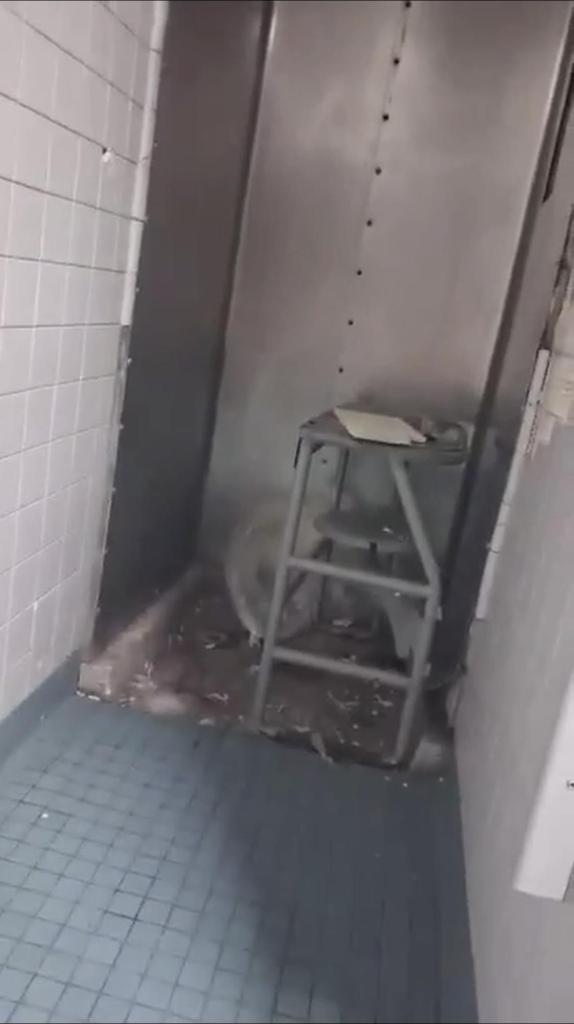
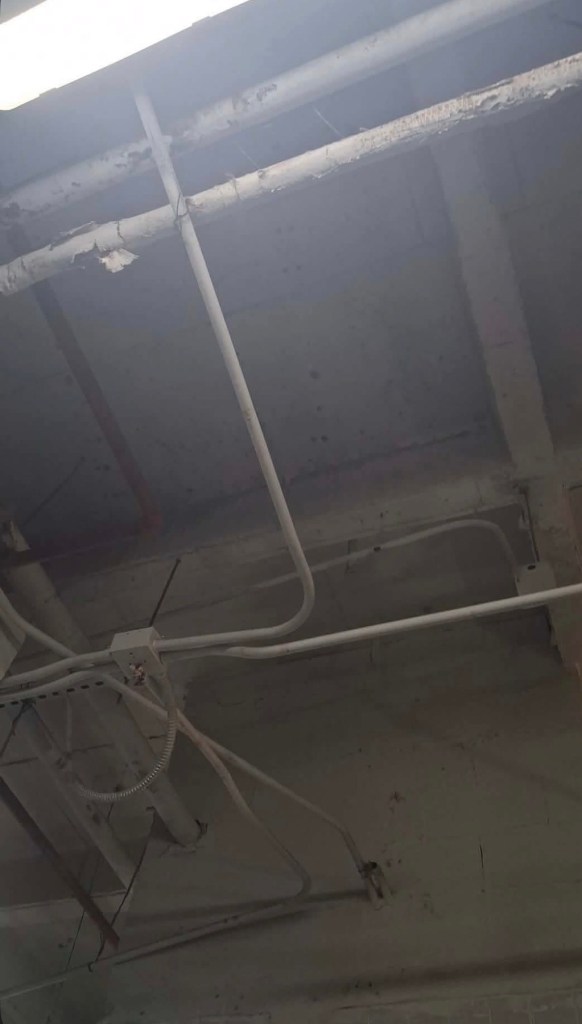
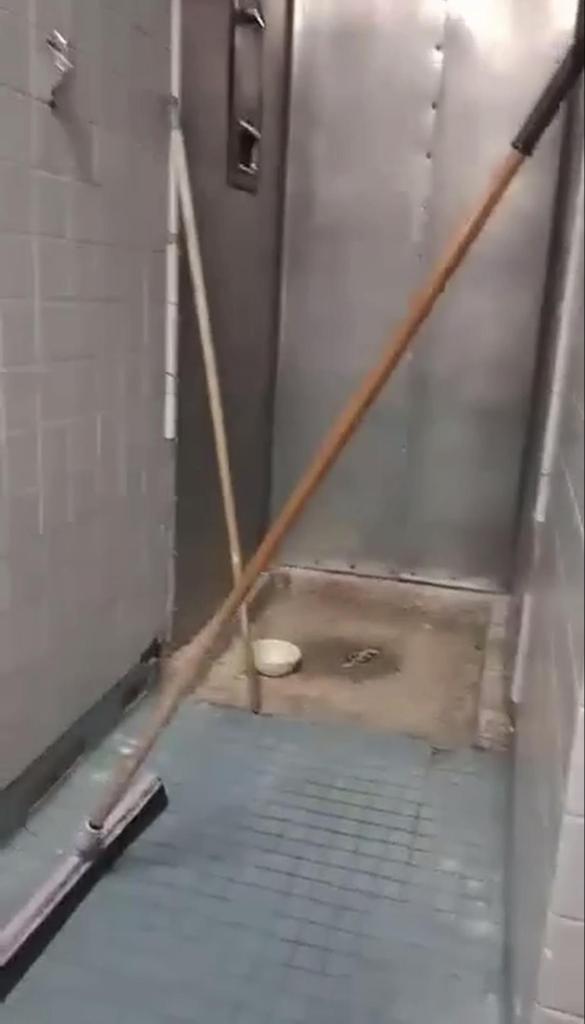
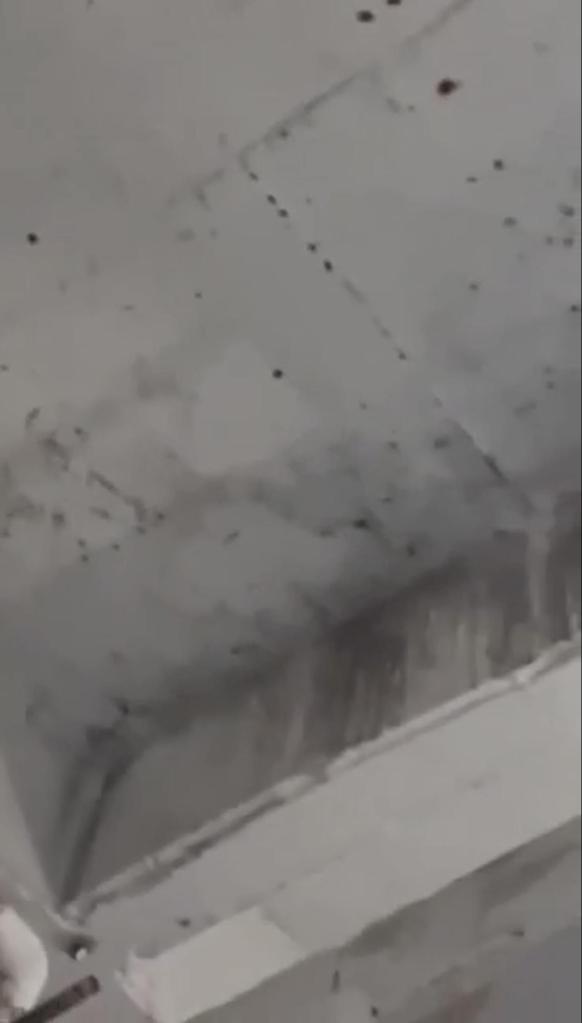
Loved Ones Coalition received extensive photographic and video documentation depicting severely deteriorated conditions within FCI Beaumont Low.
The documentation shows shower and sanitation areas with substantial deterioration, damaged and missing wall surfaces, extensive dark staining and apparent growth across walls and ceilings, deteriorated flooring and fixtures, moisture-related damage, exposed or unfinished structural surfaces, and areas that appear extremely difficult to adequately clean or sanitize in their present condition.
Loved Ones Coalition has additionally received reports of extensive mold within the institution, including what incarcerated individuals describe as thick or “furry” black mold, as well as reports of breathing and respiratory problems among individuals living in these conditions.
The organization cannot determine the biological composition of visible growth from photographs or video alone and therefore does not represent that every darkened area depicted has been laboratory-confirmed as mold. However, the extent of the visible deterioration, staining, apparent moisture intrusion, and reported mold growth warrants immediate environmental inspection regardless of the specific species or composition involved.
FCI Beaumont Low remains publicly listed by the Bureau as a low-security federal correctional institution within FCC Beaumont.
For Loved Ones Coalition, the immediate question is straightforward:
How much longer are incarcerated individuals expected to live in these conditions?
Photographically Documented Conditions
The documentation reviewed by Loved Ones Coalition depicts conditions that extend beyond ordinary wear and tear.
Images and video show:
- Extensive dark staining and apparent growth on walls, ceilings, and other surfaces;
- Significant moisture staining and deterioration;
- Damaged, missing, or deteriorated wall and tile surfaces;
- Areas where underlying wall material appears exposed;
- Deteriorated shower and sanitation spaces;
- Damaged or degraded flooring;
- Peeling and deteriorating painted surfaces;
- Visible deterioration around ceilings, pipes, structural surfaces, and fixtures; and
- Sanitation areas whose physical condition appears to impede effective routine cleaning and maintenance.
These conditions are visually documented, not based solely upon testimonial reporting.
The extent of deterioration also raises questions regarding whether routine cleaning can meaningfully remediate these spaces without addressing the underlying structural and moisture problems.
Painting over staining, repeatedly cleaning affected surfaces, or treating isolated areas will not resolve an underlying water-intrusion, ventilation, plumbing, or structural problem if one exists.
Reported Mold and Respiratory Concerns
Loved Ones Coalition has received reports describing extensive mold growth within FCI Beaumont Low, including reports of thick black growth in areas where incarcerated individuals shower and conduct daily activities.
The organization has also received concerning reports of individuals experiencing breathing or respiratory difficulties while housed at the institution.
Loved Ones Coalition cannot medically attribute any individual’s symptoms to environmental exposure based upon these submissions alone.
However, the combination of documented environmental deterioration, reported extensive mold growth, apparent moisture damage, and reports of respiratory symptoms warrants environmental and medical review.
Individuals should not have to develop significant respiratory symptoms before environmental conditions are investigated.
Closure or Deactivation Does Not Resolve Present Conditions
Loved Ones Coalition understands that FCI Beaumont Low has been identified for closure or deactivation.
If that remains the Bureau’s plan, the existence of a future closure does not answer the immediate conditions-of-confinement concern.
People are living there now.
A facility approaching closure still has to provide sanitary and reasonably safe living conditions until the final incarcerated individual is transferred.
If substantial capital repairs are considered impractical because the institution is scheduled to close, then the Bureau should explain what interim remediation is occurring and—more importantly—when the incarcerated population will actually be transferred from the affected environment.
An indefinite period between announcing a closure and completing it cannot become justification for allowing physical conditions to deteriorate around the people who remain housed there.
2. Key Concern Table
| Concern Area | Description | Potential Concern Area |
| Environmental Conditions | Photographic/video documentation depicts substantial deterioration throughout sanitation and shower areas. | Facilities / Environmental Health |
| Reported Mold | Individuals report extensive dark and “furry” mold growth. | Environmental Health |
| Moisture Damage | Images depict significant staining and deterioration consistent with persistent moisture problems. | Facilities Management |
| Respiratory Symptoms | Loved Ones Coalition has received reports of breathing and respiratory difficulties. | Health Services / Environmental Health |
| Structural Deterioration | Damaged wall surfaces, missing material, deteriorated finishes, and exposed underlying surfaces are visible. | Facilities Management |
| Showers/Sanitation | Shower areas depicted are significantly deteriorated and raise questions regarding effective sanitation. | Environmental Health |
| Closure Transition | Individuals remain housed in reportedly deteriorating conditions while the facility is expected to close/deactivate. | Central Office / South Central Region |
3. Photographic and Video Documentation
The visual documentation provided to Loved Ones Coalition depicts substantial deterioration within areas used by incarcerated individuals for basic hygiene.
This documentation is particularly important because the condition of these spaces is directly observable.
Loved Ones Coalition is not asking the Bureau to accept an incarcerated individual’s characterization of the physical condition of these areas. The Bureau can inspect the areas shown and determine their condition directly.
The visible conditions warrant inspection for moisture intrusion, ventilation deficiencies, plumbing problems, microbial growth, structural deterioration, and sanitation deficiencies.
Where mold or other microbial growth is suspected, appropriate environmental assessment should determine the nature and extent of contamination and whether remediation can safely occur while the affected areas remain occupied.
4. Systemic Concerns
The circumstances at FCI Beaumont Low raise a different question from facilities where long-term repair is the primary objective.
If the institution is being closed, what is the timeline?
If incarcerated individuals are expected to remain at Beaumont Low for weeks or months, what remediation is being undertaken during that period?
If meaningful remediation is not planned because the institution is approaching closure, why are individuals continuing to be housed in visibly deteriorated areas?
And if the Bureau has determined that the physical condition of the facility contributes to the justification for closure, how is continued occupancy being evaluated against those same conditions?
The people housed at FCI Beaumont Low cannot be placed in an administrative gap where the institution is considered too deteriorated to justify long-term investment but remains acceptable for human occupancy for an undefined period.
The Bureau has to address both sides of that equation: the long-term disposition of the institution and the immediate conditions experienced by the people still living there.
5. Questions for Clarification
- What is the current operational status and anticipated timeline for closure or deactivation of FCI Beaumont Low?
- How many incarcerated individuals remain housed at FCI Beaumont Low, and what is the anticipated timeline for their transfer?
- Has an environmental assessment recently been conducted in the areas depicted in the documentation received by Loved Ones Coalition?
- Has testing been performed for mold or other microbial growth, and if so, what were the findings?
- Has the Bureau identified the source or sources of the extensive moisture staining and deterioration visible within these areas?
- What remediation is currently underway while incarcerated individuals remain housed at the institution?
- Have any shower, bathroom, housing, or other affected areas been taken out of service because of environmental or structural conditions?
- Has Health Services identified an increase in complaints involving respiratory symptoms, breathing difficulties, asthma exacerbation, or other potentially relevant symptoms among individuals housed at FCI Beaumont Low?
- Are individuals reporting respiratory symptoms being medically evaluated for potential environmental exposure?
- If substantial repairs are not planned because FCI Beaumont Low is expected to close, what interim measures are being taken to ensure acceptable living conditions until transfers are completed?
- How much longer does the Bureau anticipate incarcerated individuals will be required to live in the conditions presently documented at FCI Beaumont Low?
SOUTHEAST REGION
FCI YAZOO CITY LOW
Food Service and Nutritional Adequacy Concerns, Reported Chow Hall Closure, Grab-and-Go Meals, and Recurring Food-Service Deficiencies



1. Summary of Concerns
Loved Ones Coalition continues to receive concerning reporting and photographic documentation regarding food service at FCI Yazoo City Low.
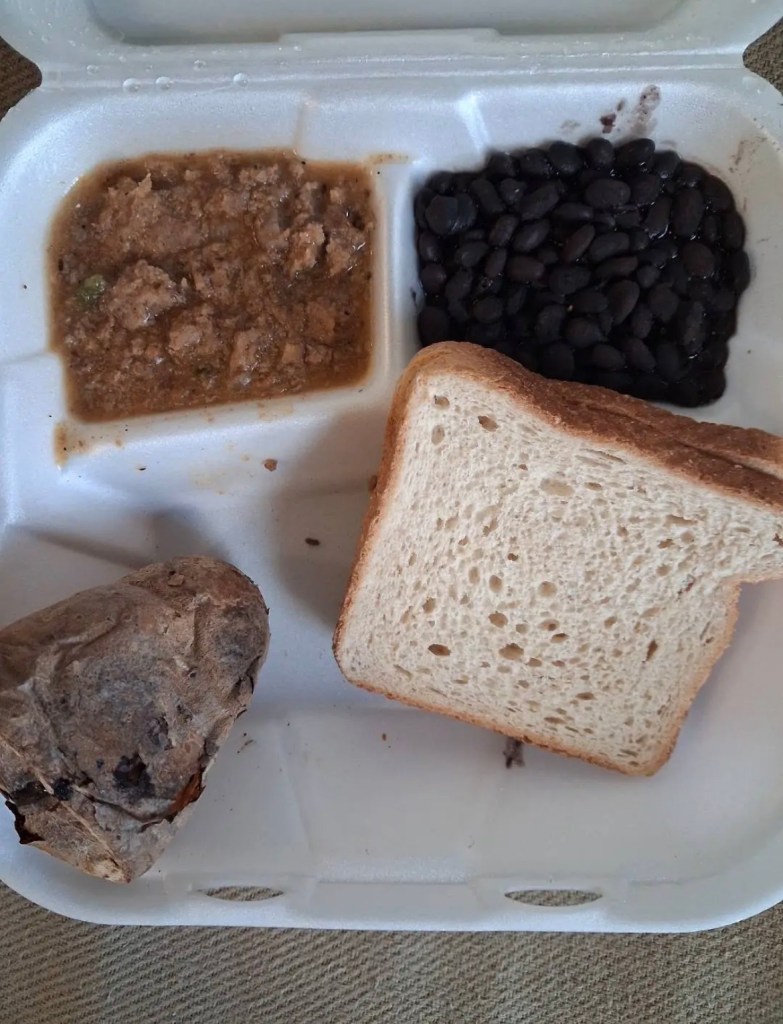
The organization received photographs reportedly depicting grab-and-go meals currently being provided to incarcerated individuals following the reported closure of the institution’s chow hall.
The photographed meals appear extremely limited and raise questions regarding portion size, nutritional adequacy, food quality, menu compliance, and whether individuals are receiving sufficient calories and nutrients while normal food-service operations are disrupted.
One photographed meal appears to consist primarily of bread, beans, a potato, and a small portion of another food item. Another photographed meal appears to contain bread, two boiled eggs, two small portions of rice, a potato, and a small piece of fruit.
Loved Ones Coalition cannot determine caloric content, nutritional composition, menu specifications, or serving weights from photographs alone. The photographs nevertheless warrant review against the Bureau’s approved menu and nutritional requirements.
This concern is particularly significant because FCI Yazoo City Low has appeared repeatedly in Loved Ones Coalition oversight reporting, including previous food-service concerns. Earlier reporting received by the organization included allegations involving expired food and rodent contamination within food-service areas.
The current documentation therefore raises the question of whether previously reported food-service deficiencies remain unresolved or whether new operational problems have developed.
Reported Regional Inspection and Chow Hall Closure
Loved Ones Coalition received reporting alleging that FCI Yazoo City Low underwent a surprise regional inspection and that deficiencies identified during that inspection resulted in the chow hall being shut down.
Additional reporting alleges subsequent leadership or personnel changes within the complex.
Loved Ones Coalition has not independently verified those assertions and is requesting confirmation directly from the Bureau.
If the chow hall was closed following a Regional Office inspection, the Bureau should identify the deficiencies requiring closure, the corrective actions ordered, and the anticipated timeframe for restoration of normal food-service operations.
More importantly, the institution remains responsible for providing nutritionally adequate meals during whatever period the chow hall remains unavailable.
A food-service area being temporarily closed for remediation may itself represent appropriate corrective action. However, correcting one health or sanitation problem cannot result in another problem in which incarcerated individuals receive inadequate substitute meals for an extended period.
Photographically Documented Grab-and-Go Meals
Loved Ones Coalition received multiple photographs reportedly showing meals currently distributed at FCI Yazoo City Low.
The organization is intentionally cautious about drawing nutritional conclusions from photographs alone. Serving weights, ingredients, caloric values, sodium, protein, and other nutritional information cannot be reliably calculated visually.
What can be documented is what appears in the photographs.
The meals depicted contain relatively small and limited combinations of foods, including bread, beans, potatoes, eggs, rice, fruit, and another prepared food item.
The presentation and apparent portions raise reasonable questions regarding whether the temporary meals correspond with approved BOP menus and whether the combined meals provided throughout the day satisfy applicable nutritional requirements.
The Bureau can answer those questions objectively by comparing the meals actually distributed with production sheets, approved menus, serving requirements, and nutritional calculations.
Recurring Food-Service Concerns
The current reporting is particularly concerning because food service at Yazoo City Low has been raised previously.
Loved Ones Coalition previously reported allegations involving expired food and rodents accessing or contaminating food-service areas.
More recent LOC reporting has continued to identify Yazoo City Low as an institution presenting recurring operational and accountability concerns.
The organization therefore requests that the current situation not be evaluated solely as a temporary inconvenience associated with a chow-hall closure.
If Regional Office intervention was required because food-service conditions had deteriorated sufficiently to warrant shutting down normal operations, that would raise a larger question regarding how those conditions developed, how long they existed, whether previous complaints identified them, and what institutional oversight failed before outside intervention became necessary.
2. Key Concern Table
| Concern Area | Description | Potential Concern Area |
| Grab-and-Go Meals | Photographs reportedly depict substitute meals currently being distributed during disruption of normal food service. | Food Service |
| Portion Size | Photographed portions appear limited and warrant comparison with approved serving requirements. | Food Service / Nutrition |
| Nutritional Adequacy | Available photographs raise questions regarding calories, protein, nutrients, and overall menu compliance. | Food Service / Health Services |
| Chow Hall Closure | Reporting alleges normal chow-hall operations were suspended following Regional intervention. | Food Service / Regional Oversight |
| Inspection | Reporting alleges a surprise regional inspection identified deficiencies. | Southeast Regional Office |
| Food Quality | Current photographs raise concerns regarding quality and presentation of substitute meals. | Food Service |
| Recurring Concerns | LOC has previously reported food-service problems at Yazoo City Low. | Institutional Accountability |
| Corrective Action | Duration and scope of remediation and restoration of normal meal service remain unclear. | Facilities / Food Service |
3. Photographic Documentation
The photographs received by Loved Ones Coalition provide an opportunity for the Bureau to address this concern objectively.
Rather than debating whether a meal “looks adequate,” the institution should be able to identify exactly what was served, the prescribed serving size, caloric and nutritional value, and the approved menu applicable to that meal.
Food-production records should likewise establish whether the meals depicted accurately reflect what Food Service intended to distribute.
If the photographs accurately represent current grab-and-go meals, the Bureau should confirm whether those meals comply with applicable nutritional and portion requirements.
4. Systemic Concerns
FCI Yazoo City Low continues to appear in oversight reporting across multiple reporting periods.
That history matters.
Food service is one of the most basic institutional responsibilities. Incarcerated individuals cannot leave the facility, purchase meals elsewhere, or choose another food provider when institutional food service becomes inadequate.
If the chow hall was closed because Regional Office personnel identified unacceptable conditions, intervention should be acknowledged as a corrective step.
But the next question is immediate:
What are people being fed while the problem is being fixed?
Temporary operations cannot mean temporarily abandoning ordinary nutritional requirements.
There is also a broader accountability question. If a surprise inspection did identify deficiencies significant enough to shut down food-service operations, the Bureau should determine why those deficiencies were not identified and corrected through routine institutional inspections and supervisory oversight.
Given LOC’s previous reporting concerning food service at this institution, the Bureau should also determine whether prior complaints were reviewed and whether the conditions prompting the reported intervention were related to previously identified concerns.
5. Questions for Clarification
- Did Southeast Regional Office personnel conduct an inspection of FCI Yazoo City Low on or around August 25, 2026?
- If so, was the inspection scheduled or unannounced?
- Did FCI Yazoo City Low fail or otherwise receive an unsatisfactory result during that inspection?
- Was the chow hall or another portion of Food Service subsequently closed or restricted as a result of deficiencies identified during the inspection?
- If so, what deficiencies were identified?
- What corrective actions were ordered, and when does the Bureau anticipate normal chow-hall operations will resume?
- Are the grab-and-go meals depicted in the documentation received by Loved Ones Coalition representative of meals currently being distributed?
- What is the caloric and nutritional content of the current temporary meal plan?
- Do the substitute meals comply with the same applicable nutritional standards and serving requirements governing normal institutional meals?
- Will the institution provide or review current approved menus, production sheets, serving quantities, and nutritional calculations for the grab-and-go meals?
- How many meals per day are currently being provided, and have meal schedules or portions changed because of the disruption?
- Were any sanitation, pest-control, food-storage, food-temperature, equipment, staffing, or structural deficiencies identified during the reported inspection?
- Has Southeast Regional leadership reviewed previous complaints and reports concerning food-service conditions at FCI Yazoo City Low to determine whether the current deficiencies were previously identified?
- Were leadership or Food Service personnel reassigned, returned to previous positions, or otherwise changed following the reported inspection, and if so, were those changes related to deficiencies identified during Regional review?