LOVED ONES COALITION SPECIAL REPORT – June 15, 2026
FCI Texarkana Family Reunification & Engagement Weekend
The Ripple Effect of Hope
For more than a year, Loved Ones Coalition has documented what happens when systems fail the people they are meant to serve.
We’ve reported on delayed medical care, communication breakdowns, overcrowding, retaliation concerns, staffing shortages, canceled visits, and families left desperately searching for answers. We’ve elevated concerns, demanded accountability, and asked difficult questions of a system responsible not only for confinement, but for rehabilitation.
Families trust us because we tell the truth.
Sometimes that truth is uncomfortable.
Sometimes it is heartbreaking.
And sometimes, if we are willing to acknowledge it, that truth surprises us.
This is one of those moments.
In February 2026, Loved Ones Coalition received an invitation unlike any we had ever received before.
FCI Texarkana wanted us there.
Not after a crisis.
Not in response to a report.
Not behind closed doors.
We were invited to participate in the institution’s Family Reunification and Engagement Weekend.
If we’re being honest, our first reaction wasn’t excitement.
It was skepticism.
We expected a dog and pony show.
We wondered if we would spend thousands of dollars traveling across the country only to be turned away at the gate. We questioned why a federal institution would invite an organization known for documenting failures within the Bureau of Prisons. We anticipated carefully curated moments designed to impress critics.
Because if FCI Texarkana wanted a dog and pony show, they invited the wrong people.
Loved Ones Coalition walked through those gates as activists, advocates, and prison critics.
Most importantly, we walked in as people who knew prison.
Among our coalition were formerly incarcerated men who had collectively spent decades inside correctional institutions.
Men who had walked prison yards.
Men who knew what hopelessness looked like.
Men who knew what performative leadership sounded like.
Men who knew what it felt like to be reduced to a register number.
Men who had experienced institutions at their best and at their worst.
These weren’t outsiders speculating about prison life.
These were men who had survived it.
Now they had returned—not as inmates, but as advocates, mentors, husbands, fathers, board members, and living proof that incarceration does not have to define the rest of a person’s life.
I was the exception.
As the founder of Loved Ones Coalition, I entered this work through the experience of loving someone through incarceration.
For nine years, I lived prison from the other side of the fence.
I stood in visiting room lines.
I experienced harassment during visits.
I was turned away at institutions after traveling hundreds—and sometimes thousands—of miles.
I spent thousands of dollars flying to facilities only for them to go on lockdown.
I watched family days get canceled.
I learned firsthand what it feels like to build your life around a visit that never happens.
To explain disappointment to the people waiting beside you.
To carry hope and heartbreak in equal measure.
The men standing beside me entered this work because they had lived incarceration themselves.
I entered it because I loved someone through it.
Together, we represented both sides of prison’s impact.
The people who once lived behind the walls.
And the people who waited for them outside.
That history shaped the way we walked into FCI Texarkana.
We did not arrive with blind optimism.
We arrived braced for impact.
We had traveled across the country.
We had invested our own time, money, and energy.
And despite the invitation, there was a very real part of each of us that believed something would go wrong.
That we would be turned away.
That plans would change.
That lockdowns would happen.
That someone would drop the ball.
That this would become another story of disappointment.
Because for many justice-impacted people and families, disappointment isn’t the exception.
It’s the expectation.
Being invited into the institution did not change who we were.
The invitation was appreciated.
But it did not buy trust.
If anything, it heightened our awareness.
Because if we got in, we were going to look.
And we did.
We looked at everything.
We noticed the smell when we walked through the gates—or, in this case, the absence of one.
We noticed the cleanliness of the institution.
We noticed the flowers.
We noticed whether there were signs of neglect.
We noticed how staff spoke to incarcerated individuals.
We noticed whether leadership was visible.
We noticed whether correctional officers knew the men in their care.
We noticed whether people knew one another’s names.
We noticed whether dignity was preserved.
We listened to the concerns raised by the men.
We paid attention to what wasn’t said as much as what was.
We watched.
We listened.
We observed.
That is who we are.
Loved Ones Coalition did not walk into FCI Texarkana looking for reasons to praise the institution.
We walked in prepared to tell the truth.
Had we witnessed neglect, indifference, hostility, performative gestures, or leadership disconnected from the realities of prison life, we would have documented that too.
That has been our commitment from the beginning.
The invitation did not change our standards.
The invitation simply gave us the opportunity to see for ourselves.
And what we witnessed challenged many of our assumptions.
Not because we stopped paying attention.
But because we never stopped.
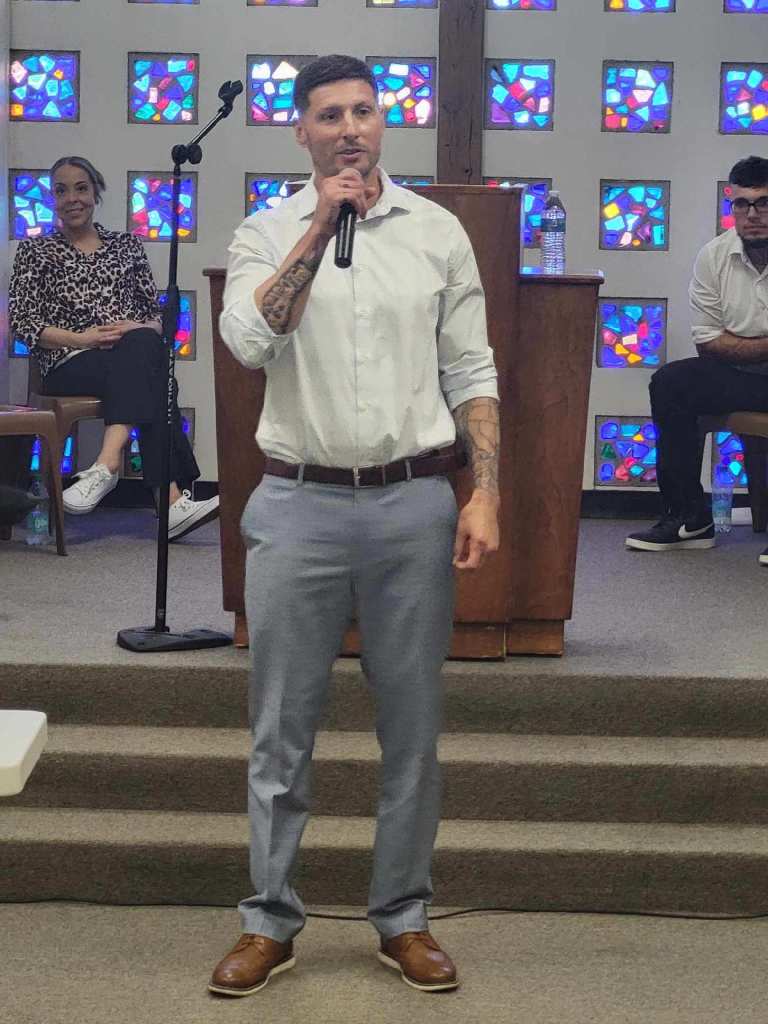
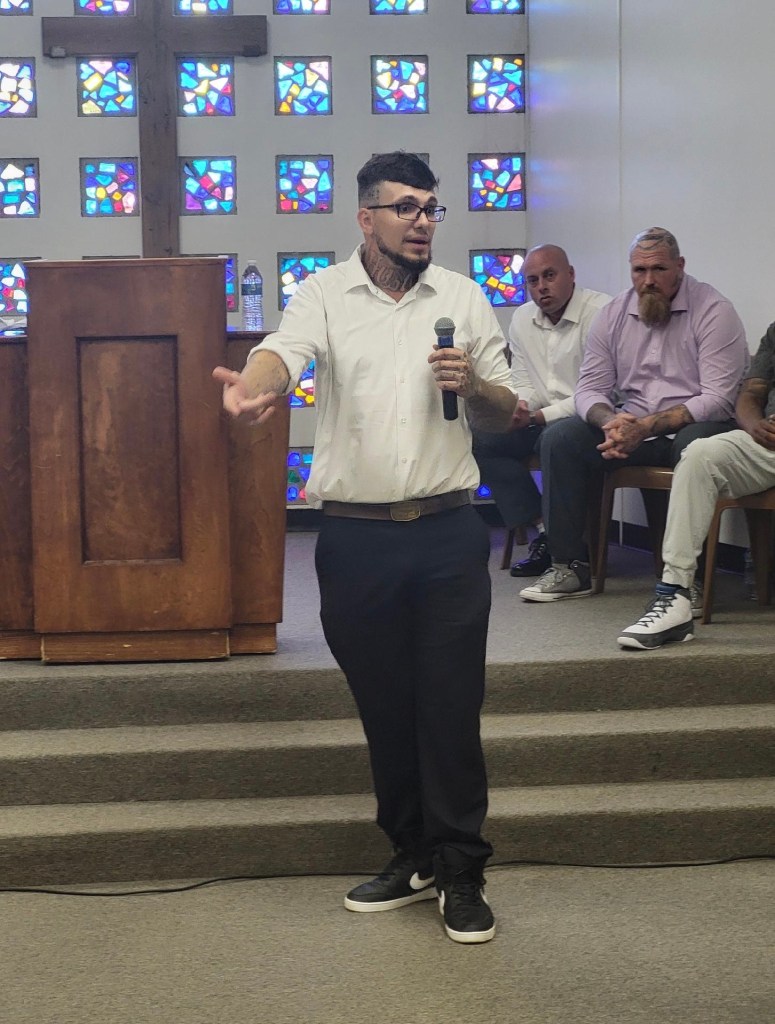
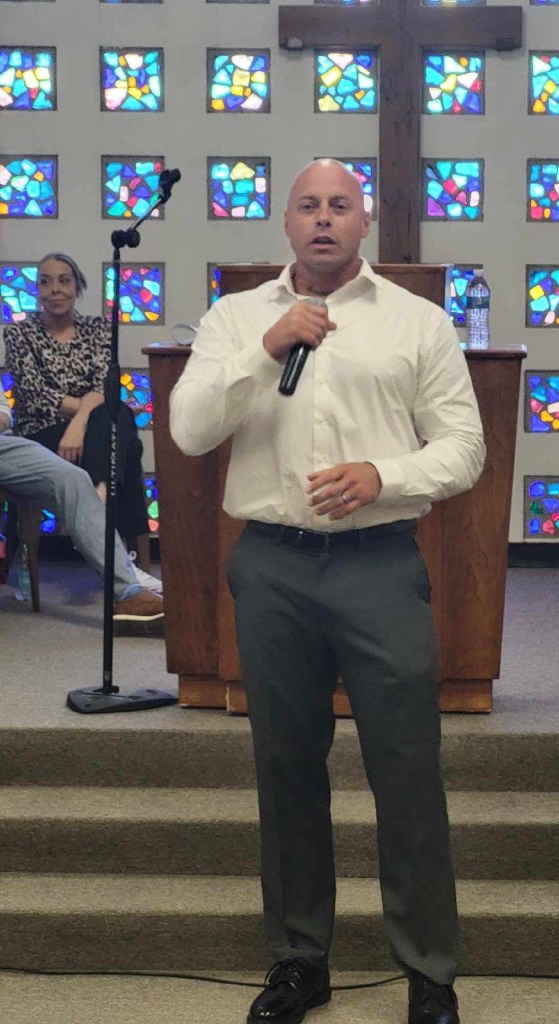
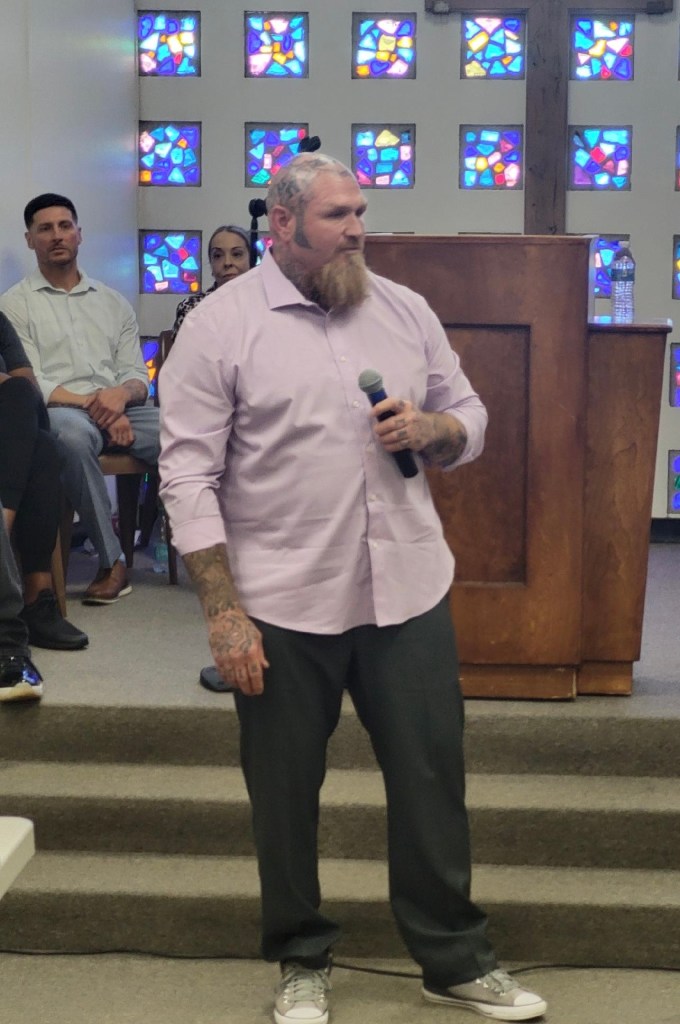
Over the course of this weekend, formerly incarcerated members of Loved Ones Coalition stood before the General Population and shared testimonies of accountability, recovery, redemption, and life after release.
Men who had once walked prison yards themselves returned to a federal institution not as inmates, but as advocates, mentors, fathers, husbands, board members, and examples of successful reentry.
The same system that had once confined them had now invited them back to help prepare others for the day they would return home.
For the men listening, it wasn’t theory.
It wasn’t motivational speaking from people who had never lived it.
It was proof.
Proof that prison did not have to be the end of someone’s story.
We would witness children reunited with their fathers.
We would sit with incarcerated men as they spoke honestly about their fears, frustrations, and hopes for the future.
We would observe correctional staff and leadership interacting with incarcerated individuals and families in ways many of us had never personally experienced.
And perhaps most unexpectedly, we would witness what becomes possible when people stop viewing one another solely as opponents and begin remembering the mission.
This report is not about perfection.
It is not an endorsement of every policy, every institution, or every decision made within the Federal Bureau of Prisons.
Loved Ones Coalition will continue doing what we have always done: elevating concerns, demanding accountability, and standing beside those impacted by incarceration.
But telling the truth means documenting hope, too.
The truth is that we witnessed something extraordinary at FCI Texarkana.
We witnessed leadership that showed up.
We witnessed staff who had not lost sight of the mission.
We witnessed incarcerated fathers fighting for their families.
We witnessed formerly incarcerated men return to prison not as inmates, but as examples of what accountability, redemption, and second chances can look like.
Most of all, we witnessed people pulling in the same direction.
The pages that follow tell the story of a weekend that challenged our assumptions, softened old wounds, and reminded us that even within systems built around punishment, humanity still finds a way to survive.
What we witnessed in Texarkana did not erase the work that remains.
It did not eliminate the concerns we continue to hear from families across the country.
It did not fix every policy, every staffing shortage, every delayed medical appointment, or every barrier to rehabilitation that still deserves our attention.
But it reminded us why this work matters.
Because if people are capable of creating moments like these inside imperfect systems, then perhaps those systems are capable of becoming better, too.
And it left us with one important question:
What if more institutions were willing to try?
Walking Through the Gates
By the time we arrived at FCI Texarkana, we had already prepared ourselves for disappointment.
It wasn’t pessimism.
It was experience.
For the formerly incarcerated members of Loved Ones Coalition, returning to a federal prison for the first time since release carried understandable anxiety. Prison has a way of staying with you. Certain sounds, routines, and memories can pull you back to places you’ve worked hard to move beyond.
For me, after nearly a decade of loving someone through incarceration, I knew the disappointment that often accompanied prison visits. I knew what it felt like to spend money you didn’t have to make a visit happen, only to be turned away. I knew the frustration of canceled family days, lockdowns, confusion, and feeling like the people on the outside were often the last to know when plans changed.
We had all learned the same lesson in different ways:
Prepare for the worst.
So as we approached the institution, we were waiting for the other shoe to drop.
We expected tension.
We expected side glances.
We expected someone to make it clear that prison critics, reform advocates, and formerly incarcerated individuals weren’t entirely welcome.
Instead, we were processed professionally and respectfully.
Staff greeted us.
People introduced themselves.
Questions were answered.
No one made us feel like an inconvenience.
The atmosphere was structured, as it should be in a correctional environment, but it was not hostile.
As we moved further into the institution, we continued doing what Loved Ones Coalition does best.
We looked.
We paid attention.
We noticed the details.
FCI Texarkana was originally built in the 1940s, and many of us expected to find the signs of aging and neglect that have become all too familiar throughout the federal system.
Instead, we found an institution that appeared clean and cared for.
There were flowers.
The grounds were maintained.
The spaces we entered reflected effort and pride.
As justice-impacted people, we were quietly taking inventory of everything around us.
How did staff speak to incarcerated individuals?
How did incarcerated individuals respond?
Did people know one another’s names?
Was leadership visible?
Did people seem afraid to speak?
Were people treated with dignity?
Were concerns acknowledged?
Was there evidence of pride in the institution?
These weren’t observations made by people unfamiliar with prison culture.
These were observations made by individuals who had lived it from nearly every angle imaginable.
And slowly, something unexpected began to happen.
The tension started to ease.
The shoulders that had entered the institution raised and guarded began to relax.
Conversations became easier.
Curiosity replaced suspicion.
None of us abandoned our skepticism.
None of us stopped paying attention.
If anything, we became more observant.
We kept waiting for the moment that would confirm everything we thought we knew.
The dismissive comment.
The unnecessary hostility.
The reminder that prisons cannot surprise us anymore.
But as the morning unfolded, another realization quietly began to settle in:
Maybe the story we had prepared ourselves to write wasn’t the story unfolding in front of us.
And we had no idea that what awaited us next would challenge us even further.
Because just beyond those gates, families were gathering.
Children were laughing.
Cotton candy machines were spinning.
And one of the happiest visiting rooms any of us had ever seen was waiting on the other side of the door.
Family Day – The Happiest Visiting Room We Had Ever Seen
Nothing could have prepared us for what we walked into next.
For many of us, visiting rooms have always been complicated places.
They are filled with anticipation and anxiety.
They hold reunions and goodbyes.
Tears and tension.
For families, visits often require weeks of planning, hundreds of dollars in travel expenses, hotel stays, childcare arrangements, time off work, and emotional preparation. Even after all of that, there is always the possibility that something will go wrong.
A lockdown.
A canceled visit.
A miscommunication.
A disappointment that families have learned to brace themselves for.
For the formerly incarcerated members of our coalition, visiting rooms carried their own memories.
Some remembered watching families leave while they remained behind.
Others remembered the guilt of seeing loved ones carry the burden of incarceration alongside them.
Visiting rooms were rarely associated with joy.
But this one was.
The moment we stepped into the Family Day event, we realized this was unlike anything any of us had experienced before.
Children were laughing.
Parents were smiling.
Families were gathered together, fully present with one another.
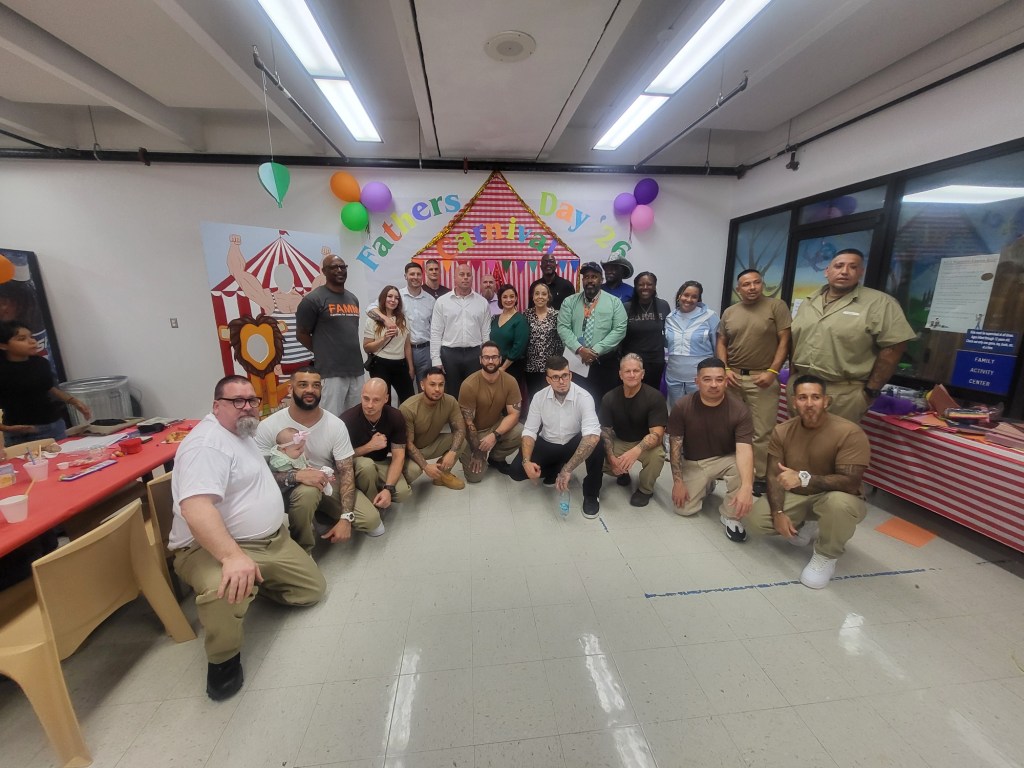
There were games.
Arts and crafts.
Snacks.
Cotton candy machines spinning in the background.
Decorations thoughtfully placed throughout the space.
A photo area designed specifically for families to create memories together.
It felt less like an obligation and more like a celebration.
The atmosphere was unmistakable.
People were happy.
Not pretending.
Not performing.
Genuinely happy.
That may not sound extraordinary to someone outside of this experience.
But for those of us who have spent years navigating incarceration from every angle imaginable, it was impossible to ignore.
The joy in the room stood in direct contrast to what so many families have come to expect.
Instead of children counting down the minutes until a visit ended, they were running from game to game.
Instead of parents carrying the weight of another difficult goodbye, they were laughing alongside their children.
Instead of merely enduring another visit, families were making memories.
What struck us just as deeply was the pride we witnessed from the incarcerated men themselves.
Many had helped prepare for this day.
They eagerly pointed out decorations they had created.
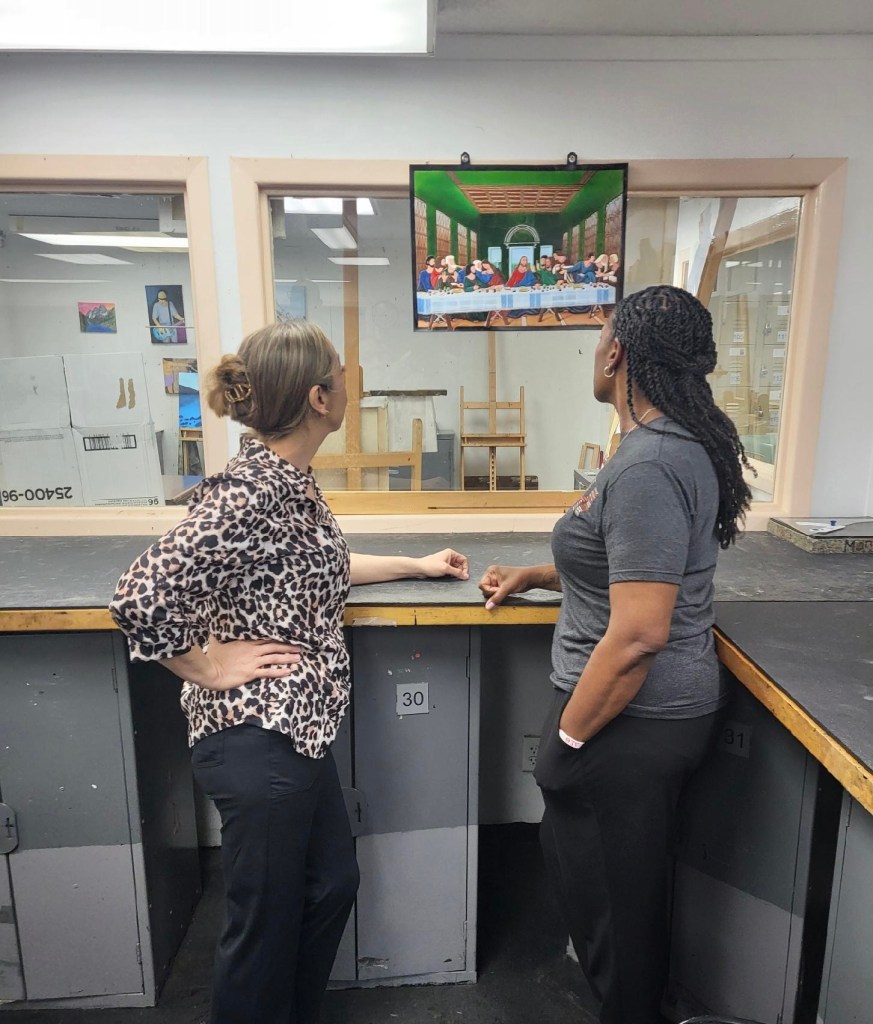
They showed us displays they had painted.
They proudly introduced us to the projects they had contributed to.
They wanted us to see what they had accomplished.
More importantly, they wanted their families to see it.
There was dignity in that pride.
There was ownership.
There was humanity.
Again and again, the men shared the same message:
Days like this matter.
They talked about how events like these gave them something to look forward to.
How they helped them remember who they were beyond their register numbers.
How moments like these strengthened their commitment to the people waiting for them at home.
Several told us they had been incarcerated for years—some for decades—and had never experienced anything like this before.
They understood exactly how rare it was.
And they wanted us to understand it too.
As advocates, we spend much of our time documenting pain.
Families call us during some of the worst moments of their lives.
We hear fear.
Frustration.
Grief.
Anger.
Loss.
But standing in that visiting room, surrounded by laughter and connection, we were reminded of something equally important:
Joy matters too.
Children deserve memories that aren’t defined solely by metal detectors and goodbye hugs.
Parents deserve opportunities to simply be parents.
Families deserve moments that remind them why they continue showing up.
Connection is not a luxury.
It is a lifeline.
For many of the men we spoke with, this wasn’t just another event on the institutional calendar.
It was hope.
Hope they would carry back to their units.
Hope they would remember during difficult days.
Hope that reminded them what they still had to fight for.
And as we looked around that room filled with cotton candy, crafts, games, and families who had chosen to keep showing up despite everything incarceration had asked of them, we realized we were witnessing something far more significant than a successful Family Day.
We were witnessing the power of preserving family.
And somehow, the most emotional part of the weekend was still ahead of us.
Returning With a Different Message
Following Family Day, we were escorted to the chapel to address the General Population.
For Loved Ones Coalition, this was one of the most meaningful parts of the entire weekend.
This wasn’t a photo opportunity.
This wasn’t a quick handshake and a speech before heading home.
We spent hours with the men.
We spoke.
They spoke.
We listened.
The conversations were honest.
As we walked into the chapel, we understood the weight of the moment.
Every formerly incarcerated member of Loved Ones Coalition was stepping back into a federal institution for the first time since their release.
The last time they had entered a prison, they had done so in handcuffs.
They had worn the khakis.
They had stood for count.
They had walked the yards.
They knew prison culture.
They knew disappointment.
They knew survival.
Returning wasn’t simple.
There was anxiety.
There was uncertainty.
There were questions none of us had fully voiced out loud.
Would old memories resurface?
Would they feel triggered?
Would prison still feel the same?
Would walking back through those gates undo some of the healing they had fought so hard to achieve?
Instead, they found themselves standing at the front of the room as advocates, mentors, board members, fathers, husbands, business owners, and examples of successful reentry.
And the men noticed.
Because what they saw wasn’t theory.
It wasn’t someone who had read about prison.
It wasn’t someone delivering a motivational speech from a place of privilege.
It was proof.
Proof that prison did not have to be the end of someone’s story.
Proof that people could come home and rebuild.
Proof that accountability and redemption could exist in the same sentence.
Members of our coalition spoke openly about addiction.
Recovery.
The consequences of poor decisions.
The challenges of reentry.
The loneliness that can accompany release.
The struggle to rebuild trust.
The reality that changing your life requires more than simply walking out of prison gates.
It requires work.
Discipline.
Accountability.
Community.
They spoke honestly about the fact that success after incarceration isn’t easy.
But they also spoke about the fact that it is possible.
The men listened.
Then they began asking questions.
Some wanted practical advice about preparing for release.
Others wanted to know how to reconnect with their families.
Some asked how they could begin creating purpose out of their own experiences.
And many wanted to know more about Loved Ones Coalition itself.
Again and again, we heard some version of the same question:
“How can I do what you do?”
“How can I become involved?”
“How can I help people when I get home?”
“How can I be a speaker?”
“How can I make sure none of this was for nothing?”
Out of all the concerns they could have raised, that question stayed with us.
These men had an opportunity to speak to advocates who regularly elevate issues within the Bureau of Prisons.
And while concerns about commissary, medical delays, programming waitlists, and institutional frustrations were certainly discussed, many of them focused on something else entirely:
Purpose.
They wanted to know how to transform pain into service.
How to take the worst chapters of their lives and use them to help someone else avoid the same path.
How to hold themselves accountable.
How to build a life they could be proud of.
How to come home and stay home.
For an organization built by people directly impacted by incarceration, it was impossible not to recognize the significance of that moment.
Loved Ones Coalition exists because people who have lived through incarceration decided their experiences had value.
Because people impacted by the system decided that surviving it wasn’t enough.
Because formerly incarcerated people chose to return to the very places that once confined them and say:
“You can make it out of here.”
“You can do better.”
“You can come home.”
“And you can stay home.”
Sitting in that chapel, we realized we were watching that same spark ignite in others.
Hope had entered the room.
Not the kind of hope built on promises.
Not false hope.
Not the fantasy that prison is easy or that reentry happens without struggle.
But hope rooted in evidence.
Evidence standing right in front of them.
Men who had walked prison yards and returned years later with families, businesses, recovery, purpose, and a commitment to helping others.
People who had every reason to give up and chose not to.
The conversations weren’t always easy.
There were honest discussions about concerns that still existed.
Medical care.
Programming delays.
Commissary frustrations.
The everyday realities of incarceration.
No one pretended those things didn’t matter.
No one suggested the system was perfect.
But underneath those conversations was something stronger:
A belief that life after prison was possible.
A belief that accountability could coexist with dignity.
A belief that redemption wasn’t reserved for other people.
As we concluded our conversations with the General Population, we left the institution carrying more than we had brought with us.
The men had trusted us with their questions.
Their concerns.
Their hopes.
Their plans for the future.
We had arrived believing we were there to encourage them.
Instead, many of them encouraged us.
They reminded us why we answer late-night messages from families.
Why we continue documenting both failures and victories.
Why we believe people deserve the opportunity to become more than the worst thing they have ever done.
As we made our way out of the institution that afternoon, we thought we had already witnessed the heart of the weekend.
Family Day had challenged our expectations.
The conversations with the General Population had renewed our sense of purpose.
We returned home grateful, emotionally exhausted, and still trying to process everything we had experienced.
We had no way of knowing that the following day would leave an even deeper mark on all of us.
Because on Saturday, we would return to FCI Texarkana once again.
And there, sixteen fathers would be reunited with their children in a way none of us had ever witnessed before.
It would become one of the most profound moments of our lives.
Dining With Dad – Sixteen Reunifications
On Saturday afternoon, we returned to FCI Texarkana for the Dining With Dad event, sponsored by God Behind Bars.
Even after everything we had experienced throughout the weekend, nothing could have prepared us for what happened next.
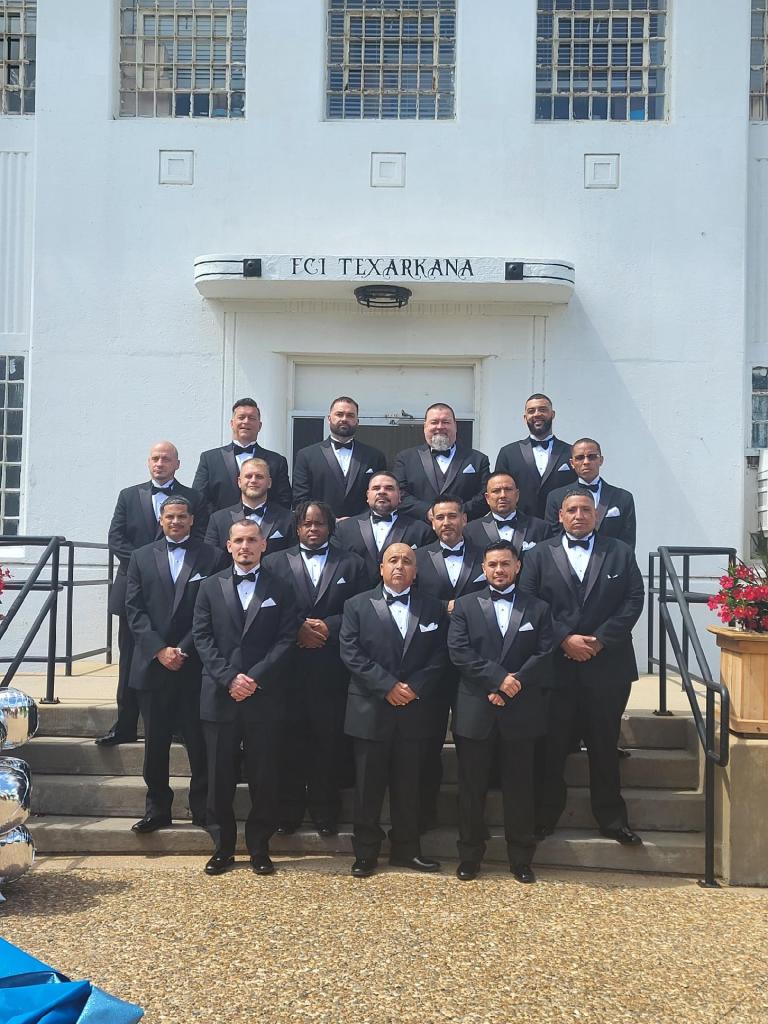
Standing outside FCI Texarkana were sixteen fathers dressed in tuxedos.
At first glance, it is an extraordinary photograph simply because of where it was taken.
A closer look reveals something even more profound.
These were not sixteen register numbers.
They were sixteen fathers.
Sixteen men carrying stories of mistakes, growth, accountability, and hope.
Sixteen men preparing for one of the most important moments of their incarceration.
The courtyard had been transformed for the occasion.
Decorations framed the entrance.
Families gathered in anticipation.
Children dressed in their best clothes.
Volunteers and staff quietly moved throughout the space, making sure every detail was just right.
There was excitement.
There were nerves.
There was an unmistakable understanding that everyone present was about to witness something extraordinary.
Then, one by one, the reunifications began.
One father at a time was brought forward.
Waiting.
Watching.
Then, one family at a time, their children were invited through the decorated entrance.
Little girls in dresses.
Children dressed in their Sunday best.
One by one, they saw their fathers.
And they ran.
They ran into their fathers’ arms.
The men caught them without hesitation.
Children wrapped themselves around the necks of fathers they had missed through birthdays, holidays, school events, and ordinary moments that families outside prison walls often take for granted.
Fathers who had learned to survive incarceration suddenly found themselves overcome by emotion as they held their children close.
God Behind Bars photographed each reunion.
Not staged portraits.
Not forced smiles.
But the exact moment of connection.
The moment a daughter saw her dad.
The moment a father held his child.
The moment a family became whole again, if only for a little while.
Then everyone present had the privilege of witnessing it again.
And again.
And again.
Sixteen times.
There was not a dry eye in the courtyard.
Not among the volunteers.
Not among the advocates.
Not among the families.
Not among the correctional staff.
Not among the men themselves.
We all cried.
It is difficult to adequately describe what it feels like to witness moments like these.
Many of these children had never seen their fathers dressed this way.
Many of these fathers had never experienced anything like this during their incarceration.
For some, this was the first opportunity they had ever been given to dance with their daughters.
The first opportunity to share a meal intentionally designed around dignity, celebration, and family connection.
The first opportunity to create memories that looked like those of families beyond prison walls.
For a few precious hours, they weren’t inmates.
They weren’t register numbers.
They weren’t case files.
They were dads.
The room that followed was filled with music, laughter, dancing, and conversations that families will carry with them long after this weekend has passed.
Children smiled without reservation.
Fathers beamed with pride.
Families laughed together.
Time slowed down just enough for everyone present to remember what mattered most.
Watching those reunifications unfold changed something in all of us.
Many members of Loved Ones Coalition collectively represented decades of incarceration and justice involvement.
Family events had been canceled.
Special opportunities had been denied.
Visits had often been reduced to short conversations under difficult circumstances.
Some of us had spent years believing moments like this simply did not exist inside correctional institutions.
Yet here we stood, witnessing them firsthand.
This was not about ignoring accountability.
It was not about pretending incarceration does not carry consequences.
It was about remembering why rehabilitation matters.
Because nearly everyone serving a sentence today will one day return home.
Children will carry the impact of these years long after sentences end.
Families will continue living with both the wounds and the resilience created during incarceration.
And fathers who are given opportunities to strengthen those bonds are reminded of exactly what they stand to lose—and exactly what they still have to fight for.
Throughout the weekend, we heard men speak about purpose.
We heard them speak about accountability.
We heard them speak about wanting to come home and stay home.
Dining With Dad allowed us to see exactly what they were fighting for.
It had names.
It had faces.
It had tiny hands wrapped tightly around their fathers’ necks.
It had daughters waiting excitedly for their turn to run through the decorated entrance.
It had children looking up at their fathers with admiration and love.
It had families who never stopped showing up.
For all of the reports we have written documenting what incarceration takes away, this moment reminded us of something equally important:
Family connection gives people something to return to.
It gives them a reason to keep going.
It gives them a reason to make different choices.
It gives them hope.
As advocates, we spend much of our time documenting what is broken.
But if we are committed to telling the truth, then we must also document what helps people heal.
This was one of those moments.
For a few hours inside a federal prison, punishment stepped aside long enough for sixteen children to run into their fathers’ arms.
And every person fortunate enough to witness it left changed by it.
Leadership, Culture, and the Choice to Build Something Better
As we reflected on everything we had witnessed throughout the weekend, one question continued to surface:
How did this happen?
How did a federal prison invite a national advocacy organization known for documenting concerns and exposing problems within the system?
How did a coalition made up primarily of formerly incarcerated men walk back through prison gates and leave feeling hopeful?
How did correctional staff, incarcerated individuals, advocates, volunteers, and families all find themselves working toward the same goal?
We believe the answer begins with leadership.
Because culture does not happen by accident.
It is modeled.
It is reinforced.
It is protected.
And eventually, it ripples outward.
Throughout our time at FCI Texarkana, we observed leaders who were present.
That may seem like a small thing to someone outside of corrections.
It isn’t.
Every single week, Loved Ones Coalition hears from incarcerated individuals and families across the country who tell us they have never met their Warden.
They’ve never seen their Associate Warden.
They don’t know who their Unit Managers are.
They rarely interact with counselors.
Some tell us they don’t even know the names of the correctional officers working their units because name tags are removed or covered.
Leadership becomes something distant.
Invisible.
Disconnected from daily institutional life.
That was not our experience at FCI Texarkana.
Leadership was visible.
Leadership was accessible.
Leadership was engaged.
We had the opportunity to meet Warden Johnston, who has since moved on to serve at another institution.
We spent significant time with Associate Warden Rice, whose vision and persistence helped bring this entire weekend to life.
What stood out most wasn’t authority.
It was presence.
It was humility.
And it was pride.
Pride in their institution.
Pride in their staff.
Pride in the families who continued to show up.
And perhaps most importantly, pride in the men entrusted to their care.
The phrase “servant leadership” is often overused.
But throughout the weekend, it felt appropriate.
Neither leader presented themselves as having all the answers.
Neither pretended the institution was perfect.
Challenges remained.
Concerns still existed.
There was no attempt to deny that reality.
Instead, we observed leaders who listened.
Leaders who engaged with critics rather than avoiding them.
Leaders who invited advocates inside instead of shutting them out.
Leaders willing to ask difficult questions and hear difficult answers.
Long before Loved Ones Coalition ever arrived in Texarkana, Associate Warden Rice had reached out to our organization.
At the time, it surprised us.
As advocates, we are often viewed as adversaries.
We elevate concerns.
We document failures.
We ask difficult questions.
We advocate publicly and privately for change.
We did not expect someone in corrections to contact us and ask:
“How can we fix this?”
Yet that is exactly what happened.
Over time, conversations replaced assumptions.
Small interactions built trust.
Problems were met with communication instead of defensiveness.
At one point, Loved Ones Coalition received reports of a toilet paper shortage at the camp.
We reached out.
The concern was acknowledged.
Within minutes, individuals inside the institution reported back that the issue had been addressed.
It wasn’t a grand gesture.
It wasn’t headline-worthy.
But it reflected a philosophy we witnessed repeatedly throughout the weekend:
Problems do not always require conflict.
Sometimes they require communication.
What also stood out to us was the genuine pride people took in one another.
The incarcerated men eagerly introduced us to staff members who had impacted them.
“This is my teacher.”
“She helped me.”
“He believed in me.”
They wanted us to know who had encouraged them, challenged them, and invested in them during incarceration.
And the pride flowed in both directions.
We observed leaders and staff who were proud of their institution.
Proud of the events they had created.
Proud of the families who continued to show up.
And proud of the men themselves.
Not because those men had never made mistakes.
Not because anyone was pretending harm had not occurred.
But because they believed people were capable of growth.
That people could change.
That rehabilitation mattered.
That the work happening inside those walls had purpose.
In many ways, the success of those men became a reflection of the work staff had invested in them.
A father dancing with his daughter.
A man completing programming.
Someone returning home and never coming back.
Those victories belonged not only to the individuals and families involved, but to everyone who helped make them possible.
Teachers.
Counselors.
Correctional officers.
Volunteers.
Administrators.
Families.
Advocates.
What struck us even further were the conversations we had with staff throughout the weekend.
Again and again, people spoke about leadership.
Not just institutional leadership.
National leadership.
Correctional officers and staff expressed appreciation for the opportunity to do things differently.
Several spoke positively about Director Billy Marshall and Deputy Director Josh Smith.
Some specifically referenced the significance of having a justice-impacted leader helping shape the future of the Bureau of Prisons.
They described feeling encouraged to innovate.
To strengthen family engagement.
To partner with outside organizations.
To focus on rehabilitation in meaningful ways.
Whether everyone shares that perspective is beside the point.
It is important to document that this is how many people at FCI Texarkana experienced this moment in time.
They believed they had permission to try.
And because they tried, sixteen fathers danced with their daughters.
Formerly incarcerated advocates returned to prison to mentor others.
Families made memories they will carry for the rest of their lives.
For decades, conversations surrounding incarceration have often been framed as opposing sides.
Staff versus inmates.
Families versus institutions.
Advocates versus administrators.
Critics versus corrections.
And certainly, there are times when advocacy requires confrontation.
There are times when systems must be challenged.
There are times when uncomfortable truths must be spoken plainly.
Loved Ones Coalition will continue to do exactly that.
But this weekend reminded us that another path exists as well.
Families can remain families.
Staff can remain staff.
Advocates can remain advocates.
Leadership can remain accountable.
No one has to abandon their role.
No one has to compromise their values.
Yet everyone can still pull in the same direction.
Toward safer institutions.
Toward stronger families.
Toward meaningful rehabilitation.
Toward successful reentry.
Toward fewer victims.
Toward fewer returns to prison.
Leadership sets the tone.
Culture carries it forward.
And when both are rooted in dignity, accountability, service, and presence, the effects ripple outward—to staff, to incarcerated individuals, to families, and ultimately to the communities these men will one day return home to.
Perhaps that is what made this weekend feel so significant.
It wasn’t simply that we witnessed something beautiful.
It was that we witnessed what becomes possible when people stop viewing one another solely as opponents and begin working toward the same goal.
Helping people come home.
And helping them stay home.
Not a perfect institution.
Not a perfect system.
But people who had not lost sight of the mission.
And maybe that mission is simpler than we make it out to be:
To help people become more than the worst thing they have ever done.
To prepare them to return home better than they arrived.
And to celebrate when they never come back.
Because when that happens, everyone has a reason to be proud.
The Ripple Effect of Hope
The ripple effect didn’t begin days later.
It didn’t begin after this report was published.
It began almost immediately.
Throughout the weekend, FCI Texarkana provided approved photographs that participants and organizations could share publicly. As we began posting those moments online—the image of sixteen fathers standing together in tuxedos outside a federal prison, snapshots from Family Day, photographs of our coalition speaking inside the institution, and reflections from the weekend—the response was instantaneous.
Our phones started going off.
Notifications flooded in.
And suddenly, people from across the country were responding to what they had seen.
Other institutions reached out.
Other jails reached out.
Departments of Corrections reached out.
Wardens reached out.
Staff members reached out.
Federal prisons reached out.
The reaction was immediate and remarkably consistent.
“How did this happen?”
“How do we get this at our institution?”
“How do we bring Loved Ones Coalition here?”
“Who do we contact?”
“What did you do to make this happen?”
“This is incredible.”
“Oh my God.”
People weren’t just reacting to photographs.
They were reacting to possibility.
They were seeing sixteen incarcerated fathers standing proudly in tuxedos outside a federal prison.
They were seeing a coalition made up primarily of formerly incarcerated advocates welcomed inside an institution.
They were seeing critics and correctional leadership occupy the same space without abandoning who they were.
They were seeing families celebrated rather than forgotten.
They were seeing evidence that something different was possible.
And they wanted to know if it could happen where they were, too.
At the very same time, another wave of messages began pouring in.
The families.
“Oh my God, we had the time of our lives.”
“Thank you so much.”
“That’s my loved one.”
“My children will never forget this.”
“Thank you for being there.”
“Thank you for sharing this.”
Family after family reached out, wanting us to know what the weekend had meant to them.
They thanked us for speaking.
They thanked us for showing up.
They thanked us for witnessing it.
But perhaps what struck us most was that they wanted us to understand what those few hours had given them.
Memories.
Joy.
Stories they would tell for years to come.
A reminder that even during incarceration, meaningful moments are still possible.
As advocates, we spend much of our time documenting what is broken.
We hear fear.
Anger.
Grief.
Desperation.
We walk alongside people during some of the darkest moments of their lives.
And that work matters.
But if we are committed to telling the truth, then we must also document what helps people heal.
This weekend reminded us that hope deserves attention, too.
People are starving for examples of what works.
Families are desperate for reminders that joy can coexist with hardship.
Justice-impacted people want proof that prison does not have to define the rest of their lives.
Correctional staff want examples of meaningful programming that strengthens rehabilitation.
Leadership wants to know what creates safer institutions and stronger communities.
Communities want evidence that people can change.
And in Texarkana, people found it.
They weren’t asking about the decorations.
They weren’t asking about the cotton candy.
They weren’t asking where the tuxedos came from.
They were asking how to recreate the feeling.
How to give families something to hold onto.
How to strengthen the bonds incarceration so often strains.
How to remind incarcerated individuals exactly what they still have to fight for.
How to bring advocates into institutions.
How to build partnerships instead of walls.
How to create cultures where accountability and humanity can coexist.
That is the ripple effect.
One institution.
One weekend.
Sixteen fathers.
A coalition made up primarily of formerly incarcerated advocates returning to prison with a different message.
Leadership willing to open the door.
Families who never stopped showing up.
Volunteers who gave their time.
Staff who chose to try something different.
And moments after those approved photographs were shared with the world, institutions across the country were asking:
“How do we bring this here?”
Because if there is one thing this weekend taught us, it is this:
Hope is contagious.
And once people witness what is possible, it becomes much harder to accept that things have to remain the way they have always been.
Maybe that is the true legacy of this weekend.
Not simply that sixteen fathers danced with their daughters.
Not simply that a coalition of former convicts walked back into prison as advocates.
Not simply that critics and corrections found common ground.
But that, for a brief moment, people across the country were reminded that rehabilitation is not just a policy objective.
It is people.
It is relationships.
It is community.
It is accountability.
It is second chances.
And it is hope.
The kind of hope that spreads from one family to another.
From one institution to another.
From one person brave enough to try something different to the next.
The kind of hope that asks not whether change is possible—
but how many lives might be transformed if we choose to pursue it.
And perhaps that is the question FCI Texarkana leaves for the rest of us:
What if more institutions were willing to try?
Beyond the Prison Walls
As meaningful as our experiences inside FCI Texarkana had been, one of the most important lessons of the weekend happened outside the institution itself.
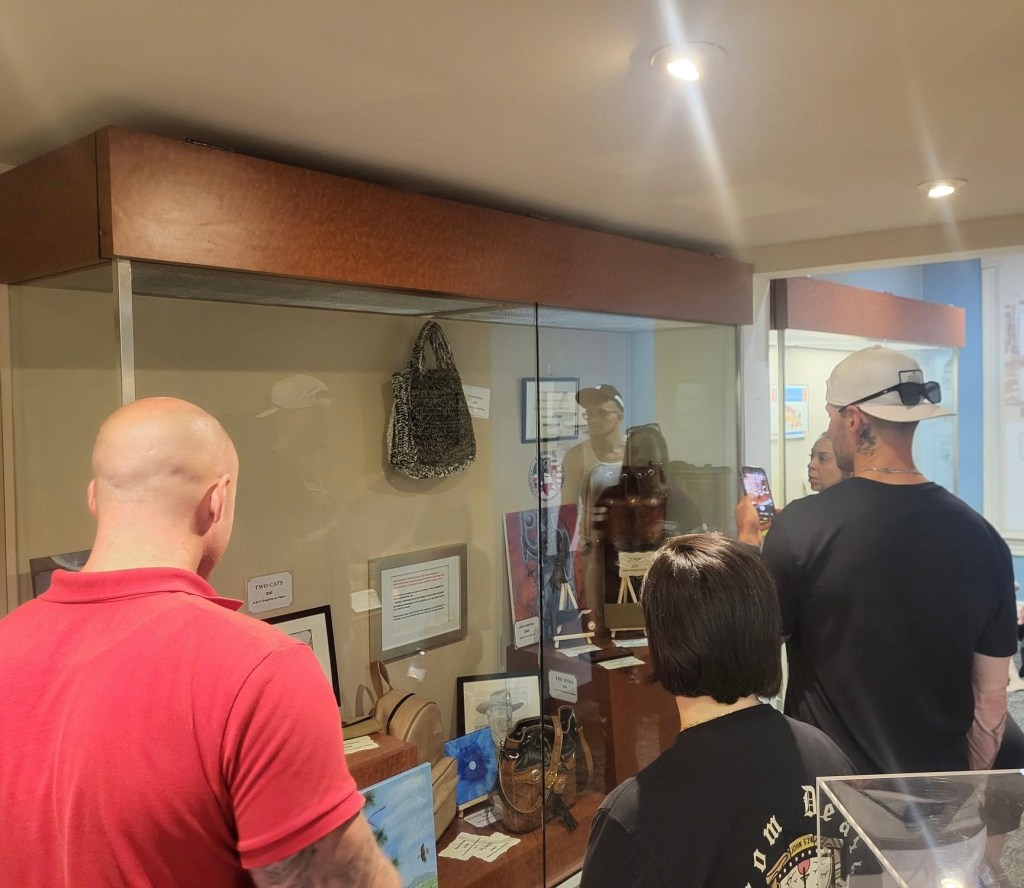
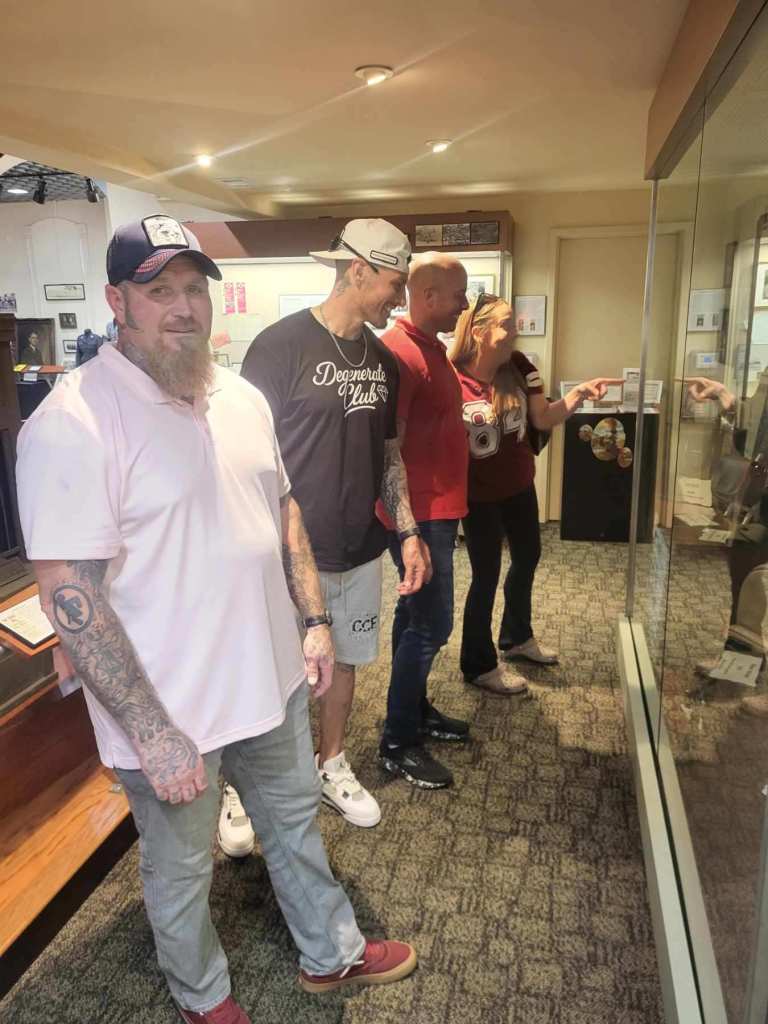
In between events, our coalition had the opportunity to visit the Museum of Regional History in Texarkana.
Among the exhibits was something that immediately caught our attention.
Artwork created by incarcerated individuals.
Pieces crafted with talent, patience, and intention.
Art that could be displayed for the community to see.
Art that could be purchased, with proceeds helping go toward restitution and supporting obligations waiting beyond prison walls.
It was another reminder that people are more complicated than the worst thing they have ever done.
Behind every register number is a person capable of creating something meaningful.
A father.
An artist.
A mentor.
A teacher.
A craftsman.
A neighbor.
A future business owner.
A volunteer.
A community member.
Throughout the weekend, we heard incarcerated men talk about who they hoped to become when they returned home.
We heard them speak about accountability.
About wanting to rebuild trust.
About wanting to contribute.
About wanting to stay out of prison.
The museum offered a visual reminder that rehabilitation does not begin and end at the prison gates.
It extends outward.
Into families.
Into neighborhoods.
Into places of worship.
Into workplaces.
Into communities willing to make space for second chances.
Too often, society asks whether people can change while simultaneously refusing to recognize the ways they already have.
We say we want accountability, yet struggle to imagine restoration.
We say we believe in rehabilitation, yet sometimes fail to envision what successful rehabilitation actually looks like.
This weekend challenged us to think differently.
Successful reentry is not simply the absence of reoffending.
It is the presence of purpose.
It is fathers returning home to their children.
It is men finding meaningful employment.
It is people using their experiences to mentor others.
It is artists creating beauty.
It is volunteers giving back.
It is advocates returning to the very places that once confined them to remind others that they, too, can build a different future.
As members of Loved Ones Coalition reflected on the weekend, one truth became increasingly clear:
None of us exist in isolation.
What happens inside prisons eventually reaches beyond prison walls.
Families carry it.
Children carry it.
Communities carry it.
And so does hope.
The investment we make in family connection, dignity, accountability, and rehabilitation today becomes the community we inherit tomorrow.
This weekend was never just about Texarkana.
It was about asking ourselves what kind of future we want to help create.
One built solely around punishment.
Or one willing to make room for responsibility, restoration, and redemption.
Because nearly everyone serving a sentence today will one day return home.
The question is not whether they will come back to our communities.
The question is who they will be when they arrive.
And what role all of us are willing to play in helping them succeed.
What We Do With Hope
As we close this report, we find ourselves returning to the same question that followed us home from Texarkana.
What do we do with this now?
FCI Texarkana is not a perfect institution.
The Federal Bureau of Prisons is not a perfect system.
Loved Ones Coalition is not a perfect organization.
And none of the people whose stories fill these pages are perfect people.
That was never the point.
The point is that perfection was never required for something meaningful to happen.
What we witnessed throughout this weekend did not erase the work that remains.
Families across this country are still fighting for answers.
Advocates are still documenting serious concerns.
Incarcerated individuals are still navigating fear, uncertainty, separation, and loss.
Staff continue working within systems that are often understaffed and overburdened.
The work is not finished.
But neither are the people doing it.
Loved Ones Coalition did not arrive at FCI Texarkana as neutral observers untouched by incarceration.
We arrived as seven justice-impacted people whose lives had been profoundly shaped by it.
Among us were four formerly incarcerated men who had collectively spent decades behind prison walls.
Standing beside them were three prison wives who understood incarceration from the other side of the fence—the visiting room lines, the canceled family days, the lockdowns, the miles traveled, the financial strain, the disappointment, and the determination it takes to continue showing up for someone you love.
Together, we carried the realities of incarceration from both sides of the experience.
We knew what prison looked like when dignity was absent.
We knew what it felt like when hope disappeared.
We knew what it meant to brace for disappointment.
And because of that, none of us walked into FCI Texarkana naïve.
We walked in looking.
We walked in listening.
We walked in prepared to tell the truth.
And the truth is that what we witnessed challenged us.
It softened old wounds.
It reminded us that humanity can still exist inside imperfect systems.
This weekend reminded us that accountability and hope can exist in the same space.
That critics and corrections do not always have to stand on opposite sides of the room.
That family connection is not a weakness.
It is a lifeline.
That rehabilitation is not an abstract idea written into mission statements and policy manuals.
It is built through moments.
Conversations.
Relationships.
Second chances.
And the decision to keep showing up.
Perhaps the greatest lesson Texarkana offered was not that change is easy.
It is that change is possible.
One invitation changed this story.
One Associate Warden willing to reach out.
One coalition willing to walk back through prison gates.
One institution willing to open its doors.
One weekend willing to try something different.
And the impact extended far beyond the people who stood in those rooms.
As we close this report, we do so with gratitude.
Gratitude for the families who trusted us with their stories and reminded us why family connection matters.
Gratitude for the incarcerated men who spoke honestly about their fears, frustrations, hopes, dreams, and determination to come home and stay home.
Gratitude for the volunteers who gave their time, energy, and hearts to this work.
Gratitude for God Behind Bars and everyone who helped create memories that families will carry with them for the rest of their lives.
Gratitude for the correctional officers who helped make this weekend possible. The officers who answered questions, played games with children, encouraged the men in their care, laughed with families, and showed us that professionalism and compassion can coexist. Corrections is not an easy profession, and this weekend reminded us that there are people in these roles who genuinely care about the impact they have and take pride in helping others succeed.
Gratitude for leadership at FCI Texarkana—leaders who were present, accessible, and willing to invite advocates into spaces where they have not traditionally been welcomed. Leaders who understood that family connection and accountability are not opposing values. Leaders who believed enough in their institution, their staff, and the men entrusted to their care to open the doors and simply say, “Come see for yourselves.”
Gratitude for the Support Coordinators Office. Over the past year, we have witnessed responsiveness, compassion, and understanding that families repeatedly tell us they have never experienced before. Time and again, they have acknowledged concerns, answered questions, explained processes, and worked to bridge gaps between institutions and the people who love those inside them. The feedback we continue to receive about their efforts speaks for itself.
Gratitude for Deputy Director Josh Smith and Director Billy Marshall. Throughout this journey, families, formerly incarcerated individuals, advocates, and even staff have repeatedly expressed a renewed sense of hope. Not because anyone believes the work is finished, but because they believe there are leaders willing to listen, engage, and try. Leaders willing to acknowledge that accountability and humanity can exist in the same space. Leaders willing to create opportunities for partnership, innovation, and reform.
Most of all, gratitude for the members of Loved Ones Coalition who returned to the very places that once caused them pain so that someone else might find hope.
People who had every reason to walk away from this work.
People who had lived incarceration from both sides of the fence.
People who chose to turn pain into purpose.
If there is one thing we hope readers carry with them after turning the final page, it is this:
People are capable of change.
Families are worth fighting for.
Hope matters.
And sometimes, the most powerful thing any of us can do is simply be willing to try.
Because if more institutions were willing to try…
If more advocates were willing to engage…
If more communities were willing to believe in accountability and redemption at the same time…
If more families were supported instead of forgotten…
If more people were invited to the table instead of treated as enemies…
We might discover that the future of prison reform is not built solely through opposition.
It is built through courage.
The courage to tell the truth.
The courage to remain hopeful.
The courage to stay accountable.
And the courage to imagine something better.
For more than a year, Loved Ones Coalition has documented what incarceration takes away.
This weekend reminded us to document what it gives back, too.
Connection.
Purpose.
Community.
Dignity.
Healing.
Hope.
The question is no longer whether change is possible.
We witnessed it.
The question is:
What will we do with it now?