Weekly Oversight Report – June 8, 2026
Loved Ones Coalition
Documenting Systemic Concerns Across the Federal Bureau of Prisons
This week’s report feels different.
For nearly a year, these reports have documented concerns raised by incarcerated individuals and their families throughout the Federal Bureau of Prisons. We’ve reported on deteriorating conditions, communication barriers, infrastructure failures, visitation concerns, staffing shortages, and the everyday realities experienced by the people living and working inside these institutions.
This week, we’re also reporting something else:
Updates.
Leadership returning to facilities.
Families reporting improvements.
Processes being adjusted.
Concerns being acknowledged.
That doesn’t mean the work is done.
Because alongside those updates, we’re still documenting collapsing ceilings, environmental hazards, overcrowding, barriers to programming, and conditions that continue to raise serious questions about safety, dignity, and accountability.
But if we’re going to ask people to pay attention when things go wrong, we also have a responsibility to acknowledge when people listen.
This report reflects both realities.
Progress is happening.
It just isn’t happening fast enough.
And while small improvements matter deeply to the people affected by them, they cannot distract from the larger conversations that still need to take place about aging infrastructure, overcrowding, population reduction strategies, and the future of institutions that continue to appear in these reports week after week.
Almost a year into this work, one thing remains true:
The goal has never been outrage for outrage’s sake.
The goal is to document concerns, recognize progress, and keep pushing until the people living and working inside these institutions are treated with the safety, dignity, and humanity they deserve.
This week’s report reflects both the progress we’ve seen and the work that still lies ahead.
USP CANAAN (PA)
OIG Findings, Institution-Wide Lockdowns, Healthcare Access Concerns, SHU Capacity Issues, Staff Culture Concerns, and Leadership Engagement
1. Summary of Allegations
The Loved Ones Coalition received reporting during this reporting period regarding conditions and operational practices at USP Canaan following the publication of a May 26, 2026 article summarizing findings from a recent Department of Justice Office of Inspector General (OIG) report concerning the institution.
According to the OIG findings, inspectors identified several serious concerns involving institution-wide lockdown practices, healthcare delivery, staffing shortages, the use of four-point restraints, staff culture, and operational conditions within the facility. The OIG reportedly found that general population incarcerated individuals experienced frequent restrictions on movement due to Special Housing Unit (SHU) overcrowding, resulting in prolonged periods of confinement despite not being assigned to restrictive housing status.
Reporting received by the Loved Ones Coalition echoed concerns regarding the impact of repeated lockdowns and movement restrictions on incarcerated individuals housed at USP Canaan. Reporting parties described disruptions to institutional programming, daily routines, recreation opportunities, educational activities, and access to services resulting from frequent restrictions on movement.
The OIG additionally reported longstanding healthcare concerns, including the absence of a full-time on-site physician for an extended period, delayed medical appointments, overdue chronic care evaluations, inconsistencies involving medication administration, delayed laboratory testing, expired medical supplies, and concerns regarding healthcare delivery practices. The findings further identified concerns involving unsafe storage practices within dental services.
Additional concerns identified by the OIG involved the use of four-point restraints within the SHU. According to the report, multiple staff members described instances in which restraints were allegedly applied in a manner that caused significant discomfort and physical swelling. The OIG also documented concerns involving inappropriate imagery and demeaning language within employee areas, raising questions regarding institutional culture and professionalism.
Importantly, the Loved Ones Coalition also received reporting suggesting that Bureau of Prisons leadership responded promptly following publication of the OIG findings. Multiple reporting parties indicated that Deputy Director Josh Smith was present at USP Canaan during this reporting period and engaged directly with incarcerated individuals regarding institutional concerns.
One reporting party advised the Coalition that they learned Deputy Director Smith was on-site and hoped for an opportunity to discuss ongoing concerns with him. Within hours, the reporting party later advised that Deputy Director Smith had personally met with the incarcerated individual, spoke with him privately regarding his concerns, and collected his identifying information for follow-up purposes.
The reporting party further indicated that Deputy Director Smith was attentive, professional, and responsive during the interaction. While the Loved Ones Coalition cannot independently verify the contents of the conversation, the reporting received suggests institutional leadership was actively engaging with incarcerated individuals and providing opportunities for direct communication following the publication of concerns identified by the Office of Inspector General.
Taken together, the reporting received regarding USP Canaan raises concerns regarding prolonged lockdown practices, healthcare access and continuity, restrictive housing operations, and institutional culture. At the same time, the reporting reflects examples of leadership engagement and responsiveness that may help foster confidence that concerns raised by incarcerated individuals are being heard and reviewed.
2. Key Allegation & Violation Table
| Allegation | Description | Potential Concern Area |
| Institution-Wide Lockdowns | Reporting and OIG findings describe frequent restrictions on movement affecting general population incarcerated individuals. | Conditions of Confinement, Institutional Operations |
| SHU Capacity Concerns | Reports indicate SHU overcrowding contributed to restrictions on movement within non-SHU housing units. | Population Management, Institutional Operations |
| Programming and Activity Disruptions | Frequent lockdowns allegedly interfered with programming, recreation, education, and routine institutional functions. | Rehabilitative Programming, Daily Operations |
| Healthcare Access Concerns | OIG findings identified delays involving appointments, chronic care evaluations, laboratory testing, and physician access. | Medical Access, Continuity of Care |
| Physician Staffing Concerns | Reports indicate the institution operated without a full-time on-site physician for an extended period. | Healthcare Staffing |
| Medication and Medical Oversight Concerns | OIG findings identified inconsistencies involving medication administration and healthcare delivery practices. | Medical Oversight |
| Dental Safety Concerns | Inspectors reportedly identified unsafe storage practices involving dental instruments and materials. | Environmental Safety, Healthcare Operations |
| Four-Point Restraint Concerns | OIG findings described allegations involving overly restrictive applications of restraints resulting in discomfort and swelling. | Use of Force, Conditions of Confinement |
| Staff Culture Concerns | OIG findings documented reports of inappropriate imagery and demeaning language in employee areas. | Institutional Culture, Professional Conduct |
| Leadership Engagement | Reporting parties indicated Bureau leadership engaged directly with incarcerated individuals during an on-site visit. | Accountability, Institutional Responsiveness |
3. Direct Testimony
“Josh Smith is here.”
“he actually sat down and talked with him privately.”
“He took his name and information.”
“He listened.”
“He was professional and responsive.”
4. Systemic Concerns
The reporting received regarding USP Canaan raises broader concerns regarding the impact of prolonged movement restrictions on incarcerated individuals who are not assigned to restrictive housing status. According to the OIG findings and subsequent reporting received by the Coalition, limitations related to SHU capacity may have had institution-wide consequences affecting programming participation, recreation opportunities, educational activities, and routine daily functions.
The OIG findings further raise questions regarding healthcare staffing models and the institution’s ability to provide timely and consistent medical care. Delays involving chronic care appointments, specialty evaluations, laboratory testing, and physician access may significantly affect medically vulnerable incarcerated individuals and undermine confidence in institutional healthcare systems.
Concerns involving restraint practices, employee conduct, and institutional culture similarly warrant continued attention. Allegations involving demeaning language and inappropriate workplace environments may negatively impact both incarcerated individuals and staff members working within the institution.
At the same time, the Loved Ones Coalition believes it is equally important to document examples of responsiveness when they occur. Multiple reporting parties described the recent on-site presence of Deputy Director Josh Smith following publication of the OIG findings. Reporting further indicated that incarcerated individuals were afforded opportunities to communicate concerns directly to leadership, including private conversations regarding their experiences.
While the long-term outcomes of those interactions remain unknown, direct engagement between institutional leadership and incarcerated individuals may strengthen confidence that concerns are being elevated beyond the facility level and reviewed by those with authority to initiate corrective action.
Taken together, the reporting received regarding USP Canaan reflects both serious operational concerns requiring continued oversight and examples of leadership engagement that deserve recognition and continued encouragement.
5. Oversight Questions for Clarification
- What corrective actions have been implemented in response to the OIG recommendations concerning USP Canaan?
- What measures are being taken to reduce the frequency and duration of institution-wide lockdowns affecting general population incarcerated individuals?
- How is SHU capacity being managed to minimize disruptions to non-SHU housing units?
- What steps have been taken to address physician staffing shortages and overdue medical appointments?
- Have concerns involving delayed laboratory testing and chronic care evaluations been resolved?
- What policies govern the use of four-point restraints, and what safeguards exist to prevent unnecessary discomfort or injury?
- What actions have been taken to address concerns involving employee conduct and institutional culture?
- What procedures are in place to ensure incarcerated individuals can communicate concerns directly to leadership without fear of retaliation?
- Did the recent leadership visit result in the identification of any corrective actions or follow-up reviews?
- How will the Bureau of Prisons measure and communicate progress related to the concerns identified by the Office of Inspector General at USP Canaan?
FCI HAZELTON (WV)
Environmental Health Concerns, Sanitation Deficiencies, Communication Barriers, Programming Accessibility Issues, Operational Restrictions, and Institutional Accountability Concerns
1. Summary of Allegations
The Loved Ones Coalition received multiple reports during this reporting period regarding environmental conditions, sanitation concerns, communication barriers, operational restrictions, programming accessibility, and institutional practices at FCI Hazleton.
Several reporting parties described ongoing environmental concerns within N-1 housing unit. Most notably, multiple reports alleged that the ceiling in Shower 12 has been covered in suspected black mold for nearly a year without remediation. Additional reporting parties alleged that mold-like substances may also be present within cell ventilation systems, stating that dark residue can allegedly be collected from vent openings throughout the housing unit. While the Loved Ones Coalition cannot independently verify the nature of the substance described, the consistency and specificity of reporting raise concerns regarding environmental safety, moisture control, ventilation maintenance, and remediation efforts.
The Coalition also received reporting concerning emergency notification procedures and family communication practices. One reporting party described a conversation with institutional staff indicating that incarcerated individuals do not routinely complete release-of-information forms upon arrival at an institution. According to the reporting received, family members may only receive information following intervention by congressional offices and after the incarcerated individual signs the appropriate authorization. Reporting parties questioned the purpose of collecting emergency contact information if family members are not routinely notified when serious incidents occur.
Additional reporting raised concerns regarding commissary pricing transparency. Reporting parties alleged that certain commissary items, including Cool Ranch Doritos, were priced approximately $1.22 higher than comparable products without explanation, creating frustration among incarcerated individuals regarding pricing practices and consistency.
The Loved Ones Coalition further received multiple reports regarding dining conditions. Reporting parties alleged that incarcerated individuals continue to receive approximately ten minutes to complete meals in the chow hall, raising concerns regarding adequate access to meals and the ability to safely consume food without feeling rushed.
Communication concerns also remained prevalent throughout this reporting period. Multiple reporting parties alleged that institutional telephone services were interrupted for extended periods without explanation, including reports of outages lasting more than one hour during the morning and more than two hours during the afternoon. Reporting parties indicated that these interruptions occur regularly, sometimes as frequently as once per week or more.
Several reports additionally described prolonged closures affecting educational and recreational opportunities. Reporting parties alleged that the Education Department, including the law library and institutional library, remained inaccessible beginning on or around May 22 despite the absence of institution-wide lockdown conditions. Reports further alleged that outdoor recreation had been suspended since approximately May 21 without posted explanation.
The Coalition also received concerns regarding limited access to evidence-based recidivism reduction programming. Reporting parties alleged that programming opportunities intended to address First Step Act needs are so limited that meaningful participation becomes unattainable for much of the institution’s population. Specifically, reporting parties alleged that a hydroponics and gardening class accepted only eight participants annually despite a population of approximately 1,500 incarcerated individuals. Similar concerns were raised regarding Healthy Minds and Bodies ACE programming, which reportedly accepted only six participants despite widespread interest.
Additional reporting described concerns involving early evening lockdown practices and restrictions associated with pending SHU placements. Reporting parties alleged that housing units continue to be secured approximately one hour earlier than practices reported at other institutions. Reports further alleged that individuals designated as “pending SHU” continue to experience restrictions associated with limited SHU capacity and prolonged confinement outside of traditional restrictive housing settings.
Sanitation concerns remained among the most frequently reported issues during this reporting period. Multiple reporting parties alleged that N-1 housing unit has experienced prolonged shortages of institution-issued cleaning chemicals, at times exceeding two weeks. Reporting parties stated that incarcerated individuals resorted to creating makeshift cleaning solutions using commissary products such as dish soap, shampoo, and melted bar soap. Several reporting parties further alleged that an N-1 Unit Manager discarded bottles of homemade cleaning solutions that had been placed in common areas for communal use. Reporting parties expressed concern that inadequate access to cleaning supplies contributes to unsanitary living conditions and tension among incarcerated individuals competing for limited resources. Multiple reporting parties specifically requested anonymity regarding these concerns due to fears of retaliation.
Infrastructure concerns also continued throughout the reporting period. Reporting parties alleged that plumbing access areas and pipe chases routinely filled with stagnant gray water and sewage requiring removal by incarcerated individuals, at times filling multiple large trash receptacles. More recent reporting received on June 7 alleged that pipe chases servicing cells 105 and 106 continued to flood, requiring repeated removal of sewage-contaminated water every other day.
Additional reports alleged that incarcerated individuals remained without access to hot water, functioning water fountains, or ice for approximately one week. Reporting parties further described institution-wide restrictions following the death of an incarcerated individual from unknown causes. According to the reporting received, housing units were secured until midday the following day and recreational, educational, law library, and library access remained suspended.
Finally, the Loved Ones Coalition received allegations regarding staff accountability and identification practices. Reporting parties alleged that certain correctional staff routinely fail to wear visible name tags, creating concerns regarding accountability and limiting the ability of incarcerated individuals to accurately identify staff members involved in alleged misconduct. Some reporting parties expressed concern that the absence of identifying information undermines confidence in existing complaint and accountability mechanisms.
Taken together, the consistency and volume of reporting received regarding FCI Hazleton raise broader concerns regarding environmental health conditions, sanitation practices, infrastructure reliability, communication access, programming availability, institutional transparency, and confidence in accountability systems.
2. Key Allegation & Violation Table
| Allegation | Description | Potential Concern Area |
| Suspected Mold Exposure | Reports allege Shower 12 in N-1 has remained covered in suspected black mold for nearly one year, with similar concerns involving cell ventilation systems. | Environmental Health, Facility Maintenance |
| Ventilation Concerns | Reporting parties described dark residue allegedly present within cell vents. | Environmental Safety |
| Emergency Notification Concerns | Questions raised regarding family notification practices and use of emergency contact information. | Family Communication, Institutional Transparency |
| Commissary Pricing Concerns | Reports allege unexplained pricing discrepancies involving commissary items. | Commissary Operations |
| Limited Meal Times | Reporting parties alleged approximately ten minutes are provided to complete meals. | Conditions of Confinement |
| Telephone Service Interruptions | Frequent phone outages allegedly occur without explanation. | Communication Access |
| Law Library and Library Closures | Education Department facilities reportedly inaccessible since May 22. | Access to Courts, Educational Access |
| Recreation Closures | Outdoor recreation reportedly suspended without explanation. | Conditions of Confinement |
| Limited FSA Programming Access | Reports allege extremely limited enrollment opportunities for evidence-based programming. | First Step Act Implementation |
| Early Lockdown Practices | Housing units reportedly secured earlier than comparable institutions. | Institutional Operations |
| Pending SHU Restrictions | Reports allege continued restrictions affecting individuals awaiting SHU placement. | Population Management |
| Cleaning Supply Shortages | Reporting parties described prolonged lack of institution-issued cleaning chemicals. | Sanitation |
| Removal of Homemade Cleaning Supplies | Reports allege communal cleaning solutions were discarded by unit staff. | Conditions of Confinement |
| Pipe Chase Flooding | Recurrent sewage accumulation allegedly affects housing units and plumbing areas. | Infrastructure Maintenance |
| Utility Disruptions | Reports describe prolonged lack of hot water, ice, and functioning water fountains. | Conditions of Confinement |
| Post-Incident Restrictions | Reports allege broad restrictions following an incarcerated individual’s death. | Institutional Operations |
| Staff Identification Concerns | Allegations that some staff do not wear visible name tags. | Accountability, Professional Conduct |
3. Direct Testimony
“Shower 12 in N-1 has been covered in black mold for almost a year.”
“You don’t have to look any further than the vents.”
“What’s the point of emergency contacts if nobody calls them?”
“They’re only giving us about ten minutes to eat.”
“The phones were off again. No explanation.”
“How are 1,500 guys supposed to complete FSA needs when only six or eight people get picked?”
“We’ve gone weeks without chemicals.”
“Guys are making cleaning supplies out of shampoo and soap.”
“Cells 105 and 106 are still flooding with sewer water.”
“Some COs aren’t wearing name tags, and people are afraid to report them.”
4. Systemic Concerns
The reporting received regarding FCI Hazleton suggests concerns extending beyond isolated incidents. Environmental complaints involving suspected mold, sewage exposure, inadequate cleaning supplies, and utility disruptions raise questions regarding sanitation practices and infrastructure maintenance.
Similarly, repeated allegations involving closures of educational resources, recreational opportunities, and evidence-based programming may undermine rehabilitative goals and create barriers to meaningful participation in First Step Act-related programming.
Communication barriers involving telephone outages and uncertainty surrounding emergency notification practices may contribute to frustration among incarcerated individuals and their families, particularly when support systems rely heavily on consistent contact.
The Coalition is additionally concerned by allegations suggesting that incarcerated individuals may hesitate to report concerns due to fear of retaliation or inability to identify staff involved in alleged misconduct. While these allegations remain unverified, confidence in accountability systems is essential to maintaining institutional legitimacy.
Taken together, the reporting received during this period suggests broader concerns involving environmental safety, sanitation, communication access, infrastructure reliability, programming availability, and institutional transparency.
5. Oversight Questions for Clarification
- Have environmental inspections been conducted regarding reports of suspected mold in N-1 housing unit, including Shower 12 and ventilation systems?
- What remediation efforts, if any, have been undertaken to address these concerns?
- What policies govern emergency family notification practices, and how is emergency contact information utilized?
- How are commissary pricing determinations established and communicated?
- What meal-time standards currently exist for incarcerated individuals at FCI Hazleton?
- What factors contributed to recent telephone outages, and what steps are being taken to reduce disruptions?
- Why have the Education Department, law library, institutional library, and recreation areas experienced prolonged closures?
- How does the institution ensure equitable access to evidence-based recidivism reduction programming and First Step Act needs-based activities?
- What steps are being taken to address repeated sewage flooding, utility disruptions, and shortages of cleaning supplies?
- What policies govern staff identification requirements, and how is compliance monitored to ensure accountability?
FCI JESUP (GA)
Administrative SHU Placement Due to Overcrowding, Communication Restrictions, and Family Notification Concerns
1. Summary of Allegations
The Loved Ones Coalition received multiple reports during this reporting period regarding allegations of overcrowding at FCI Jesup and the resulting use of Special Housing Unit (SHU) placements for incarcerated individuals who were reportedly not under disciplinary status.
Reporting parties alleged that newly arriving incarcerated individuals have been placed in SHU due to a lack of available beds in general population housing areas rather than as a result of disciplinary infractions. Families described being informed that these placements were administrative in nature and related to population management challenges within the institution.
According to reporting received, some incarcerated individuals have remained in SHU for extended periods while awaiting placement in the Low. One reporting party alleged that individuals have remained in restrictive housing settings for as long as three weeks due to bed shortages. The Loved Ones Coalition cannot independently verify the duration of these placements; however, the consistency of reporting raises concerns regarding the use of restrictive housing to manage overcrowding.
Multiple family members described experiencing little to no communication with their loved ones during these periods of administrative placement. Reporting parties alleged that incarcerated individuals awaiting housing assignments were not consistently provided opportunities to notify family members of their status or reassure loved ones of their well-being. Families described significant emotional distress resulting from prolonged periods without communication and uncertainty regarding whether their loved ones were safe or facing disciplinary action.
Reporting parties further questioned whether individuals housed in SHU solely because of institutional overcrowding should continue to receive access to communication opportunities typically afforded to individuals not serving disciplinary sanctions. Families expressed concern that administrative housing practices may inadvertently create conditions resembling punishment despite the absence of misconduct.
According to reporting received, family members were advised that FCI Jesup may currently be operating beyond its intended capacity. One reporting party alleged that the FCI was designed to house approximately 1,000 incarcerated individuals, the Federal Satellite Low approximately 500 individuals, and the camp approximately 200 individuals. While the Loved Ones Coalition cannot independently verify current population levels or design capacity, the reporting raises broader questions regarding institutional crowding and the impact of population pressures on daily operations and communication practices.
Taken together, the reporting received regarding FCI Jesup suggests concerns regarding the use of administrative SHU placements related to overcrowding, limited communication opportunities during these placements, and the impact such practices have on incarcerated individuals and their families.
2. Key Allegation & Violation Table
| Allegation | Description | Potential Concern Area |
| Administrative SHU Placement | Reports allege newly arriving incarcerated individuals are being housed in SHU due to lack of available general population beds. | Population Management, Restrictive Housing |
| Overcrowding Concerns | Reporting parties described institutional population pressures affecting housing assignments. | Institutional Operations |
| Extended SHU Stays | Reports allege individuals have remained in SHU for weeks while awaiting placement. | Conditions of Confinement |
| Limited Family Communication | Families reported prolonged periods without phone calls or updates from loved ones. | Family Communication |
| Lack of Initial Notification | Reporting parties questioned why incarcerated individuals awaiting placement could not make brief reassurance calls to family members. | Communication Access |
| Administrative vs. Disciplinary Distinction | Families expressed concern that non-disciplinary placements may function similarly to punitive housing restrictions. | Due Process, Conditions of Confinement |
| Emotional Impact on Families | Families described significant distress caused by uncertainty and lack of information. | Family Well-Being |
3. Direct Testimony
“They placed him in the SHU, and I haven’t had any chance to talk to my husband.”
“They told me I just have to wait.”
“FCI Jesup is overcrowded, and they just keep sending people there to pile up in the SHU.”
“They won’t even let them make one call to let the families know they’re okay.”
“They’re not in trouble. The place is just overcrowded.”
“They’ve had people in the hole going on three weeks because they’re so packed.”
“If they’re only there because there’s no beds available, they should still have their privileges.”
4. Systemic Concerns
The reporting received regarding FCI Jesup raises broader questions regarding how institutions manage overcrowding and whether restrictive housing environments are being used to address population pressures rather than disciplinary concerns.
When individuals are reportedly housed in SHU due solely to bed shortages, the distinction between administrative necessity and punitive conditions may become blurred from the perspective of incarcerated individuals and their families. Even temporary restrictions on communication, visitation, and routine privileges can have significant emotional consequences, particularly when loved ones have no way of confirming that the individual is safe and not facing disciplinary action.
The Loved Ones Coalition recognizes the operational challenges associated with institutional crowding and fluctuating populations. However, reporting parties consistently expressed concern that individuals awaiting placement should retain reasonable access to communication with their support systems, especially when their housing assignment is not the result of misconduct.
The Coalition further notes that family contact is widely recognized as an important component of institutional adjustment, emotional well-being, and successful reintegration. Practices that unnecessarily delay communication may contribute to heightened anxiety among families and undermine support systems that are essential to rehabilitation and reentry.
Taken together, the reporting received during this period suggests a need for greater transparency regarding administrative SHU placements, clearer communication with families, and review of practices affecting individuals awaiting general population placement.
5. Oversight Questions for Clarification
- Under what circumstances are newly arriving incarcerated individuals placed in SHU due to housing shortages?
- How many incarcerated individuals are currently housed in SHU for administrative reasons unrelated to disciplinary sanctions?
- What is the average length of stay for individuals awaiting placement into general population housing?
- What procedures exist to ensure that administratively housed individuals have timely access to telephone communication with family members?
- Are individuals awaiting placement afforded privileges consistent with their non-disciplinary status whenever operationally feasible?
- What measures are being implemented to address population pressures and reduce reliance on restrictive housing for administrative purposes?
- How does FCI Jesup communicate with families when delays in housing placement significantly affect communication access?
- Have institutional leadership reviewed the impact of these practices on family engagement and incarcerated individual well-being?
- What safeguards exist to distinguish administrative placements from disciplinary sanctions in both practice and perception?
- What steps can be taken to ensure that individuals awaiting bed assignments are able to reassure family members of their safety and status?
FCC YAZOO CITY LOW I (MS)
Allegations of Retaliation, Environmental Health Concerns, Infrastructure Failures, Grievance Barriers, and Conditions of Confinement
1. Summary of Allegations
The Loved Ones Coalition received multiple reports during this reporting period concerning conditions at Yazoo City Low I involving allegations of retaliation, environmental health concerns, infrastructure failures, inadequate access to basic necessities, and barriers to administrative remedies.
Several reporting parties alleged that incarcerated individuals who sought clarification regarding recent Bureau of Prisons policy changes related to early camp placement and compassionate release were subsequently placed in the Special Housing Unit (SHU) under investigative status. According to reporting received, on or around June 1, 2026, two incarcerated individuals approached Unit Team staff seeking information regarding recently published Bureau guidance concerning camp placement eligibility. Reporting parties alleged that both individuals were later placed in SHU following these inquiries.
Multiple reporting parties specifically identified a Low I Case Manager identified as Johnson and a Unit Manager identified as Ms. Wiggins in connection with these allegations. One reporting party further alleged that a third incarcerated individual who attempted to inquire about the same policy changes was warned that continued questioning could result in similar consequences. The Loved Ones Coalition cannot independently verify these allegations; however, the consistency of reporting received warrants review.
The Coalition also received repeated reports concerning environmental conditions throughout Yazoo Low I. Reporting parties alleged that black mold has been present throughout housing areas for extended periods, including ceilings within living quarters and common areas. According to reports, staff have placed fans within bathrooms to circulate moisture, while some reporting parties alleged that affected areas have been described internally as “mildew” rather than mold. Multiple reporting parties alleged that incarcerated individuals frequently experience respiratory symptoms and illnesses, with some expressing concerns regarding potential links between environmental conditions and their health. The Loved Ones Coalition cannot independently verify the nature of the substances described or any medical causation.
Additional reporting described persistent plumbing failures affecting multiple housing areas. Reporting parties alleged that leaking toilets from upper housing levels have resulted in wastewater dripping through ceilings onto lower-level bathrooms. Several incarcerated individuals reported that fecal-contaminated water had dripped into areas where individuals were actively using restroom facilities, creating significant sanitation and dignity concerns.
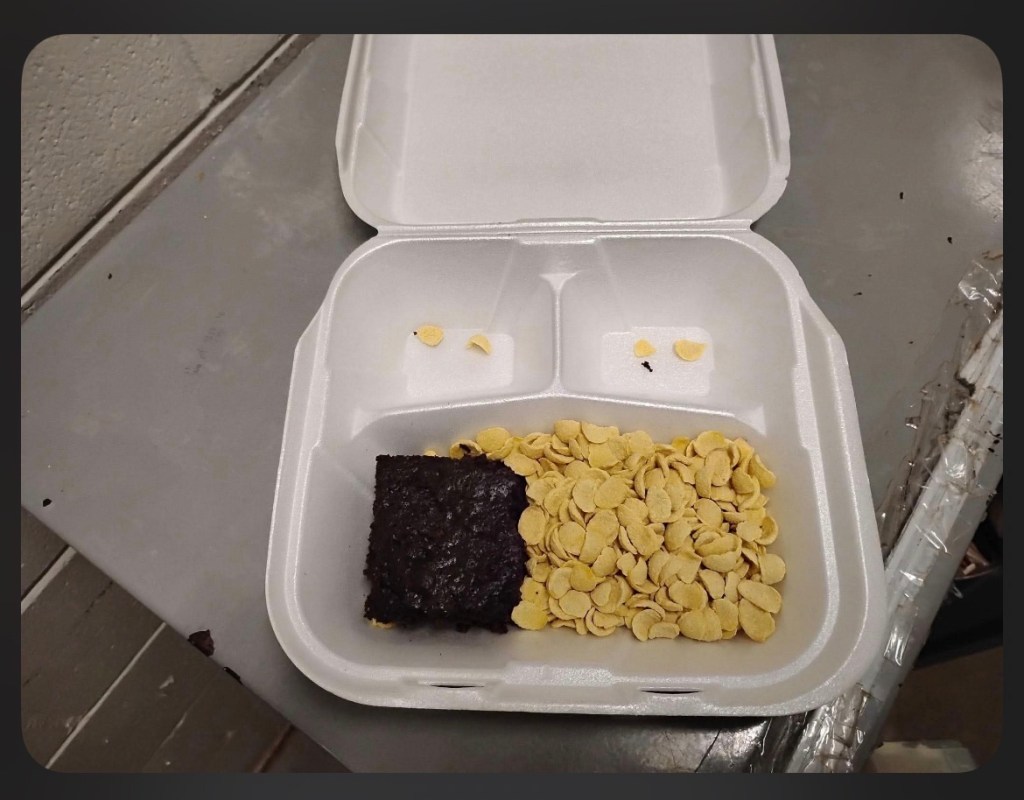
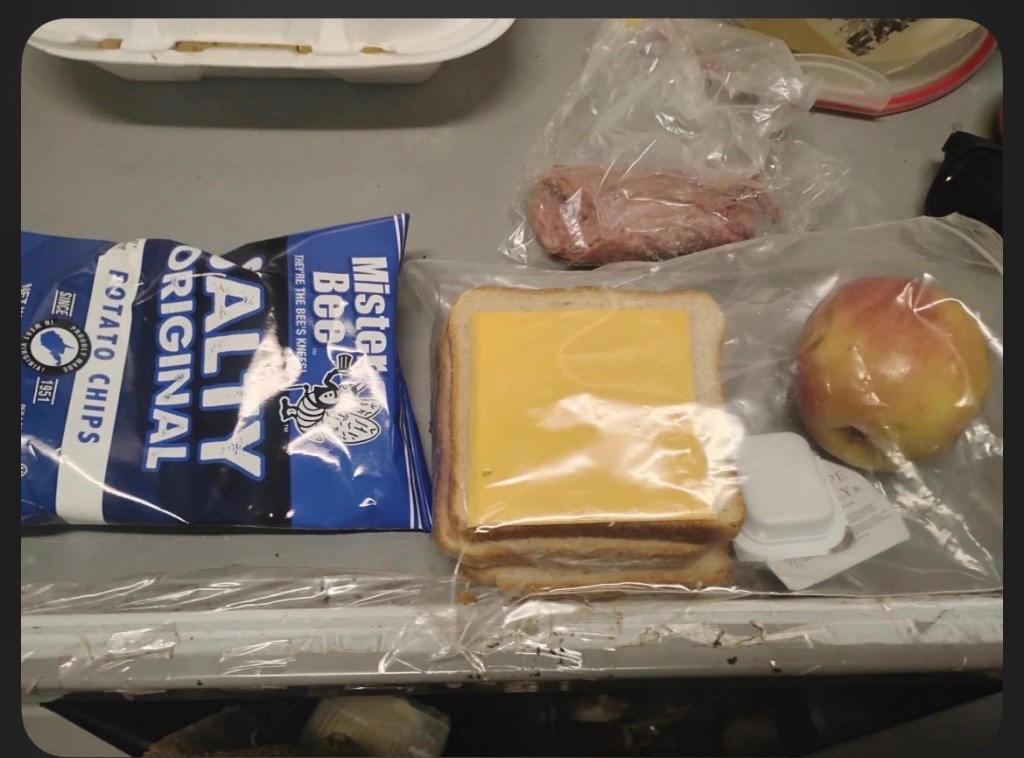
Reports also indicated that Yazoo Low I had been without hot water for several days, affecting both housing units and food service areas. Reporting parties alleged that incarcerated individuals had been required to endure cold showers while also receiving meals they believed lacked sufficient nutritional value. Photographs submitted to the Coalition depicted meals that reporting parties described as inadequate in both quantity and nutritional content.
The Coalition additionally received allegations that staff retaliate against incarcerated individuals who attempt to utilize the Administrative Remedy Program. Multiple reporting parties alleged that BP-8 and BP-9 forms have been discarded or withheld and that individuals who persist in filing grievances may face adverse consequences, including threats of placement in SHU. While these allegations remain unverified, the consistency of reporting raises concerns regarding access to administrative remedies and confidence in institutional complaint mechanisms.
Finally, reporting parties noted that Yazoo Low I has experienced significant leadership turnover. According to reporting received, the institution is currently operating under its third warden or acting warden this calendar year. While leadership transitions can occur for a variety of reasons, reporting parties questioned whether frequent administrative changes may contribute to inconsistency in institutional operations and accountability.
Taken together, the reporting received regarding Yazoo Low I raises broader concerns involving environmental health conditions, sanitation and infrastructure deficiencies, access to grievance procedures, allegations of retaliatory practices, and the overall stability of institutional operations.
2. Key Allegation & Violation Table
| Allegation | Description | Potential Concern Area |
| Alleged Retaliatory SHU Placements | Reports allege two incarcerated individuals were placed in SHU after inquiring about camp placement policy changes. | Retaliation, Due Process |
| Staff Conduct Concerns | Multiple reporting parties identified specific Unit Team staff in connection with alleged retaliatory actions. | Professional Conduct, Accountability |
| Fear of Retaliation | Reports allege others were discouraged from asking similar questions. | Access to Information |
| Suspected Mold Exposure | Reporting parties alleged mold-like substances throughout housing areas and common spaces. | Environmental Health |
| Respiratory Health Concerns | Multiple reports described recurring illnesses and respiratory symptoms among incarcerated individuals. | Medical Concerns |
| Plumbing Failures | Reports allege wastewater leaks from upper-level toilets into lower-level bathroom areas. | Infrastructure, Sanitation |
| Lack of Hot Water | Reporting parties alleged prolonged periods without hot water affecting housing and kitchen areas. | Conditions of Confinement |
| Nutritional Concerns | Submitted photographs and reporting questioned meal adequacy and nutritional value. | Food Service Operations |
| Grievance Access Barriers | Reports allege BP-8 and BP-9 forms are discarded or not processed. | Administrative Remedies |
| Alleged Retaliation for Filing Remedies | Reporting parties expressed fear of adverse consequences for utilizing the grievance process. | Accountability, Due Process |
| Leadership Turnover | Reports indicate multiple warden transitions within a short timeframe. | Institutional Stability |
3. Direct Testimony
“Two inmates went to ask about the changes to early camp placement and were thrown in the SHU.”
“A third inmate was told to keep asking and he’d end up like the last two guys.”
“Black mold is everywhere.”
“Many of us stay sick with respiratory infections.”
“Toilets upstairs leak onto inmates sitting downstairs.”
“Feces and urine water dripped onto us.”
“We’ve had no hot water in the showers or kitchen.”
“Staff retaliate if you bring BP-8s or BP-9s.”
“They throw the forms away.”
“This is already the third warden this year.”
4. Systemic Concerns
The reporting received regarding Yazoo Low I raises concerns extending beyond individual incidents and suggests the potential presence of broader institutional challenges.
Allegations that incarcerated individuals were placed in SHU after seeking clarification regarding publicly available Bureau policies raise questions regarding access to information, the ability to communicate with Unit Team staff without fear of retaliation, and confidence in institutional decision-making processes. The Coalition emphasizes that these allegations remain unverified and warrant objective review.
Environmental concerns involving alleged mold exposure, wastewater leaks, and prolonged lack of hot water similarly raise questions regarding facility maintenance, sanitation standards, and the health implications of unresolved infrastructure deficiencies. Repeated reports of respiratory illness and exposure to contaminated water environments deserve careful evaluation.
The Coalition is also concerned by allegations involving barriers to the Administrative Remedy Program. Access to grievance procedures serves as one of the primary mechanisms through which incarcerated individuals may seek resolution of concerns through established channels. Allegations that remedy forms are discarded or that individuals fear retaliation for utilizing the process may undermine confidence in institutional accountability systems.
Finally, frequent leadership transitions may present additional operational challenges and contribute to perceptions of inconsistency in oversight and responsiveness. Continued attention to these concerns may help ensure that institutional practices align with the Bureau’s stated commitment to safety, accountability, and humane conditions of confinement.
5. Oversight Questions for Clarification
- Were any incarcerated individuals placed in SHU after inquiring about recently published Bureau policies concerning camp placement or compassionate release?
- What safeguards exist to ensure individuals may seek clarification from Unit Team staff without fear of retaliation?
- Have environmental assessments been conducted regarding reports of suspected mold within Yazoo Low I housing areas?
- What investigations or remediation efforts have been undertaken concerning reported wastewater leaks and ceiling deterioration?
- What caused the reported disruption in hot water service, and when was service restored?
- How does the institution evaluate the nutritional adequacy of meals provided during service disruptions?
- What procedures are in place to ensure incarcerated individuals have meaningful access to BP-8 and BP-9 remedy forms?
- How are allegations of retaliation related to administrative remedy filings investigated and addressed?
- How many wardens or acting wardens have served at Yazoo Low I during the current calendar year?
- What measures are being implemented to improve confidence in institutional accountability and responsiveness at Yazoo Low I?
FCI THOMSON (IL)
Operational Restrictions, Delayed Transfers, Communication Concerns, HVAC Issues, and Conditions of Confinement
1. Summary of Allegations
The Loved Ones Coalition received multiple reports during this reporting period regarding operational restrictions, delayed transfers, communication concerns, housing unit conditions, and access to basic necessities at FCI Thomson.
Several reporting parties described ongoing concerns regarding prolonged movement restrictions and operational practices within the institution. Reports alleged that incarcerated individuals have experienced extended periods confined to housing units, reduced access to outdoor recreation, delayed movement throughout the institution, and repeated postponements of routine services. Reporting parties questioned whether some operational restrictions were more consistent with higher-security environments than what they expected within a low-security institution.
The Coalition also received reports regarding commissary and movement delays. Reporting parties alleged that incarcerated individuals were repeatedly advised that services such as commissary would resume, only to experience additional postponements. Some reports further alleged that individuals were left waiting for extended periods without clear explanations regarding operational changes or timelines.
Communication concerns were also raised during this reporting period. Several reporting parties described uncertainty regarding institutional operations and reported receiving limited information about ongoing restrictions. Family members expressed frustration regarding inconsistent communication and difficulty obtaining updates regarding conditions affecting their loved ones.
Additional reports involved delayed transfer procedures. One family member reported that her loved one had been instructed to pack property for transfer approximately one week earlier but remained at the institution without access to much of his personal property. According to reporting received, the individual allegedly lacked access to hygiene items and was relying on other incarcerated individuals for basic necessities while awaiting transfer. The reporting party further expressed concern regarding the financial burden placed on families when delays create prolonged periods without access to personal hygiene supplies.
The Coalition additionally received reports concerning HVAC issues affecting housing units. Reporting parties alleged that air conditioning in Unit H had been inoperable since approximately Thursday, creating excessively hot and humid living conditions. Subsequent reporting indicated that air conditioning service was reportedly restored at approximately 7:30 p.m. Sunday June 7.
Taken together, the reporting received regarding FCI Thomson raises concerns regarding prolonged operational restrictions, communication challenges, delayed transfers, access to basic necessities, and environmental conditions affecting housing units.
2. Key Allegation & Violation Table
| Allegation | Description | Potential Concern Area |
| Extended Housing Restrictions | Reports allege prolonged periods of confinement and reduced movement opportunities. | Conditions of Confinement |
| Delayed Institutional Services | Reporting parties described repeated delays involving commissary and routine operations. | Institutional Operations |
| Communication Concerns | Families reported difficulty obtaining information regarding restrictions and operational changes. | Family Communication |
| Transfer Delays | Reports allege incarcerated individuals were packed out for transfer but remained in place for extended periods. | Transfer Operations |
| Lack of Hygiene Supplies | Reporting parties alleged some individuals lacked access to personal hygiene items while awaiting transfer. | Basic Necessities |
| Financial Burden on Families | Families reported increased costs associated with prolonged transfer delays. | Family Impact |
| Housing Unit HVAC Failure | Reports alleged Unit H air conditioning was nonfunctional for several days. | Environmental Conditions |
| Heat and Humidity Concerns | Reporting parties described excessively hot housing conditions during HVAC outages. | Health & Safety |
| Continued Cooling Issues | Reports indicate some areas reportedly remained without functioning air conditioning even after partial restoration. | Facility Maintenance |
3. Direct Testimony
“He was told to pack for transfer a week ago and still hasn’t left.”
“He has no hygiene items and nothing extra.”
“He’s using other people’s soap just to take showers.”
“Services keep getting delayed again and again.”
“People are being locked down for extended periods.”
“Unit H AC hasn’t been working since Thursday.”
“It’s way too hot and humid to be in there with no AC.”
4. Systemic Concerns
The reporting received regarding FCI Thomson suggests concerns involving both operational management and quality-of-life conditions affecting incarcerated individuals and their families.
Transfer delays may create unintended hardships when individuals lose access to personal property, hygiene supplies, and other essential items while awaiting movement. When delays extend beyond anticipated timelines, both incarcerated individuals and families may experience unnecessary stress and financial burden.
The Coalition is also concerned by reports involving prolonged operational restrictions and delayed access to institutional services. While institutions may face legitimate operational challenges, transparency regarding restrictions and expected timelines can help reduce uncertainty and frustration among incarcerated individuals and their support networks.
Environmental conditions remain another area of concern. Reports involving prolonged HVAC outages during warm weather raise questions regarding living conditions, particularly when housing units become excessively hot or humid. Timely maintenance and communication regarding repair efforts are critical to maintaining safe and humane conditions.
Taken together, the reporting received during this period suggests a need for continued review of operational restrictions, transfer procedures, communication practices, and environmental conditions at FCI Thomson.
5. Oversight Questions for Clarification
- What operational factors contributed to recent movement restrictions and service delays at FCI Thomson?
- How are incarcerated individuals and families informed when operational disruptions occur?
- What procedures are in place to ensure individuals awaiting transfer maintain access to hygiene items and basic necessities?
- How many individuals are currently experiencing delayed transfers beyond anticipated timelines?
- What caused the reported HVAC outage in Unit H?
- When was air conditioning fully restored to affected housing areas?
- Were any other institutional areas affected by cooling system failures?
- What mitigation measures were implemented during the outage to protect incarcerated individuals from excessive heat?
- How does the institution evaluate the impact of prolonged restrictions on incarcerated individuals and family communication?
- What steps are being taken to improve transparency regarding operational disruptions and transfer delays?
FCI THOMSON — CREDIT WHERE CREDIT IS DUE
For months, Loved Ones Coalition has reported concerns regarding visitation at Thomson.
Families consistently described long waits, confusion about line placement, inconsistent processing, and frustration trying to navigate a system that simply wasn’t working well for visitors.
This weekend, Thomson implemented a new visitor numbering system, and the feedback from families has been overwhelmingly positive.
Visitors reported smoother processing, better organization, clearer expectations, and less confusion about who was next in line. Several families stated the process moved much more efficiently than previous weekends.
We spend a lot of time reporting problems, but accountability also means acknowledging progress when it happens.
If a change improves communication, reduces frustration, and makes it easier for families to maintain connections with their loved ones, that’s a good thing.
Thank you to the staff and leadership at FCI Thomson who listened to the concerns being raised and were willing to adjust the process.
Family connections matter. Small operational improvements can make a big difference for the people who travel hours, take time off work, and spend significant money just to spend a few hours with someone they love.
This appears to be a step in the right direction.
FCI SHERIDAN (OR)
Visitation Communication Failures, Family Hardship, and Camp Food Service Concerns
1. Summary of Allegations
The Loved Ones Coalition received multiple reports during this reporting period concerning communication failures related to visitation disruptions and quality-of-life concerns involving food service practices at FCI Sheridan.
Several reporting parties described significant hardship after traveling to FCI Sheridan for scheduled visitation, only to arrive and be informed that visits would not be taking place. Families reported spending substantial amounts of money on airfare, hotels, gas, meals, and taking unpaid time off work in order to maintain connections with their incarcerated loved ones.
According to reporting received, no notice regarding the visitation cancellations had been posted on the institution’s official website prior to families arriving at the facility. Reporting parties expressed frustration that they learned of the cancellations only after completing their travel. Families emphasized that the issue was not necessarily the cancellation itself, recognizing that institutions may occasionally face operational circumstances requiring visitation changes, but rather the absence of timely communication that could have prevented unnecessary financial loss and emotional distress.
The Coalition received multiple accounts describing the burden these unexpected disruptions place on families, many of whom save for months, coordinate childcare, request leave from employers, and travel across state lines to maintain family relationships. Reporting parties expressed concern that the lack of advance notice reflects a broader disregard for the sacrifices families make to preserve critical support systems.
Additionally, the Coalition received reports originating specifically from the Sheridan Camp population alleging that the institution has eliminated the use of seasonings in kitchen food preparation. Reporting parties described concerns that meals, which they already considered difficult to consume, may become increasingly unpalatable. While this issue may not rise to the same level as some other reported concerns, incarcerated individuals emphasized that food quality significantly impacts morale and daily quality of life.
Taken together, the reporting received regarding FCI Sheridan raises broader questions regarding transparency, communication with families, and the consideration given to the practical and emotional impact institutional decisions have on incarcerated individuals and their support systems.
2. Key Allegation & Violation Table
| Allegation | Description | Potential Concern Area |
| Lack of Visitation Notice | Families reported arriving for visits without prior notification that visitation had been suspended. | Communication, Transparency |
| Financial Hardship | Families described expenses related to flights, hotels, fuel, meals, and lost wages. | Family Impact |
| Emotional Distress | Families reported disappointment and frustration after unexpected cancellations. | Family Well-Being |
| Failure to Update Public Information | Reporting parties questioned why visitation changes were not communicated beforehand. | Institutional Accountability |
| Camp Food Service Changes | Sheridan Camp reporting parties alleged seasonings were eliminated from kitchen food preparation. | Food Service Operations |
| Declining Food Quality | Reports expressed concerns regarding meal palatability and morale. | Conditions of Confinement |
3. Direct Testimony
“People paid for flights and hotels only to be turned away.”
“No one is saying visits can never be canceled. Just tell us before we spend thousands of dollars.”
“Families take time off work, arrange childcare, and travel long distances for these visits.”
“The food already wasn’t good. Now they’re taking away all the seasonings.”
“It’s going to be completely inedible.”
4. Systemic Concerns
The reporting received regarding FCI Sheridan highlights the often-overlooked impact institutional communication failures have on families.
Family visitation is not a convenience—it is a critical component of maintaining relationships, supporting rehabilitation, and strengthening reentry outcomes. Families routinely make significant financial and personal sacrifices to preserve these connections. When visits are unexpectedly unavailable without advance notice, the consequences extend far beyond inconvenience. Families lose wages, spend money they often cannot afford, exhaust leave from work, and experience avoidable emotional hardship.
The Coalition recognizes that institutions may occasionally need to alter visitation schedules due to legitimate operational concerns. However, timely communication is both practical and humane. Posting updates through official channels before families begin traveling demonstrates respect for the people who continue supporting incarcerated individuals despite tremendous obstacles.
Additionally, while concerns regarding seasoning practices within Sheridan Camp may appear comparatively minor, quality-of-life issues can significantly influence institutional morale. Food is one of the few daily constants available to incarcerated individuals, and repeated reductions in quality contribute to perceptions that basic dignity and well-being are not being considered.
Taken together, the reporting received during this period suggests a need for improved transparency, more timely communication with families, and greater awareness of how institutional decisions affect both incarcerated individuals and the support systems that sustain them.
5. Oversight Questions for Clarification
- Under what circumstances were recent visitation periods canceled at FCI Sheridan?
- When did institutional leadership become aware that visits would not proceed as scheduled?
- Why were visitation changes reportedly not communicated through the institution’s public channels before families traveled?
- What procedures currently exist to notify families of visitation disruptions in a timely manner?
- How does the institution consider the financial burden imposed on families when communication regarding visitation changes is delayed?
- What steps can be implemented to improve transparency and prevent unnecessary hardship for visitors?
- Have food preparation practices within Sheridan Camp changed regarding the use of seasonings or spices?
- If so, what operational or nutritional considerations prompted these changes?
- How does the institution evaluate incarcerated individuals’ concerns regarding food quality and morale?
- What measures are being taken to strengthen trust and communication between FCI Sheridan and the families who support the incarcerated population?
FMC CARSWELL (TX)
Medical Care Concerns, Disability Accommodations, Durable Medical Equipment, and Access to Medically Necessary Supplies
1. Summary of Allegations
The Loved Ones Coalition received reporting during this reporting period from an incarcerated individual describing serious concerns regarding medical care, disability accommodations, access to medically necessary supplies, and continuity of treatment at FMC Carswell.
According to the reporting received, the individual alleges that a skin injury later developed into a MRSA infection. The reporting party further alleges that despite repeatedly expressing concerns regarding symptoms consistent with MRSA, requests for medical evaluation were initially dismissed. The reporting party states that the infection ultimately progressed, resulting in hospitalization, sepsis, and spinal complications. The individual reports that she is now paraplegic and requires significant assistance with activities of daily living.
The reporting party further alleges that a neurologist ordered an electric wheelchair to address mobility limitations; however, she reports that she has not received the prescribed equipment and instead relies on other incarcerated individuals to assist with transportation throughout the institution.
Additional concerns involve access to medically necessary supplies associated with her disability and catheter care. The reporting party alleges repeated shortages of absorbent pads, pull-ups, wipes, and other hygiene-related medical supplies. According to the reporting received, the shortages became so severe that the individual reported limiting food and fluid intake out of fear that she would be unable to adequately manage basic hygiene needs.
The reporting party also alleges concerns regarding catheter maintenance and continuity of care. Specifically, she reports that catheter changes do not always occur within expected timeframes and alleges complications associated with delayed replacement.
The Coalition further received allegations involving a patient handling incident during a Hoyer lift transfer. According to the reporting received, the individual alleges that she was dropped during a transfer and sustained injuries. The reporting party further alleges that concerns regarding the incident were reported but that she remains concerned about accountability and patient safety.
Additional allegations involve mental health treatment. The reporting party states that she has a documented history of major depressive disorder, anxiety, and other mental health conditions. According to the reporting received, psychiatric medications were discontinued due to concerns involving kidney disease. The reporting party alleges that her mental health symptoms have significantly worsened since the discontinuation of medication and expresses concern regarding the balance between physical and mental health treatment needs.
The reporting party indicates that concerns have been raised with institutional leadership and medical administration, including the Health Services Administrator, Associate Warden for Medical Services, Social Work Department, and the Warden.
The Loved Ones Coalition cannot independently verify these allegations. However, the severity of the concerns described—including allegations involving disability accommodations, access to prescribed medical equipment, continuity of medical care, access to medically necessary supplies, and mental health treatment—warrants review.
2. Key Allegation & Violation Table
| Allegation | Description | Potential Concern Area |
| Delayed MRSA Treatment | Reporting party alleges concerns regarding delayed recognition and treatment of a serious infection. | Medical Care |
| Sepsis and Spinal Complications | Reporting party attributes permanent disability to progression of infection. | Continuity of Care |
| Electric Wheelchair Access | Allegation that prescribed durable medical equipment has not been provided. | Disability Accommodations |
| Dependence on Other Incarcerated Individuals | Reporting party states mobility assistance relies heavily on other incarcerated persons. | Accessibility |
| Shortage of Medical Supplies | Alleged reductions in medically necessary hygiene supplies. | Medical Necessities |
| Catheter Care Concerns | Alleged delays and complications associated with catheter maintenance. | Medical Care |
| Hoyer Lift Incident | Reporting party alleges injury during patient transfer. | Patient Safety |
| Mental Health Treatment Concerns | Alleged discontinuation of psychiatric medications with worsening symptoms. | Mental Health Services |
| Administrative Escalation | Reporting party states concerns have been raised to institutional leadership. | Accountability |
3. Direct Testimony
“When I came to Carswell, I was walking, running, and working two jobs.”
“I told them it was MRSA.”
“I woke up in the hospital.”
“Now I’m a paraplegic with one good arm.”
“I have to have someone push me everywhere because I don’t have the wheelchair that was ordered.”
“They cut my medically necessary medical supplies.”
“I stopped eating and drinking because I don’t have the supplies necessary to manage my condition.”
“My mental state is horrible.”
“This place is a disgrace.”
4. Systemic Concerns
The reporting received regarding FMC Carswell raises concerns extending beyond the circumstances of a single individual.
As the Bureau of Prisons’ primary federal medical center for women, FMC Carswell houses many medically vulnerable individuals with significant healthcare needs. Allegations involving delayed treatment, access to durable medical equipment, disability accommodations, supply shortages, and continuity of mental health care raise broader questions regarding how medically complex patients are supported within the institution.
The Coalition is particularly concerned by allegations involving access to medically necessary supplies. Individuals with mobility impairments, catheter-related needs, or significant disabilities depend on consistent access to these supplies to maintain basic hygiene, dignity, and health. Any interruption in access may create serious health risks and quality-of-life concerns.
Additionally, allegations involving mental health treatment discontinuation underscore the challenges that can arise when complex physical and psychiatric conditions must be managed simultaneously. Reporting parties should not be placed in a position where treatment of one condition appears to come at the expense of another without appropriate monitoring and alternative care planning.
Taken together, the reporting received during this period raises significant concerns regarding medical continuity, disability accommodations, patient safety, and access to medically necessary resources within a federal medical center specifically tasked with caring for medically vulnerable populations.
5. Oversight Questions for Clarification
- What procedures exist to ensure timely evaluation and treatment of serious infections within FMC Carswell?
- What is the process for reviewing and implementing specialist recommendations involving durable medical equipment such as electric wheelchairs?
- Are medically necessary hygiene and catheter-care supplies consistently available to patients with documented needs?
- What safeguards exist to prevent interruptions in access to medically prescribed supplies?
- What protocols govern catheter maintenance and replacement schedules?
- How are patient-transfer incidents involving Hoyer lifts documented, reviewed, and investigated?
- What alternatives are available when psychiatric medications must be adjusted due to medical complications?
- How does FMC Carswell ensure continuity of mental health treatment for medically complex patients?
- What oversight mechanisms exist to review concerns raised by medically vulnerable incarcerated individuals?
- How does FMC Carswell monitor and address disability accommodation concerns involving mobility-impaired patients?
FCC FORREST CITY (AR) – UPDATE
The Loved Ones Coalition previously documented serious concerns involving deteriorating infrastructure at FCC Forrest City, including reports of leaking ceilings, black mold exposure, prolonged hot water outages, broken showers, and unsafe living conditions.
Most notably, footage of a ceiling collapse inside the institution circulated publicly, drawing significant concern from families, advocates, and incarcerated individuals alike. The footage highlighted the very real safety risks associated with the deteriorating conditions that have been repeatedly reported at this facility.
Following the reporting and public attention surrounding the collapse, regional personnel reportedly returned to the institution. That response is acknowledged and appreciated.
However, families and incarcerated individuals continue asking the same question:
What is actually changing?
Because the concerns being reported are not limited to a single incident.
Reports continue describing deteriorating infrastructure, broken showers, maintenance delays, and living conditions that many believe have existed for far too long. Families continue questioning why individuals remain housed in areas where significant structural concerns have repeatedly been raised.
At what point does a facility become too deteriorated to continue housing people under these conditions?
How many more infrastructure failures need to occur before meaningful corrective action is taken?
We appreciate that regional leadership has returned to the institution and appears to be taking these concerns seriously. But repeated visits must translate into measurable outcomes.
Families and incarcerated individuals deserve more than assessments. They deserve visible repairs, clear timelines, accountability, and safe living conditions.
Because people should not have to worry about ceilings collapsing around them while serving their sentences.
The Loved Ones Coalition will continue monitoring conditions at FCC Forrest City and documenting updates as they are received.