Weekly Oversight Report – June 1, 2026
Loved Ones Coalition
Documenting Systemic Concerns Across the Federal Bureau of Prisons
June 1, 2026
The Loved Ones Coalition continues to receive reporting from incarcerated individuals, family members, formerly incarcerated individuals, correctional staff, contractors, attorneys, and community members throughout the Federal Bureau of Prisons.
With more than 6,500 verified members nationwide, including approximately 4,350 currently incarcerated individuals, the reporting contained in this report represents thousands of firsthand observations from inside federal institutions.
One thing has become increasingly clear.
Some facilities appear in these reports over and over and over again.
Not once.
Not twice.
Every week.
The allegations may change, but the themes often remain the same: deteriorating infrastructure, environmental hazards, delayed medical care, communication barriers, staffing concerns, maintenance failures, and living conditions that continue generating complaints from both incarcerated individuals and staff.
The Loved Ones Coalition has reviewed reporting involving leaking ceilings, standing water, mold concerns, failing plumbing systems, broken climate-control systems, sanitation concerns, infrastructure failures, and housing areas described as actively deteriorating.
These reports are frequently accompanied by photographs, videos, witness testimony, and corroborating accounts from multiple reporting parties.
Importantly, these conditions do not impact incarcerated individuals alone.
They also impact correctional officers, medical staff, contractors, maintenance workers, and other employees who must report to these institutions every day.
Many facilities have maintenance departments attempting to address these concerns. In many cases, incarcerated work crews and staff members are actively involved in repairs and remediation efforts. However, the larger question remains:
Why are people still being housed and working in conditions requiring constant remediation?
No incarcerated individual should be expected to live in unsafe conditions while repairs are ongoing.
No staff member should be expected to work in unsafe conditions while repairs are ongoing.
The Loved Ones Coalition continues to believe that meaningful reform requires more than temporary fixes. Infrastructure concerns, institutional culture, accountability, staffing challenges, medical access concerns, and population-management issues must all be part of the conversation.
The Coalition also recognizes the efforts of Bureau of Prisons leadership, the Support Coordinators Office, and institutional staff members who continue engaging with concerns raised through these reports. We have repeatedly seen situations where reporting resulted in review, intervention, corrective action, or increased oversight.
That is why these reports continue.
Not to create conflict.
Not to assign blame.
But to document patterns, elevate concerns, identify recurring issues, and ensure the experiences of those living and working inside federal institutions are not ignored.
The conditions described throughout this report deserve attention.
The recurring patterns deserve review.
And the people living and working inside these institutions deserve better.
FCC HAZELTON (WV)
Environmental Health Concerns, Suspected Mold Exposure, Infrastructure Deterioration, First Step Act Application Concerns, Second Chance Act Placement Disputes, and Retaliation Allegations
1. Summary of Allegations
The Loved Ones Coalition received multiple reports during this reporting period regarding environmental conditions, infrastructure deterioration, First Step Act implementation, Second Chance Act placement determinations, and allegations of retaliation against incarcerated individuals utilizing administrative remedy procedures at FCC Hazleton.
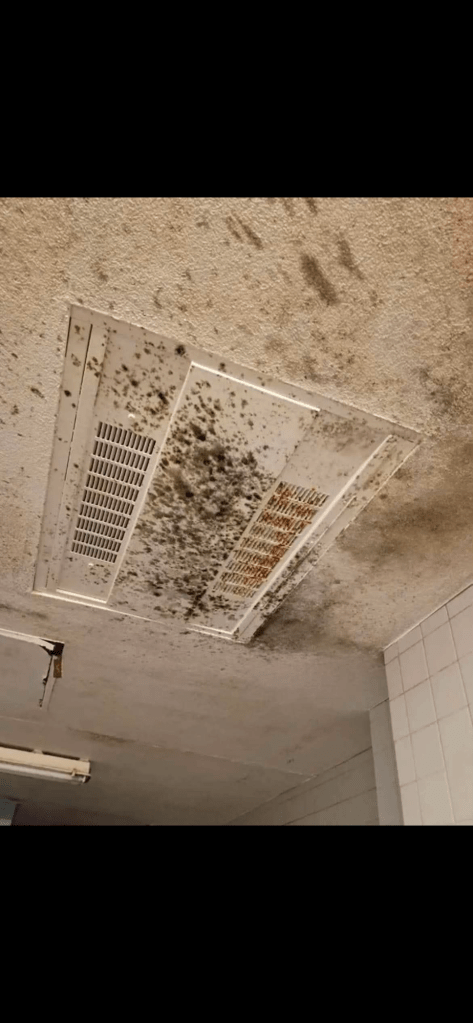
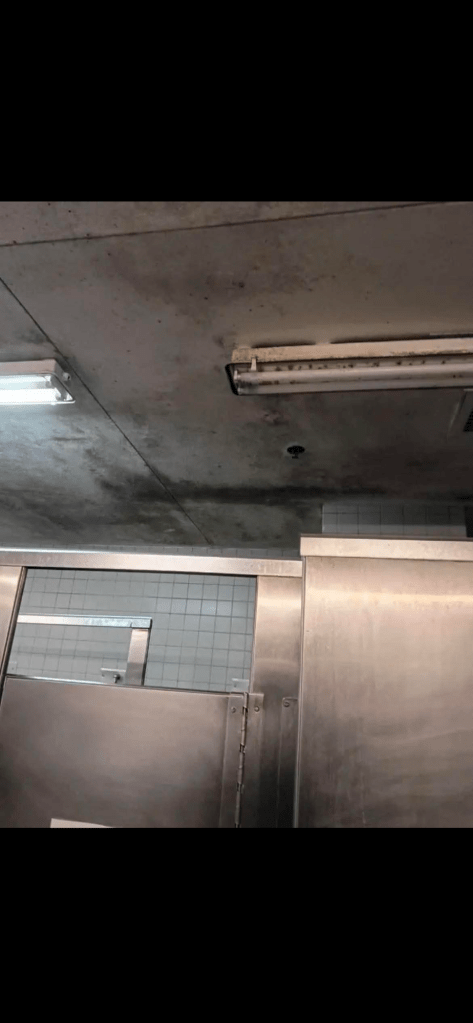
Several reporting parties described widespread mold, water intrusion, flooding, deteriorating infrastructure, and unsanitary conditions throughout portions of the institution. Supporting photographs submitted to the Loved Ones Coalition appear to depict extensive dark discoloration and suspected mold growth throughout institutional shower and bathroom facilities. The photographs appear to show widespread accumulation affecting ceilings, ventilation fixtures, lighting fixtures, access panels, and surrounding surfaces. The apparent scope of the conditions raises concerns regarding moisture control, ventilation effectiveness, environmental safety, and routine maintenance practices.
Multiple reporting parties additionally described recurring flooding and water intrusion within housing areas. One reporting party alleged that lower-tier housing units routinely flooded during periods of heavy rainfall and reported that water accumulation became severe enough during winter months that standing water would freeze inside occupied housing units. Additional testimony alleged repeated interruptions in hot water availability and described portions of the institution as being in a prolonged state of deterioration.
The Loved Ones Coalition also received reporting alleging concerns regarding the application of First Step Act Earned Time Credits and Second Chance Act placement determinations. Multiple reporting parties alleged that incarcerated individuals who have participated in qualifying programming are not consistently receiving the credits they believe they have earned. Additional allegations suggest that custody score reductions associated with programming participation and recidivism reduction efforts may not be accurately reflected in institutional calculations.
Several reporting parties further alleged that incarcerated individuals who believe they qualify for maximum prerelease placement consideration are receiving substantially less placement time than anticipated. One reporting party specifically alleged that despite serving a lengthy sentence and believing they qualified for the full twelve months of prerelease placement consideration, only six months was recommended. Additional reports suggest these concerns may not be isolated to a single individual.
The Loved Ones Coalition further received allegations that incarcerated individuals who challenge sentence-credit calculations or utilize administrative remedy procedures regarding First Step Act concerns experience adverse consequences following those complaints. Reports include allegations of targeted cell searches, property disruption, destruction of personal property, disciplinary sanctions, increased custody classifications, restrictive housing placements, and transfers to higher security institutions following attempts to challenge institutional decisions.
Several reporting parties specifically alleged that incarcerated individuals who submitted BP-8 administrative remedies regarding First Step Act concerns experienced retaliatory actions. While the Loved Ones Coalition cannot independently verify every allegation submitted, the consistency of reporting raises concerns regarding institutional transparency, accountability, and the ability of incarcerated individuals to utilize established grievance procedures without fear of adverse consequences.
Taken together, the consistency and volume of reporting received regarding FCC Hazleton raise broader concerns regarding environmental health conditions, infrastructure maintenance, sentence-credit administration, prerelease custody determinations, and institutional responsiveness to inmate concerns.
2. Key Allegation & Violation Table
| Allegation | Description | Potential Concern Area |
| Suspected Mold Exposure | Multiple reports and submitted photographs depict extensive mold-like growth and dark discoloration throughout bathroom facilities, ceilings, ventilation fixtures, lighting fixtures, and surrounding surfaces. | Environmental Health, Facility Maintenance |
| Water Intrusion and Flooding | Reporting parties describe recurring flooding within lower-tier housing units during periods of heavy rainfall, resulting in persistent moisture accumulation and deteriorating living conditions. | Infrastructure Maintenance, Environmental Safety |
| Hot Water Disruptions | Reports allege recurring interruptions in hot water availability and access to basic sanitation services. | Conditions of Confinement |
| Infrastructure Deterioration | Reporting parties describe deteriorating facility conditions, damaged fixtures, moisture-related deterioration, and longstanding maintenance concerns. | Institutional Maintenance |
| First Step Act Credit Concerns | Multiple reporting parties allege earned time credits are not being consistently applied or honored despite participation in qualifying programming. | First Step Act Implementation |
| Custody Score Concerns | Reports allege earned credit participation and recidivism-related reductions are not being accurately reflected in custody calculations. | Classification Procedures |
| Second Chance Act Placement Concerns | Reporting parties allege eligible incarcerated individuals are receiving less prerelease placement consideration than anticipated under existing policy. | Reentry Planning, Prerelease Custody |
| Case Management Concerns | Multiple reporting parties allege institutional staff are refusing to properly address concerns regarding earned time credits and prerelease placement calculations. | Institutional Operations |
| Administrative Remedy Retaliation Allegations | Reports allege incarcerated individuals utilizing BP-8 and administrative remedy procedures experience adverse consequences following complaints. | Institutional Accountability |
| Property Destruction Allegations | Reporting parties allege personal property was damaged, discarded, destroyed, or disrupted following complaints regarding sentence-credit determinations. | Property Accountability |
| SHU Placement and Disciplinary Concerns | Reports allege disciplinary sanctions, restrictive housing placements, increased custody classifications, and transfers following attempts to challenge institutional decisions. | Due Process, Institutional Accountability |
3. Direct Testimony
“Please report that case managers all across the compound, with the exception of the L-2 Honor Unit case manager, are refusing to honor FSA and SCA.”
“Refusing to give guys the credits they’re supposed to get and denying them the points off their custody and recidivism scores.”
“Refusing to give inmates the mandatory 12 months halfway house that FSA eligible inmates are entitled to.”
“Refusing to give inmates the FSA time credits they have accumulated.”
“A serious investigation of the case managers’ actions here in FCI Hazleton is needed.”
“Guys who have wrote BP-8s on these issues have had their cells tore apart, their store items stolen, destroyed or dumped on the floor.”
“Or worse, given ghost write-ups and sent to the SHU, have their custody points jacked up and sent to USPs.”
“Our case manager refuses to follow directions and doesn’t do the right SCA time. For instance, I have a 151-month sentence which should give me the full 12 months and he refuses and only gave me 6 months. He’s doing it to everybody.”
“When it rained, a lot of the cells on the bottom tier would flood from the floor.”
“In the cell next to the door during the winter that water freezes and I had ice inside my cell.”
“Half the time the hot water wasn’t working.”
“Hazleton was hands down the most run down place I’ve ever been.”
4. Systemic Concerns
The reporting received regarding FCC Hazleton raises significant concerns regarding environmental health conditions and the potential impact of prolonged moisture exposure within institutional living environments. Particularly concerning are the photographs submitted during this reporting period depicting extensive discoloration and suspected mold accumulation throughout shower facilities and ventilation systems. The apparent concentration of discoloration visible on ceilings, ventilation fixtures, and surrounding surfaces raises questions regarding the effectiveness of remediation efforts, moisture control measures, and routine maintenance practices.
The consistency between photographic evidence and witness testimony further strengthens concerns regarding environmental conditions within portions of the institution. Multiple reporting parties independently described mold, moisture intrusion, flooding, deteriorating infrastructure, and sanitation concerns. While the Loved Ones Coalition is not qualified to determine the precise nature of the substance depicted in the photographs, the conditions shown warrant further review and clarification.
The reporting additionally raises concerns regarding infrastructure reliability and maintenance practices. Allegations involving recurring flooding, standing water, frozen water accumulation, and repeated interruptions in hot water service suggest potential long-term maintenance challenges that may impact daily living conditions. When considered alongside the submitted photographs, these reports suggest that moisture-related concerns may extend beyond isolated incidents.
The reporting also raises concerns regarding the administration of First Step Act Earned Time Credits and Second Chance Act placement determinations. Multiple reporting parties described confusion, frustration, and concern regarding earned time credit calculations, custody score reductions, and prerelease placement recommendations. While individual determinations may vary based upon statutory and policy considerations, the consistency of complaints suggests a perceived lack of transparency regarding how such decisions are being calculated and communicated.
The Loved Ones Coalition is additionally concerned by allegations suggesting that incarcerated individuals may be reluctant to pursue administrative remedies due to fear of adverse consequences. Reports alleging property destruction, cell searches, disciplinary sanctions, increased custody classifications, and restrictive housing placements following complaints raise concerns regarding confidence in the administrative remedy process. While these allegations remain unverified, the consistency of reporting warrants attention.
Taken together, the reporting received regarding FCC Hazleton suggests broader concerns involving environmental health conditions, infrastructure maintenance, sentence-credit administration, prerelease custody planning, institutional communication, and confidence in existing grievance procedures. The volume and consistency of reporting indicate these concerns may reflect broader operational issues rather than isolated incidents.
5. Oversight Questions for Clarification
- Have environmental inspections recently been conducted regarding reported mold and moisture concerns within housing and bathroom areas at FCC Hazleton?
- What remediation efforts, if any, have been undertaken to address the conditions depicted in photographs submitted during this reporting period?
- How many maintenance requests involving flooding, water intrusion, plumbing failures, or moisture-related concerns have been documented during the previous twelve months?
- Have institutional assessments been conducted regarding ventilation systems servicing the areas depicted in submitted photographs?
- What procedures are currently utilized to review and verify First Step Act Earned Time Credit calculations?
- How are disputes regarding earned time credits and prerelease custody recommendations reviewed and resolved at the institutional level?
- What factors are currently considered when determining Residential Reentry Center and Second Chance Act placement recommendations?
- What safeguards exist to ensure incarcerated individuals can utilize administrative remedy procedures without fear of retaliation?
- Have allegations involving retaliatory searches, property destruction, disciplinary sanctions, or restrictive housing placements related to grievance activity been reviewed?
- Are any corrective actions currently planned or underway regarding environmental conditions, infrastructure concerns, or sentence-credit administration at FCC Hazleton?





USP LEE (VA)
Mail Delivery Concerns, Communication Barriers, SHU Communication Restrictions, Returned Correspondence Concerns, and Access to Family Contact
1. Summary of Allegations
The Loved Ones Coalition received multiple reports during this reporting period regarding mail delivery concerns, communication barriers, and correspondence processing issues at USP Lee. Families and support networks reported concerns that incoming mail is not consistently reaching incarcerated individuals and alleged that mail-related problems have persisted for several months.
Several reporting parties described situations in which correspondence was delayed, missing, or returned to senders despite their understanding that the intended recipients remained housed at USP Lee. Supporting documentation submitted to the Loved Ones Coalition included examples of correspondence returned with notations indicating that the intended recipient was no longer housed at the institution. Reporting parties disputed the accuracy of those determinations and alleged that the incarcerated individuals in question remained assigned to USP Lee at the time the correspondence was returned.
The reporting received suggests that concerns regarding mail delivery may not be isolated to a single incident. Multiple families described difficulty confirming whether correspondence was delivered, delayed, returned, or otherwise affected during processing. Several reporting parties expressed frustration regarding the lack of transparency surrounding mail handling procedures and stated that communication concerns have persisted for an extended period of time.
In addition to mail delivery concerns, reporting parties raised issues regarding communication restrictions affecting incarcerated individuals housed in restrictive housing environments. Families reported that limitations involving telephone access, visitation privileges, and commissary restrictions have increased reliance on written correspondence as a primary means of maintaining contact with loved ones.
According to the reporting received, communication through traditional channels becomes increasingly important when other forms of contact are restricted. Several reporting parties expressed concern that delayed, missing, or returned correspondence may significantly impact incarcerated individuals’ ability to maintain family relationships, emotional support systems, and community ties.
The Loved Ones Coalition also received concerns regarding the cumulative impact of communication restrictions. Families reported that when telephone access, visitation opportunities, and written correspondence are simultaneously affected, maintaining consistent contact becomes increasingly difficult. Reporting parties described situations in which written correspondence represented one of the few remaining avenues for communication.
While the Loved Ones Coalition cannot independently verify the circumstances surrounding individual pieces of returned correspondence or determine the precise reason mail may not have reached intended recipients, the reporting received raises concerns regarding mail processing procedures, communication access, and institutional transparency.
Taken together, the consistency of reporting raises broader concerns regarding mail delivery reliability, correspondence processing practices, communication access, and the ability of incarcerated individuals to maintain meaningful contact with family members and support networks while housed at USP Lee.
2. Key Allegation & Violation Table
| Allegation | Description | Potential Concern Area |
| Mail Delivery Concerns | Multiple reporting parties alleged delayed, missing, or inconsistently delivered correspondence. | Mail Operations, Communication Access |
| Returned Correspondence Concerns | Families submitted examples of mail returned with indications that recipients were no longer housed at USP Lee despite allegations that they remained assigned to the institution. | Mail Processing Procedures, Institutional Records |
| Ongoing Communication Barriers | Reporting parties alleged mail-related concerns have persisted for several months rather than representing isolated incidents. | Institutional Communication |
| Correspondence Processing Concerns | Families expressed uncertainty regarding whether mail was delivered, delayed, returned, or otherwise affected during processing. | Administrative Procedures |
| SHU Communication Restrictions | Families reported concerns regarding restricted communication opportunities for incarcerated individuals housed in the SHU. | Conditions of Confinement |
| Telephone Restriction Concerns | Reporting parties alleged communication restrictions have increased reliance on written correspondence. | Communication Access |
| Visitation Restriction Concerns | Families reported reduced opportunities for in-person communication and contact. | Family Contact |
| Family Contact Concerns | Reporting parties expressed concern that multiple communication barriers are limiting meaningful contact between incarcerated individuals and support networks. | Family Reunification, Communication Access |
| Mail Processing Transparency Concerns | Families reported difficulty obtaining clarification regarding the status and disposition of missing correspondence. | Institutional Accountability |
3. Direct Testimony
“This has been going on for months now.”
“This been going on literally since February or March.”
“We never had an issue since he arrived.”
“They put him in the SHU, slapped him with phone, commissary, and visitation restrictions, and now he basically ain’t getting mail.”
“If he didn’t have the ability to use CorrLinks he’d be relying almost entirely on mail to communicate with the outside world.”
4. Systemic Concerns
The reporting received regarding USP Lee raises concerns regarding the reliability of mail delivery procedures and the importance of correspondence as a critical communication lifeline for incarcerated individuals.
Communication with family members remains one of the primary means through which incarcerated individuals maintain community ties, emotional support systems, and preparation for eventual reentry. When concerns arise regarding delayed correspondence, missing mail, returned mail, or uncertainty surrounding delivery, families often experience significant frustration due to their limited ability to independently verify what occurred.
Particularly concerning are allegations that correspondence was returned to senders based upon determinations that recipients were no longer housed at USP Lee despite reporting parties alleging those individuals remained assigned to the institution. If accurate, such circumstances may raise questions regarding inmate location records, mail processing procedures, correspondence tracking systems, and the accuracy of return-to-sender determinations utilized during mail screening and distribution.
The reporting additionally raises concerns regarding transparency within mail operations. Multiple reporting parties described difficulty determining whether correspondence was delayed, misplaced, returned, rejected, or otherwise affected during institutional processing. When communication systems lack transparency, families may have limited ability to identify the source of the problem or pursue resolution.
The reporting further highlights the cumulative impact of communication restrictions on incarcerated individuals and their support networks. According to the reporting received, some incarcerated individuals are subject to restrictions affecting telephone access, visitation opportunities, and commissary privileges. Under those circumstances, written correspondence may become one of the few remaining avenues for maintaining consistent family contact.
The Loved Ones Coalition recognizes that institutional mail systems must balance security concerns with communication needs. However, recurring allegations involving delayed, missing, or improperly returned correspondence may undermine confidence in communication systems and create unnecessary barriers between incarcerated individuals and their support networks.
Taken together, the consistency of reporting received regarding USP Lee raises broader concerns regarding communication access, mail delivery reliability, correspondence processing practices, institutional transparency, and the ability of incarcerated individuals to maintain meaningful family contact while incarcerated.
5. Oversight Questions for Clarification
- What procedures are currently utilized to process and distribute incoming personal correspondence at USP Lee?
- Under what circumstances may correspondence be returned to a sender with a determination that an incarcerated individual is no longer housed at the institution?
- What safeguards exist to ensure inmate location records are accurately reflected during mail processing procedures?
- Are individuals housed in SHU status subject to different mail-processing procedures than the general population?
- What oversight mechanisms exist to ensure incoming correspondence is delivered in a timely and consistent manner?
- How are families notified when correspondence is returned, rejected, or otherwise unable to be delivered?
- Have any recent operational issues affected mail processing or delivery at USP Lee?
- What avenues are available for incarcerated individuals to challenge concerns regarding delayed, missing, or returned correspondence?
- How does the institution ensure communication access for incarcerated individuals subject to restrictions involving telephone, visitation, or commissary privileges?
- Have concerns regarding mail delivery reliability, correspondence processing, or returned mail practices been reviewed by institutional leadership, and if so, what corrective actions have been considered?
FCI BECKLEY (WV)
Medical Neglect Concerns, Delayed Specialty Care, Failure to Follow Specialist Orders, Chronic Care Management Deficiencies, and Access to Appropriate Medical Placement
1. Summary of Allegations
The Loved Ones Coalition continues to receive reporting regarding medical care concerns at FCI Beckley, including allegations involving delayed specialty referrals, delayed diagnostic testing, missed follow-up appointments, failures to implement outside physician recommendations, and concerns regarding the management of medically complex incarcerated individuals.
Reporting received during this period included documentation involving an incarcerated individual diagnosed with leukemia following months of elevated platelet counts, delayed specialty referrals, delayed diagnostic testing, and prolonged gaps in oncology follow-up care. Families expressed concern that the case reflects broader issues involving continuity of care, implementation of specialist recommendations, and access to medically appropriate treatment within the institution.
According to the reporting received, significant abnormal laboratory findings were reportedly identified over an extended period without timely referral to appropriate specialists. Documentation provided alleges delays between abnormal test results, specialty consultation requests, diagnostic testing, and implementation of treatment plans recommended by outside medical providers.
The reporting further raises concerns regarding continuity of specialty care once treatment plans have been established. Families alleged that outside specialists ordered recurring laboratory monitoring, follow-up appointments, diagnostic evaluations, and ongoing observation, yet several of those recommendations were allegedly not carried out within the prescribed timeframe.
Particularly concerning are allegations involving oncology care and chronic disease management. Documentation submitted to the Loved Ones Coalition alleges that an outside oncology provider ordered weekly laboratory monitoring and recurring follow-up visits after diagnosing leukemia. Reporting parties allege that the individual was not returned for follow-up care as ordered and that portions of the monitoring plan were modified despite specialist recommendations.
Families additionally raised concerns regarding medical classification and placement. Reporting parties questioned whether incarcerated individuals requiring ongoing specialty treatment, oncology oversight, and complex chronic care management are appropriately housed within the current institutional setting. Requests were made for consideration of transfer to a higher-level medical facility capable of providing expanded specialty care resources.
Additional reporting received by the Loved Ones Coalition over multiple reporting periods has similarly raised concerns regarding delayed medical appointments, specialty-care access, chronic disease management, and communication surrounding ongoing medical treatment at FCI Beckley.
While the Loved Ones Coalition cannot independently verify the entirety of the medical records referenced in the reporting, the documentation provided raises substantial concerns regarding continuity of care, implementation of specialist recommendations, specialty referral processes, chronic disease management, and institutional capacity to manage medically complex incarcerated individuals.
Taken together, the reporting raises broader concerns regarding access to specialty care, medical oversight, treatment continuity, implementation of physician orders, and healthcare delivery practices at FCI Beckley.
2. Key Allegation & Violation Table
| Allegation | Description | Potential Concern Area |
| Delayed Specialty Referrals | Reporting alleges delays in obtaining specialty consultations following significant medical findings. | Medical Access |
| Delayed Diagnostic Testing | Families report prolonged delays completing testing ordered by specialists. | Diagnostic Services |
| Failure to Implement Physician Orders | Reporting alleges outside specialist recommendations are not always implemented as ordered. | Continuity of Care |
| Oncology Follow-Up Concerns | Families report extended gaps between oncology appointments and recommended monitoring. | Specialty Care |
| Chronic Care Management Concerns | Reporting raises concerns regarding monitoring of medically complex incarcerated individuals. | Chronic Disease Management |
| Laboratory Monitoring Concerns | Families allege ordered laboratory monitoring was not completed within prescribed timeframes. | Medical Oversight |
| Vision Care Concerns | Reporting indicates significant delays in follow-up care after serious vision-related medical events. | Specialty Care Access |
| Care Level Placement Concerns | Questions raised regarding whether medically complex individuals are housed at medically appropriate institutions. | Medical Classification |
| Medical Transfer Concerns | Families report difficulty obtaining transfer consideration to higher-level medical facilities. | Medical Placement |
| Systemic Medical Neglect Concerns | Reporting parties describe recurring concerns involving delays, scheduling issues, specialist access, and treatment continuity. | Institutional Healthcare Operations |
3. Direct Testimony
“His initial labs showed elevated platelet counts, but no prompt follow-up or referral was made.”
“He suffered a retinal vein occlusion resulting in approximately 30–40% permanent vision loss.”
“The retinal specialist ordered monthly follow-up visits, but over the following year he was only brought to two appointments.”
“Despite critically high platelet counts, he was not referred to an oncologist for months.”
“After finally completing the delayed testing, the oncologist diagnosed leukemia.”
“The oncologist ordered weekly laboratory monitoring and weekly office visits.”
“He has not been taken back to the oncologist since March 18, 2026.”
“None of the weekly labs or office visits have been carried out.”
“This failure leaves his condition completely unmonitored and puts him at continued high risk for life-threatening complications.”
“The in-house doctor has taken him off weekly labs that were ordered by a specialist.”
“Please help my brother make these people follow the doctor’s orders and get him sent to a medical facility.”
4. Systemic Concerns
The reporting received regarding FCI Beckley raises concerns that extend beyond any single medical case. Multiple reporting periods have included allegations involving delayed specialty referrals, delayed diagnostic testing, inconsistent follow-up care, difficulties obtaining outside consultations, and concerns regarding the implementation of physician recommendations.
While individual circumstances vary, the consistency of reporting suggests broader concerns regarding continuity of care, specialty-care access, chronic disease management, and oversight of medically complex incarcerated individuals. Families frequently report difficulty obtaining timely information regarding treatment plans, specialist appointments, and implementation of outside physician orders.
Particularly concerning are allegations involving serious chronic illnesses that require regular monitoring and specialist involvement. Delays in appointments, testing, laboratory monitoring, or treatment implementation may increase the risk of preventable complications and contribute to declining health outcomes.
The reporting received this period raises questions regarding institutional capacity to manage complex medical conditions, coordination between institutional providers and outside specialists, and the processes utilized to ensure specialist recommendations are carried out consistently and in a timely manner.
The allegations also raise concerns regarding medical classification and placement decisions. Families continue to question whether incarcerated individuals with extensive specialty-care needs are consistently housed in institutions capable of providing the level of treatment, monitoring, and specialist access required by their medical conditions.
The Loved Ones Coalition recognizes that medical treatment decisions ultimately rest with qualified healthcare professionals. However, recurring allegations involving delayed care, delayed referrals, missed appointments, and deviations from specialist treatment plans may undermine confidence in institutional healthcare systems and create significant concern among incarcerated individuals and their families.
Taken together, the reporting received regarding FCI Beckley raises broader concerns regarding continuity of care, specialty access, chronic disease management, implementation of physician recommendations, medical classification practices, and healthcare oversight within the institution.
5. Oversight Questions for Clarification
- What procedures are utilized at FCI Beckley to ensure timely referral to outside specialists following significant abnormal laboratory findings?
- What safeguards exist to ensure specialist-ordered testing, monitoring, and follow-up appointments are completed within recommended timeframes?
- How are outside physician recommendations reviewed, implemented, modified, or overridden by institutional medical staff?
- What procedures govern oncology follow-up scheduling for incarcerated individuals diagnosed with serious hematological conditions?
- How are missed specialty appointments documented, reviewed, and rescheduled?
- What factors are considered when determining whether an incarcerated individual requires placement at a higher-level medical institution?
- What oversight mechanisms exist to ensure continuity of care for individuals requiring long-term specialty treatment?
- How are chronic care patients monitored when outside specialists recommend frequent laboratory testing and follow-up visits?
- Have concerns regarding delayed specialty treatment, missed appointments, or implementation of physician orders at FCI Beckley been reviewed by institutional leadership?
- What corrective measures, if any, are currently being considered to improve specialty care coordination, chronic disease management, continuity of treatment, and access to medically appropriate placement at FCI Beckley?
FCI McDowell (WV) — UPDATE
Mattress Shortage Update
For several consecutive weeks, the Loved Ones Coalition has documented reports regarding mattress shortages affecting incarcerated individuals at FCI McDowell. Families and incarcerated individuals repeatedly reported concerns that portions of the institution were operating without adequate mattress availability, leaving some individuals without proper sleeping accommodations.
During this reporting period, multiple family members reported that mattresses are now being distributed throughout affected housing areas. According to updated testimony, incarcerated individuals have observed staff delivering mattresses to units that had previously been impacted by the shortage, with additional distributions reportedly continuing.
Families expressed that incarcerated individuals feel their concerns have finally been heard and that action is being taken to address an issue that has been repeatedly reported over recent weeks. While some individuals continue to await mattress distribution, the reports received this week indicate meaningful progress toward resolving a concern that has been consistently raised in prior Loved Ones Coalition reporting.
The Loved Ones Coalition will continue monitoring conditions at FCI McDowell and welcomes additional updates regarding housing conditions, institutional responsiveness, and access to basic necessities.
FCI Hazleton (WV) — UPDATE
Long-Term SHU Placement Receives Review Following Advocacy Referral
During this reporting period, the Loved Ones Coalition elevated concerns regarding an incarcerated individual who had reportedly spent approximately two years in the Special Housing Unit (SHU).
Following outreach through the Bureau of Prisons Support Coordinators Office, family members reported that the matter received attention and review. The reporting party expressed appreciation that concerns regarding the prolonged SHU placement were being acknowledged after an extended period of time.
The family member, who has actively participated in advocacy efforts and reporting initiatives, stated that they were encouraged by the responsiveness and grateful that the issue was receiving oversight.
While the Loved Ones Coalition cannot determine what actions may result from any review, the update reflects the value of continued reporting, documentation, and communication regarding long-standing concerns raised by incarcerated individuals and their families.
The Loved Ones Coalition will continue monitoring the situation and documenting any future developments as they become available.
FCC Forrest City (AR)
Infrastructure Deterioration, Plumbing Failures, Hot Water Outages, Food Service Sanitation Concerns, Programming Disruptions, Unpaid Work Assignments, and Staff Conduct Allegations
1. Summary of Allegations
The Loved Ones Coalition received reporting from incarcerated individuals and family members regarding ongoing concerns at FCC Forrest City involving deteriorating infrastructure, sanitation issues, plumbing failures, delayed inmate compensation, food service concerns, repeated programming disruptions, and staff conduct allegations.
Reporting received by the Loved Ones Coalition alleges that some incarcerated individuals assigned to institutional work details have experienced delayed compensation, including reports of individuals being owed multiple pay periods for completed work. Families expressed concern that incarcerated individuals are performing institutional labor without receiving timely or consistent compensation.
Additional reporting raises concerns regarding food service sanitation and institutional equipment failures. One reporting party alleged that the dishwashing machine was not functioning properly and that the booster heater used to sanitize dishes was out of service. These concerns raise questions regarding sanitation procedures, food service safety, and institutional maintenance responsiveness.
Multiple reports also describe prolonged hot water outages within portions of the institution. According to testimony, H Unit allegedly went approximately three months during freezing weather without reliable hot water. Reporting parties described this as an ongoing conditions-of-confinement concern impacting sanitation, hygiene, and daily living conditions.
Plumbing failures were repeatedly referenced throughout the reporting. Multiple individuals alleged that toilets located in upper portions of H Unit leak into lower areas, resulting in water coming down on incarcerated individuals using lower-level restroom facilities. Similar concerns were also reported regarding shower areas. These allegations raise concerns regarding wastewater exposure, sanitation standards, and delayed maintenance repairs.
The Loved Ones Coalition also received reporting regarding repeated cancellations and interruptions to First Step Act programming and other institutional classes. According to testimony, FSA and other classes are frequently cancelled. One report alleged that a class was ended three sessions early, with incarcerated individuals allegedly told not to worry because they would still receive credit. These reports raise concerns regarding program integrity, access to rehabilitative programming, and consistency in earned time credit-related opportunities.
Food service concerns were also reported. Individuals alleged that meals served are frequently inconsistent with the posted menu, raising concerns regarding transparency, food service accountability, and compliance with institutional menu standards.
Additional testimony raised concerns regarding staff conduct and professionalism. Reporting alleged that some staff members smoke within institutional areas and use personal cell phones while on duty. While the Loved Ones Coalition cannot independently verify these allegations, they contribute to broader concerns regarding institutional culture, staff accountability, and operational oversight.
Taken together, the consistency and overlap of reporting suggest broader concerns involving facility maintenance, sanitation standards, plumbing infrastructure, food service operations, inmate compensation practices, programming reliability, staff professionalism, and overall operational accountability within FCC Forrest City.
2. Key Allegation & Violation Table
| Allegation | Description | Potential Concern Area |
| Unpaid work assignment concerns | Reports allege incarcerated individuals have not received compensation for completed institutional work and are owed multiple pay periods. | Inmate Compensation / Institutional Operations |
| Dishwashing equipment failure | Dishwashing machine reportedly not functioning properly within food service operations. | Food Service / Sanitation |
| Booster heater failure | Booster heater reportedly used to sanitize dishes is allegedly out of service. | Food Safety / Sanitation |
| Prolonged hot water outage | H Unit reportedly went approximately three months during freezing weather without reliable hot water. | Conditions of Confinement |
| Plumbing leak concerns | Toilets in upper portions of H Unit reportedly leak into lower-level restroom areas. | Facility Maintenance |
| Wastewater exposure concerns | Individuals report water from upper-tier restroom areas leaking down while incarcerated individuals use lower-level urinals. | Sanitation / Environmental Health |
| Shower drainage concerns | Similar leakage and water intrusion concerns reportedly occur in shower areas. | Sanitation / Infrastructure |
| Programming disruptions | FSA and other institutional classes are reportedly cancelled frequently. | Programming / Rehabilitation |
| Incomplete class concerns | One class was reportedly ended three sessions early, with individuals allegedly told they would still receive credit. | Program Integrity / First Step Act |
| Food menu concerns | Meals reportedly do not match the posted menu. | Food Service Accountability |
| Staff conduct allegations | Reports allege staff smoke within institutional areas and use personal cell phones while on duty. | Staff Professionalism |
| Institutional maintenance concerns | Multiple complaints describe delayed repairs and unresolved facility issues affecting daily living conditions. | Institutional Operations |
3. Direct Testimony
“He has not been paid for his work and is owed two paychecks.”
“The dish machine isn’t working and the booster heater that is to sanitize the dishes is out.”
“The H pod went 3 months during the freezing weather without hot water.”
“The toilets in the upper part of H unit leaks into the bottom floor.”
“While an inmate is using the urinal downstairs, water floods down on them.”
“Same thing happens in the showers.”
“Their FSA and other classes get cancelled all the time.”
“They ended one class 3 classes short and told the inmates not to worry with it, they’d just give them the credit.”
“The food is never what is on the posted menu.”
“COs smoke within the walls on the premises and play on their cell phones.”
“Families could sue for the neglect they are receiving. It’s inhumane.”
4. Systemic Concerns
The reporting from FCC Forrest City raises concerns regarding facility maintenance, sanitation standards, food service operations, programming reliability, inmate compensation practices, and staff professionalism.
Particularly concerning are allegations involving prolonged hot water outages during freezing weather conditions. Access to hot water is fundamental to hygiene, sanitation, and basic living conditions within a correctional environment. Reports that portions of H Unit allegedly went approximately three months without reliable hot water raise serious questions regarding maintenance responsiveness and institutional capacity to address basic infrastructure failures in a timely manner.
The plumbing concerns described in the reporting raise additional sanitation and environmental health concerns. Allegations that upper-level toilets leak into lower-level restroom areas, including while incarcerated individuals are using urinals below, suggest potentially unsanitary and degrading conditions. Similar concerns regarding shower areas further raise questions regarding plumbing infrastructure, maintenance response times, and exposure to contaminated water or wastewater.
Food service sanitation concerns also warrant attention. Reports that the dishwashing machine and booster heater used for sanitation are not functioning raise questions regarding whether dishes, trays, and utensils are being properly sanitized before reuse. If sanitation equipment is not operational, the institution should have clear alternative procedures in place to prevent foodborne illness and maintain food safety standards.
Programming-related concerns raise separate issues regarding access to rehabilitative opportunities and First Step Act implementation. Repeated cancellations of FSA and other classes may interfere with access to evidence-based recidivism reduction programming. Reports that a class was ended before completion, while participants were allegedly told they would still receive credit, also raise questions regarding program integrity, documentation practices, and consistency in earned time credit-related programming.
The reporting additionally reflects ongoing frustration regarding inmate work assignment compensation. Allegations that incarcerated workers are owed multiple paychecks raise concerns regarding payroll processing, work assignment accountability, and institutional responsiveness when payment issues arise.
Food service concerns regarding meals not matching posted menus further raise questions regarding transparency, menu compliance, nutritional planning, and food service oversight. When posted menus differ from meals served, incarcerated individuals may be unable to rely on institutional information regarding nutrition, religious diet planning, medical diet expectations, or basic meal consistency.
Staff conduct allegations involving smoking within institutional areas and personal cell phone use while on duty also raise concerns regarding professionalism, supervision, and operational accountability. While the Loved Ones Coalition cannot independently verify these allegations, repeated concerns involving staff conduct contribute to broader questions regarding institutional culture and oversight.
Taken together, the reporting suggests broader concerns regarding infrastructure reliability, sanitation, maintenance responsiveness, program access, food service accountability, inmate compensation practices, and institutional oversight within FCC Forrest City.
5. Oversight Questions for Clarification — FCC Forrest City (SOUTH CENTRAL REGION)
- What procedures are in place to ensure incarcerated individuals assigned to institutional work details receive timely compensation for completed work?
- Have there been recent delays in inmate payroll processing at FCC Forrest City, and if so, what corrective actions are being taken?
- Is the institutional dishwashing machine currently functioning properly?
- Is the booster heater used to sanitize dishes currently operational, and if not, what alternative sanitation procedures are being used?
- How long did H Unit reportedly operate without reliable hot water during freezing weather conditions?
- What repairs were completed or are currently pending regarding hot water access in H Unit?
- Have plumbing leaks involving upper-tier toilets or showers been documented within H Unit?
- What steps are being taken to address reports of water leaking into lower-level restroom and shower areas?
- What sanitation procedures are implemented when plumbing failures create possible exposure to wastewater or contaminated water?
- How frequently are FSA and other programming classes cancelled at FCC Forrest City?
- What procedures ensure incarcerated individuals receive accurate program credit only when required coursework or participation standards are satisfied?
- What oversight mechanisms exist to ensure meals served are consistent with posted menus and applicable food service standards?
- Have food service operations received recent complaints regarding menu substitutions, sanitation equipment failures, or meal inconsistency?
- Have allegations regarding staff smoking within institutional areas or personal cell phone use while on duty been reviewed by institutional leadership?
- What corrective actions, if any, are currently being considered to address maintenance failures, sanitation concerns, programming disruptions, inmate pay delays, and staff conduct concerns at FCC Forrest City?
FMC Carswell (TX)
Recurring Reports of Delayed Medical Treatment, Specialty Care Delays, Chronic Care Concerns, and Access-to-Care Issues
1. Summary of Allegations
The Loved Ones Coalition continues to receive recurring reports from incarcerated women at FMC Carswell regarding delays in medical treatment, delayed specialty consultations, postponed procedures, chronic care management concerns, and barriers to timely access to healthcare services.
Throughout the reporting period, multiple individuals described prolonged waits for evaluation, treatment, follow-up appointments, and implementation of specialist recommendations. Concerns frequently involve chronic medical conditions, cardiac care, specialty referrals, diagnostic testing, and delayed responses to ongoing symptoms.
Several reporting parties described situations in which serious medical concerns allegedly remained unresolved for extended periods despite repeated requests for treatment. Reports received by the Loved Ones Coalition indicate concerns regarding delays in specialist appointments, postponed procedures, lack of follow-up after outside consultations, and uncertainty regarding treatment timelines.
Additional reporting raises concerns regarding continuity of care after specialist evaluations. Multiple individuals reported being evaluated by outside providers or specialists but experiencing significant delays before recommended treatment plans were implemented. Families and incarcerated individuals alike expressed frustration regarding communication gaps, inconsistent information, and difficulty obtaining updates regarding medical status or pending procedures.
The Loved Ones Coalition continues to receive reports alleging delays involving cardiology services, chronic disease management, dermatological conditions, diagnostic testing, and specialty care referrals. While individual medical circumstances vary, the consistency of the reporting raises broader concerns regarding access to care, timeliness of treatment, specialty provider availability, and implementation of medically recommended interventions.
Although the Loved Ones Coalition cannot independently verify individual medical allegations, the volume and consistency of reporting suggest ongoing concerns regarding healthcare access and continuity of medical services at FMC Carswell.
2. Key Allegation & Violation Table
| Allegation | Description | Potential Concern Area |
| Delayed specialist appointments | Multiple reports describe extended waits for outside consultations and specialty care. | Specialty Medical Care |
| Delayed treatment implementation | Individuals report significant delays between specialist recommendations and actual treatment. | Continuity of Care |
| Chronic care concerns | Reports describe ongoing symptoms persisting without timely intervention. | Chronic Disease Management |
| Cardiac care concerns | Multiple reports involve delays related to cardiac evaluations, procedures, and follow-up care. | Cardiology Services |
| Delayed diagnostic testing | Individuals report delays in obtaining ordered testing and evaluations. | Medical Access |
| Follow-up appointment concerns | Reports describe missed, delayed, or postponed follow-up care. | Medical Operations |
| Communication barriers | Families and incarcerated individuals report difficulty obtaining information regarding treatment status. | Patient Communication |
| Continuity of care concerns | Reports suggest breakdowns between outside specialist recommendations and institutional implementation. | Healthcare Oversight |
| Chronic staffing and scheduling concerns | Recurring reports raise questions regarding capacity to provide timely medical services. | Institutional Healthcare |
3. Direct Testimony
“I feel they’re not taking this serious enough.”
“It’s been months since they said they were going to do the procedure.”
“I’m still waiting for treatment.”
“I’ve had ongoing symptoms and still don’t have answers.”
“I went months without treatment.”
These statements reflect concerns repeatedly reported by multiple incarcerated individuals and family members regarding delays in care, specialist access, and treatment implementation.
4. Systemic Concerns
The recurring nature of reporting received from FMC Carswell suggests concerns extending beyond isolated incidents.
The Loved Ones Coalition has received multiple complaints involving delayed specialty referrals, postponed procedures, prolonged waits for diagnostic testing, delayed implementation of specialist recommendations, and challenges obtaining continuity of care. While each individual’s medical condition differs, the underlying concerns remain remarkably consistent.
Particularly concerning are reports involving cardiac care and other chronic medical conditions where delayed treatment may result in worsening health outcomes. When specialist recommendations are not implemented promptly, incarcerated individuals may remain symptomatic while awaiting care for extended periods.
The volume of reporting also raises questions regarding staffing levels, specialist availability, transportation to outside appointments, scheduling capacity, communication practices, and oversight mechanisms intended to ensure continuity of care.
Because FMC Carswell serves medically vulnerable individuals, delays involving specialty care, chronic disease management, and physician-recommended treatment plans warrant heightened attention and oversight.
5. Oversight Questions for Clarification — FMC Carswell (SOUTH CENTRAL REGION)
- What is the average wait time for specialty consultations at FMC Carswell?
- What procedures ensure specialist recommendations are implemented in a timely manner?
- How are delayed procedures tracked and monitored by institutional leadership?
- What factors contribute to delays in outside medical appointments and specialty referrals?
- Are staffing shortages affecting access to healthcare services?
- How are medically vulnerable individuals prioritized for treatment?
- What safeguards exist to ensure continuity of care following specialist evaluations?
- How does FMC Carswell monitor outstanding diagnostic tests, referrals, and treatment plans?
- Have institutional reviews identified recurring delays involving specialty care access?
- What corrective actions are being taken to address recurring concerns regarding medical treatment delays, specialty care access, and continuity of care at FMC Carswell?
FTC Oklahoma City (OK)
Recurring Reports of Delayed Specialty Care, Medical Transfer Continuity Issues, Post-Surgical Follow-Up Concerns, and Access-to-Care Barriers
1. Summary of Allegations
The Loved Ones Coalition continues to receive reports from incarcerated individuals and family members regarding concerns involving delayed medical treatment, specialty care access, continuity of care following transfers, post-surgical follow-up delays, and difficulties obtaining timely medical intervention at FTC Oklahoma City.
During this reporting period, multiple concerns were raised regarding continuity of care after inmates arrive at FTC Oklahoma City from outside hospitals, medical facilities, or other Bureau of Prisons institutions. Families report that treatment plans initiated elsewhere are not always implemented in a timely manner upon arrival, resulting in delays in specialist appointments, follow-up evaluations, wound care, diagnostic testing, and ongoing treatment.
Several reporting parties described concerns involving orthopedic injuries, post-surgical recovery, chronic pain management, wound monitoring, and delayed access to outside specialists. Reports indicate that some individuals experienced worsening symptoms while awaiting follow-up appointments or implementation of specialist recommendations.
Additional testimony raises concerns regarding delays in addressing symptoms potentially indicative of post-surgical complications, including swelling, pain, skin irritation, wound concerns, and possible infections. Family members frequently report difficulty obtaining updates regarding treatment plans, specialist scheduling, or expected timelines for care.
The Loved Ones Coalition continues to receive similar reports throughout the Bureau of Prisons regarding medical transfers and continuity-of-care challenges. However, recent reporting from FTC Oklahoma City suggests ongoing concerns regarding medical coordination, specialist access, post-operative monitoring, and timely intervention when medical complications are reported.
Although the Loved Ones Coalition cannot independently verify individual allegations, the consistency of reporting raises broader questions regarding healthcare coordination, continuity of treatment, specialty referral management, and implementation of physician recommendations following transfer into FTC Oklahoma City.
2. Key Allegation & Violation Table
| Allegation | Description | Potential Concern Area |
| Delayed specialist appointments | Reports describe prolonged waits for orthopedic and specialty follow-up care. | Specialty Medical Care |
| Continuity-of-care concerns | Treatment plans initiated before transfer allegedly experience delays after arrival. | Medical Coordination |
| Post-surgical monitoring concerns | Reports raise questions regarding monitoring of recovering patients. | Continuity of Care |
| Delayed response to complications | Individuals report worsening symptoms while awaiting evaluation. | Patient Safety |
| Orthopedic care delays | Reports involve delays in follow-up treatment after injury or surgery. | Specialty Medical Care |
| Possible wound care concerns | Reports describe concerns regarding wound monitoring and infection prevention. | Medical Operations |
| Communication barriers | Families report difficulty obtaining information regarding treatment status. | Patient Communication |
| Medical transfer concerns | Reports suggest challenges maintaining continuity between institutions and providers. | Institutional Healthcare |
3. Direct Testimony
“His cast became wet and had to be replaced.”
“He is reporting severe blistering, worsening pain, swelling, skin irritation, and possible infection.”
“I am deeply concerned that he is not receiving adequate post-surgical monitoring.”
“I have attempted repeated contact with facility staff and have not been able to obtain meaningful assistance.”
These statements reflect concerns repeatedly raised by families regarding medical follow-up, continuity of care, and access to specialty treatment after transfer into federal custody.
4. Systemic Concerns
The reporting received raises broader concerns regarding continuity of care after medical transfers, implementation of specialist recommendations, and timely access to follow-up treatment for incarcerated individuals recovering from surgery or significant injury.
FTC Oklahoma City serves as a major transfer and medical transit hub within the Bureau of Prisons. Because of this role, effective coordination of ongoing treatment plans is essential. Delays involving specialist appointments, post-operative monitoring, wound care, orthopedic evaluations, and physician-recommended treatment may increase the risk of complications, prolonged recovery, and preventable medical deterioration.
The consistency of reporting received by the Loved Ones Coalition suggests concerns extending beyond isolated incidents and raises questions regarding medical staffing, specialty referral processes, scheduling practices, communication procedures, and continuity-of-care safeguards for medically vulnerable inmates.
5. Oversight Questions for Clarification — FTC Oklahoma City (SOUTH CENTRAL REGION)
- What procedures ensure continuity of care when inmates arrive from outside hospitals or other institutions?
- How are specialist recommendations tracked and implemented following transfer into FTC Oklahoma City?
- What is the average wait time for orthopedic and specialty follow-up appointments?
- How are post-surgical patients monitored for complications while awaiting specialist evaluation?
- What safeguards exist to prevent delays in treatment following transfer between institutions?
- How are wound care and infection concerns evaluated and addressed?
- Have staffing shortages or transportation limitations affected specialty care access?
- What oversight mechanisms ensure continuity of treatment plans initiated before transfer?
- How are complaints regarding delayed medical care investigated and resolved?
- What corrective actions, if any, are being taken to address recurring concerns regarding continuity of care, specialist access, and post-surgical treatment delays at FTC Oklahoma City?
FCI Thomson (IL)
Recurring Reports of Commissary Shortages, Limited Access to Basic Necessities, and Supply Chain Concerns
1. Summary of Allegations
The Loved Ones Coalition continues to receive reports from incarcerated individuals and family members regarding ongoing commissary shortages at FCI Thomson. During this reporting period, concerns were raised regarding the availability of basic over-the-counter medications, footwear, hygiene-related items, and common food products.
Multiple reporting parties describe repeated instances of commissary shelves being depleted of essential items for extended periods. Families report that shortages are not limited to comfort items but have included products frequently relied upon by inmates for daily living, minor medical needs, and supplemental nutrition.
Recent reports indicate shortages involving over-the-counter pain medications, including ibuprofen and acetaminophen products, as well as footwear-related items such as shoes and inserts. Additional reports describe recurring shortages of common commissary food products, including peanut butter and various snack items.
Families and inmates report frustration with inconsistent product availability and concerns that prolonged shortages limit access to items relied upon to supplement institution-issued supplies. Several reporting parties stated that current shortages appear more severe than those experienced during previous commissary disruptions.
While the Loved Ones Coalition cannot independently verify inventory levels, the consistency of reporting raises broader questions regarding commissary operations, inventory management, supply chain reliability, and access to basic necessities at FCI Thomson.
2. Key Allegation & Violation Table
| Allegation | Description | Potential Concern Area |
| Medication shortages | Reports indicate commissary shortages of common over-the-counter pain medications. | Health & Wellness |
| Footwear shortages | Families report limited availability of shoes and shoe inserts. | Basic Necessities |
| Food item shortages | Reports indicate recurring shortages of common commissary food products. | Commissary Operations |
| Inventory concerns | Families report multiple categories of products unavailable simultaneously. | Supply Management |
| Extended shortages | Reports suggest some items remain unavailable for prolonged periods. | Operational Management |
| Limited inmate purchasing options | Inmates reportedly have fewer alternatives when key products are unavailable. | Quality of Life |
| Recurring commissary complaints | Similar concerns have been reported during previous reporting periods. | Institutional Operations |
| Transparency concerns | Families report limited information regarding when products will return. | Communication |
3. Direct Testimony
“It is way worse than last time.”
“No ibuprofen. No Tylenol.”
“Still no shoes or inserts.”
“No peanut butter. No sweets.”
These statements reflect ongoing concerns regarding access to basic commissary items and product availability within the institution.
4. Systemic Concerns
Commissary services serve as an important supplement to institution-issued supplies and allow inmates to obtain food items, personal care products, over-the-counter medications, and other basic necessities. Repeated shortages of commonly purchased products may create hardship for inmates who rely on commissary access to manage daily needs.
The consistency of reporting received by the Loved Ones Coalition raises broader questions regarding inventory controls, vendor supply issues, procurement processes, and contingency planning when essential products become unavailable. Concerns become particularly significant when shortages involve health-related items such as pain relievers, footwear products, or items commonly used to support medical comfort and daily functioning.
5. Oversight Questions for Clarification — FCI Thomson (NORTH CENTRAL REGION)
- What factors are contributing to recurring commissary shortages at FCI Thomson?
- Have vendor, procurement, or distribution issues affected product availability?
- How long have essential items such as over-the-counter medications and footwear products been unavailable?
- What procedures are in place to prioritize restocking of health-related and basic necessity items?
- Are alternative products offered when commonly used items become unavailable?
- How are inmates informed regarding anticipated restocking timelines?
- Have shortages increased during recent reporting periods?
- What corrective actions are being taken to improve commissary inventory stability?
- Has the institution conducted a review of recurring commissary complaints?
- What measures are being implemented to ensure reliable access to essential commissary products moving forward?
FCI Edgefield (SC)
Recurring Reports of Medical Access Concerns, Staffing Shortages, Delayed Care, and Questions Following an Inmate Death
1. Summary of Allegations
The Loved Ones Coalition continues to receive reports from incarcerated individuals and family members regarding medical care concerns at FCI Edgefield. During this reporting period, concerns intensified following the reported death of a 39-year-old incarcerated individual, which has prompted additional discussion among inmates and families regarding access to medical treatment and institutional healthcare operations.
Multiple reporting parties describe longstanding concerns involving delayed medical appointments, difficulty accessing outside specialists, interruptions in medication management, and perceived delays in responding to medical complaints. Families report that these concerns have increased since significant medical staffing turnover reportedly occurred within the institution over the past year.
Reports received by the Loved Ones Coalition describe recurring allegations that inmates experiencing serious medical issues may encounter delays in evaluation, treatment, specialist referrals, or transportation to outside medical appointments. Families further report concerns that staffing shortages may affect the institution’s ability to consistently provide timely medical services.
Following the recent inmate death, several reporting parties expressed concern regarding whether broader medical system issues may be contributing to preventable health risks within the institution. While the circumstances surrounding the death remain under investigation and no conclusions can be drawn regarding causation, the event has amplified existing concerns regarding healthcare delivery and medical oversight at FCI Edgefield.
2. Key Allegation & Violation Table
| Allegation | Description | Potential Concern Area |
| Delayed medical care | Families report inmates experience delays in receiving evaluations and treatment. | Medical Services |
| Staffing shortages | Reports indicate loss of experienced medical personnel and ongoing staffing concerns. | Institutional Operations |
| Specialist access concerns | Allegations of delays obtaining outside medical appointments and specialist care. | Healthcare Access |
| Medication management issues | Families report interruptions and delays involving prescribed medications. | Continuity of Care |
| Transportation delays | Reports suggest inmates may experience delays reaching scheduled medical appointments. | Medical Logistics |
| Chronic healthcare complaints | Multiple families describe recurring concerns regarding medical responsiveness. | Healthcare Oversight |
| Communication concerns | Families report difficulty obtaining updates regarding serious medical situations. | Transparency |
| Inmate death concerns | Recent death has raised broader questions regarding medical systems and oversight. | Institutional Accountability |
3. Direct Testimony
“We have severe medical issues being overlooked a lot at Edgefield right now.”
“Especially since all the seasoned medical staff left.”
“They’re notorious for not taking people out for medical reasons during holidays because of staff shortages.”
“I hear horror stories all the time.”
These statements reflect recurring concerns submitted by reporting parties regarding healthcare operations and medical responsiveness at the institution.
4. Systemic Concerns
The Loved Ones Coalition has received recurring reports from FCI Edgefield involving delayed treatment, staffing concerns, medication access issues, and difficulty obtaining timely medical attention. While individual allegations cannot independently establish institutional wrongdoing, the consistency of reporting raises broader questions regarding healthcare capacity and continuity of care.
The recent inmate death has intensified concern among inmates and families already reporting healthcare-related issues. Although the cause and circumstances remain matters for official investigation, families continue to express concern regarding whether existing staffing and medical access challenges may be affecting healthcare delivery within the institution.
Access to timely medical evaluation, specialist care, prescribed medications, and emergency response systems remains a recurring concern raised by multiple reporting parties associated with FCI Edgefield.
5. Oversight Questions for Clarification — FCI Edgefield (SOUTHEAST REGION)
- Has FCI Edgefield experienced significant medical staffing vacancies or turnover during the past 12 months?
- What is the current staffing level for physicians, nurses, and other healthcare personnel?
- Have medical appointment wait times increased due to staffing shortages?
- What procedures are in place to ensure inmates receive timely evaluations for serious medical complaints?
- How are outside specialist appointments prioritized and monitored?
- Have medication distribution or prescription refill delays been identified within the institution?
- What quality assurance measures are used to monitor medical response times and treatment outcomes?
- Were any healthcare system reviews initiated following the recent inmate death?
- What steps are being taken to address recurring family concerns regarding medical care at the institution?
- What corrective actions are being implemented to ensure continuity of care and timely access to medical services for incarcerated individuals at FCI Edgefield?
FPC Jesup (GA)
Serious Medical Care Concerns, Delayed Emergency Response, Compassionate Release Concerns, Elderly Inmate Medical Vulnerability, and Release Planning Disputes
1. Summary of Allegations
The Loved Ones Coalition received reporting from incarcerated individuals and family members regarding serious medical care concerns, emergency response delays, compassionate release concerns, elderly inmate medical vulnerability, and release planning disputes at FPC Jesup.
Reporting received during this period raises concerns regarding inmates with serious cardiac conditions, possible cancer-related medical concerns, elderly inmate vulnerability, delayed emergency intervention, and concerns regarding access to compassionate release review for medically deteriorating individuals.
One report involved an incarcerated individual with a documented history of serious cardiac disease who allegedly experienced worsening symptoms over a period of time prior to suffering a major cardiac event. According to reporting received, the individual entered Bureau of Prisons custody with a prior heart attack history, cardiac stents, known arterial blockage, and ongoing cardiac medication requirements.
Reporting parties allege that the individual repeatedly reported symptoms including dizziness, weakness, blurred vision, and other signs consistent with cardiac distress. According to testimony, abnormal EKG findings were reportedly identified during medical encounters, but concerns were raised regarding whether physician review and escalation occurred in a timely manner.
Additional reporting alleges that requests for cardiac medication were denied or delayed prior to the emergency event. Shortly thereafter, the individual reportedly suffered a major heart attack involving a complete arterial blockage requiring emergency hospitalization, cardiac intervention, and additional stent placement.
Particularly concerning are allegations involving delays during emergency transport. Reporting parties allege that complications involving emergency air transport logistics resulted in additional delays during a life-threatening medical emergency. According to testimony received, significant time elapsed while arrangements were made for transportation and accompanying correctional staff.
The Loved Ones Coalition also received reporting regarding elderly and medically vulnerable inmates suffering from serious chronic illnesses and possible cancer-related conditions. One report involved an elderly incarcerated individual with reportedly elevated PSA levels and concerns regarding possible prostate cancer. Reporting parties expressed concern regarding worsening health, chronic medical issues, and release planning decisions affecting medically vulnerable inmates.
Additional concerns were raised regarding release planning transparency and case management decisions. Reporting parties allege that some inmates expected to be released or transferred within a relatively short timeframe later experienced substantial changes to projected release dates without receiving meaningful explanations regarding the basis for those decisions.
Several reporting parties expressed concern that medically vulnerable inmates may not be receiving meaningful consideration for compassionate release review despite significant health deterioration. Families described frustration regarding communication, transparency, and access to information regarding available medical release options.
While the Loved Ones Coalition cannot independently verify every allegation submitted, the consistency and seriousness of reporting received raise broader concerns regarding emergency medical response, chronic care management, compassionate release review practices, release planning transparency, continuity of care, and institutional accountability at FPC Jesup.
Taken together, the reporting suggests broader concerns regarding whether medically vulnerable inmates are receiving timely medical evaluation, appropriate emergency intervention, adequate follow-up care, and meaningful consideration of release-related options when serious health deterioration is present.
2. Key Allegation & Violation Table
| Allegation | Description | Potential Concern Area |
| Serious cardiac care concerns | Reports describe an inmate with known cardiac disease allegedly experiencing worsening symptoms before suffering a major heart attack. | Medical Care / Chronic Care |
| Delayed physician evaluation concerns | Reporting alleges abnormal EKG findings and cardiac symptoms were not followed by timely physician review. | Medical Responsiveness |
| Medication access concerns | Reports allege requested cardiac medication was not provided despite significant cardiac history and symptoms. | Medication Management |
| Emergency response concerns | Reporting alleges delays occurred during a serious cardiac emergency. | Emergency Medical Response |
| Emergency transport delay concerns | Reports allege air transport delays occurred during a life-threatening medical event. | Emergency Transport / Patient Safety |
| Post-hospitalization continuity concerns | Reporting raises concerns regarding follow-up care after emergency hospitalization and cardiac intervention. | Continuity of Care |
| Elderly inmate medical concerns | Reports describe elderly inmates experiencing serious medical deterioration and chronic health conditions. | Elder Care / Medical Vulnerability |
| Elevated PSA concerns | Reporting alleges an elderly inmate presented with significantly elevated PSA levels and possible prostate cancer concerns. | Specialty Medical Care |
| Compassionate release concerns | Reporting raises concerns regarding access to compassionate release review for medically vulnerable inmates. | Compassionate Release / Medical Release |
| Release planning disputes | Reports allege medically vulnerable inmates experienced unexpected release planning changes or delays. | Case Management / Reentry Planning |
| Administrative transparency concerns | Reporting parties describe difficulty obtaining clear explanations regarding medical and release-related decisions. | Institutional Accountability |
| Staff discretion concerns | Reports allege dismissive responses when inmates questioned release planning decisions. | Staff Professionalism / Oversight |
3. Direct Testimony
“One thing is what you guys are being told out there, another reality is what they’re telling us here.”
“He was supposed to go home in about two weeks. He’s now going home in October.”
“He asked why and the response was because I can.”
“Don’t waste your time trying to fight it because nothing’s going to change.”
“This man was having a heart attack.”
“The hospital was waiting for a helicopter.”
“They needed another helicopter because of weight distribution.”
“It took 45 minutes to find a guard under 210 pounds.”
“When he finally got airborne, he flatlined three times.”
“They were letting the guy die.”
“He had another heart attack.”
“The gentleman has a PSA of 12 and they’re concerned it may be cancer.”
“Sometimes he can’t control his bowels and his health is getting worse.”
4. Systemic Concerns
The reporting received regarding FPC Jesup raises serious concerns regarding medical responsiveness, emergency care procedures, continuity of treatment, compassionate release review, and release planning transparency for medically vulnerable inmates.
Particularly concerning are allegations involving an inmate with known cardiac disease who reportedly experienced worsening symptoms, abnormal EKG findings, delayed physician evaluation, and difficulties obtaining requested cardiac medication before suffering a major heart attack. If accurate, these allegations raise significant questions regarding chronic care monitoring, escalation procedures, and institutional response to symptoms consistent with cardiac distress.
Emergency response and transport concerns raise additional questions regarding patient safety during life-threatening medical emergencies. Reports alleging delays involving emergency transportation logistics warrant careful review. During cardiac emergencies, delays in treatment and transport may significantly impact outcomes and increase the risk of serious injury or death.
The reporting also raises broader concerns regarding continuity of care following hospitalization. Individuals who suffer major cardiac events require ongoing monitoring, medication management, specialist follow-up, and timely physician review. Delays in follow-up care may place medically vulnerable individuals at continued risk.
Additional reporting involving elderly inmates, elevated PSA levels, possible cancer-related concerns, chronic illness, incontinence, and significant health deterioration raises broader questions regarding the management of aging and medically vulnerable populations within FPC Jesup. These concerns are especially significant when individuals may be approaching release eligibility or seeking compassionate release consideration.
The reporting further raises concerns regarding release planning transparency and case management discretion. Allegations that medically vulnerable inmates experienced unexpected changes to anticipated release planning timelines, combined with reports of dismissive responses when those decisions were questioned, may undermine confidence in institutional review processes.
The consistency of reporting received suggests concerns extending beyond isolated incidents and raises broader questions regarding medical escalation procedures, emergency response readiness, compassionate release review practices, continuity of care, communication, and institutional accountability.
Taken together, the reporting indicates a need for additional review of medical care access, emergency response procedures, specialist follow-up, compassionate release review practices, release planning communication, and healthcare oversight affecting medically vulnerable inmates at FPC Jesup.
5. Oversight Questions for Clarification — FPC Jesup (SOUTHEAST REGION)
- What procedures are in place to ensure inmates with known serious cardiac histories receive timely physician evaluation when symptoms are reported?
- How are abnormal EKG findings reviewed, documented, and escalated to physicians at FPC Jesup?
- What procedures govern access to cardiac medications for inmates with documented heart disease and ongoing cardiac treatment needs?
- What emergency response protocols were followed during the reported cardiac emergency described in recent reporting?
- Were any delays documented involving EMT response, officer availability, helicopter transport, or emergency transfer logistics?
- What safeguards exist to ensure emergency medical transport is not delayed due to logistical barriers?
- How is continuity of care ensured following hospitalization for major cardiac events, cardiac intervention, and emergency treatment?
- What procedures exist to evaluate elderly inmates with elevated PSA levels, possible cancer-related concerns, chronic illness, incontinence, or other serious medical deterioration?
- How are medically vulnerable inmates identified for possible compassionate release review or reduction-in-sentence consideration?
- How many compassionate release requests based upon serious medical conditions have been submitted, approved, denied, or forwarded from FPC Jesup during the previous twelve months?
- What procedures govern communication with inmates regarding changes to release planning, halfway house placement recommendations, or projected release-related decisions?
- What safeguards exist to ensure medically vulnerable inmates can question release planning or medical decisions without fear of retaliation or dismissive treatment?
- Have allegations involving delayed medical escalation, emergency transport delays, or post-hospitalization follow-up gaps been reviewed by institutional leadership?
- What corrective actions, if any, are currently being considered to address medical care concerns, emergency response issues, compassionate release review practices, and release planning transparency at FPC Jesup?
FPC Talladega (AL)
Legal Mail Delivery Concerns, Alleged Staff Misconduct, Use-of-Force Allegations, Communication Barriers, Death Following Medical Furlough, and Institutional Accountability Concerns
1. Summary of Allegations
The Loved Ones Coalition received multiple reports during this reporting period regarding legal mail delivery concerns, communication barriers, staff conduct allegations, use-of-force concerns, and the reported death of a recently furloughed incarcerated individual at FPC Talladega.
Several reporting parties raised concerns regarding delays involving legal mail delivery and access to court-related correspondence. One report alleged that an incarcerated individual was notified that legal mail had arrived but was unable to retrieve the correspondence at the time it was initially made available. According to the reporting received, the individual was later informed that the legal mail had been transferred to another location and would not be available for pickup for an additional period of time.
Reporting parties expressed concern because the correspondence reportedly involved active litigation and a pending 28 U.S.C. § 2241 matter. Families voiced frustration regarding delays in receiving time-sensitive legal communications and questioned whether current procedures adequately protect inmates’ access to legal correspondence.
Additional reporting received this period involved allegations of staff misconduct during a search operation within a housing unit. According to testimony submitted to the Loved Ones Coalition, Lieutenant B. Moore allegedly participated in a search operation that resulted in an incarcerated individual being subjected to a pat search. Reporting parties allege that Lieutenant B. Moore struck the incarcerated individual on the forehead despite the individual reportedly offering no resistance and complying with staff instructions. Testimony further alleges that multiple incarcerated individuals witnessed the incident.
The reporting indicates that contraband was ultimately discovered during the search. However, reporting parties contend that the use of physical force described was unnecessary and unrelated to any resistance or threat posed during the encounter. Families expressed concern regarding staff professionalism, use-of-force standards, and accountability mechanisms available to incarcerated individuals reporting misconduct.
The Loved Ones Coalition also received reports regarding the death of an incarcerated individual who had reportedly been granted a furlough for medical treatment. According to reporting received, the individual had been temporarily released to undergo surgery and was expected to return to federal custody following completion of the furlough period. Reporting parties allege that the individual died by suicide shortly before the scheduled return date.
While the Loved Ones Coalition cannot independently verify the circumstances surrounding the reported death, the reporting received raises concerns regarding mental health challenges, anxiety surrounding reincarceration, and support services available to individuals transitioning between medical furlough status and return to custody.
Taken together, the reporting received regarding FPC Talladega raises broader concerns regarding legal mail access, institutional communication, staff accountability, use-of-force review procedures, mental health support, and institutional transparency.
2. Key Allegation & Violation Table
| Allegation | Description | Potential Concern Area |
| Legal mail delivery concerns | Reports allege delays involving legal mail and court-related correspondence. | Legal Access / Due Process |
| Legal mail notification concerns | Reporting alleges inmates are notified of legal mail but experience delays obtaining it. | Mail Operations |
| Time-sensitive litigation concerns | Families express concern regarding delayed access to legal documents related to active court proceedings. | Access to Courts |
| Communication barriers | Reporting parties describe difficulty obtaining information regarding legal correspondence. | Institutional Communication |
| Use-of-force allegation involving Lieutenant B. Moore | Reporting alleges Lieutenant B. Moore struck an incarcerated individual during a pat search despite the individual reportedly not resisting or creating a disturbance. | Staff Accountability / Use of Force |
| Search operation concerns | Families question procedures utilized during institutional search operations. | Institutional Operations |
| Witness corroboration concerns | Reporting alleges multiple incarcerated individuals witnessed the incident. | Investigative Review |
| Medical furlough transition concerns | Reporting raises concerns regarding support provided to individuals returning from medical furlough. | Reentry / Mental Health |
| Suicide-related concerns | Reports involve the death of an incarcerated individual shortly before returning to custody. | Mental Health Services |
| Mental health support concerns | Reporting raises questions regarding support systems available during furlough transitions. | Behavioral Health |
| Institutional transparency concerns | Families report difficulty obtaining clarification regarding significant incidents. | Institutional Accountability |
3. Direct Testimony
“You can add holding legal mail from an inmate at FPC Talladega to your list.”
“He was called over the intercom to come to visitation for legal mail.”
“He was at work and was told it was at the medium and would be next week before he received it.”
“He asked again for it yesterday and nothing happened.”
“It concerns a 2241.”
“Lieutenant B. Moore comes down from medium with 2 other COs and conducts a search.”
“Lieutenant got our friend for a pat down and slaps our friend on the forehead really hard for no reason and then conducts a pat down.”
“He wasn’t resisting or moving at all.”
“Lieutenant did find a phone on his person but he did wrong in hitting him because he wasn’t resisting or moving at all.”
“Half the unit is a witness though.”
“He is going to push paperwork probably on Monday on the lieutenant.”
“He got furlough to have surgery and couldn’t stand the thoughts of going back.”
“He was supposed to report back today.”
“He just couldn’t do it.”
4. Systemic Concerns
The reporting received regarding FPC Talladega raises concerns involving access to legal correspondence, staff accountability, use-of-force practices, and mental health support for incarcerated individuals experiencing significant medical or transitional stressors.
Particularly concerning are allegations involving delayed access to legal mail associated with active litigation. Legal correspondence often involves filing deadlines, court responses, administrative remedies, and other time-sensitive matters. Delays involving legal mail may create significant concern for incarcerated individuals attempting to protect their legal rights and access the courts.
The reporting also raises concerns regarding transparency and consistency within legal mail handling procedures. Families described uncertainty regarding where correspondence was located, when it would be delivered, and what processes governed access to legal documents once notification had been provided.
Additional reporting involving alleged physical force by Lieutenant B. Moore during a pat search raises concerns regarding staff conduct, professionalism, and accountability. While the Loved Ones Coalition cannot independently verify the allegations received, reports that force may have been used against a compliant inmate warrant review and clarification through established oversight channels. Allegations involving unnecessary force, particularly where multiple witnesses are alleged to have been present, may undermine confidence in institutional accountability mechanisms if not thoroughly reviewed.
The reported death of an incarcerated individual following medical furlough additionally raises broader concerns regarding mental health support and transition planning. Individuals facing serious medical issues, surgery, uncertainty about future incarceration, and reintegration into custody may experience significant emotional and psychological stress. Reporting received this period highlights the importance of accessible mental health resources and support systems during those transitions.
Taken together, the reporting received regarding FPC Talladega suggests broader concerns regarding legal access, institutional communication, staff accountability, use-of-force review procedures, mental health support, and institutional transparency.
5. Oversight Questions for Clarification — FPC Talladega (SOUTHEAST REGION)
- What procedures govern the processing and delivery of legal mail at FPC Talladega?
- How are incarcerated individuals notified when legal mail arrives?
- What safeguards exist to ensure legal correspondence is delivered in a timely manner?
- How are delays involving legal mail documented, reviewed, and resolved?
- What procedures are available for inmates to challenge concerns regarding delayed legal correspondence?
- Have any recent complaints regarding legal mail delivery been reviewed by institutional leadership?
- Have allegations involving Lieutenant B. Moore and the reported use-of-force incident been reviewed by institutional leadership or Internal Affairs?
- What policies govern staff conduct during housing unit searches and pat searches?
- Were any incident reports, witness statements, camera reviews, or investigative actions initiated regarding the alleged incident described in recent reporting?
- What procedures exist for inmates and witnesses to report concerns involving staff misconduct or alleged excessive force?
- What oversight mechanisms are utilized to review allegations involving unnecessary physical force?
- What mental health resources are available to individuals returning from medical furlough or other temporary release statuses?
- How does the institution identify individuals experiencing significant anxiety, depression, or emotional distress related to incarceration or return-to-custody requirements?
- Have institutional reviews been conducted regarding inmate deaths involving individuals on furlough or preparing to return to custody?
- What corrective actions, if any, are currently being considered to address concerns regarding legal mail delivery, staff accountability, mental health support, and institutional transparency at FPC Talladega?
FCI Aliceville (AL)
Medical Neglect Allegations, Deaths Following Reported Delayed Care, Sexual Assault and PREA Failure Allegations, Retaliation Allegations, Administrative Remedy Obstruction, Mental Health Care Deficiencies, Falsified Records Concerns, Dental Neglect, Food and Water Concerns, Staff Misconduct, and Institutional Accountability Failures
1. Summary of Allegations
The Loved Ones Coalition received multiple testimonies during this reporting period from incarcerated women housed at FCI Aliceville describing extensive allegations involving medical neglect, delayed emergency response, deaths following reported requests for medical care, sexual assault and harassment, PREA reporting failures, retaliation, administrative remedy obstruction, mental health care deficiencies, falsified records, dental neglect, food and water concerns, disability accommodation concerns, and staff misconduct.
The testimonies reviewed describe a facility culture in which incarcerated women report fear of seeking help, fear of reporting staff misconduct, fear of retaliation, and fear that serious medical complaints will be dismissed until conditions become life-threatening. Multiple women independently described similar patterns involving delayed medical intervention, denial of outside care, refusal to provide meaningful mental health support, obstruction of grievances, and retaliation against women who speak out.
Several testimonies described women allegedly dying or suffering serious deterioration after repeated requests for medical assistance were ignored, delayed, or dismissed. Reporting parties described women crying out for help, reporting chest pain, severe gastrointestinal distress, infections, head injuries, kidney-related symptoms, and other serious conditions before later dying, requiring hospitalization, or suffering permanent harm.
The Loved Ones Coalition also received repeated allegations involving sexual assault, sexual harassment, unwanted touching, coercive sexual conduct, threats, stalking behavior, inappropriate comments, and failures to protect women who attempted to report abuse. Several women alleged that complaints involving staff misconduct were ignored, minimized, or followed by retaliation.
Multiple reports further alleged that administrative remedies are difficult or impossible to access at FCI Aliceville. Reporting parties alleged that staff refuse to provide forms, destroy or lose grievances, demand to know the purpose of complaints, notify the subject of complaints, and retaliate through loss of privileges, threats, disciplinary action, SHU threats, property disruption, and communication restrictions.
The reporting also raises serious concerns regarding mental health care. Multiple women alleged that meaningful mental health care is largely unavailable, that psychiatric medications have been discontinued without adequate review, that women with histories of self-harm are not properly monitored, and that suicide-related concerns are not taken seriously.
Several testimonies alleged falsification or inaccuracy of medical records, institutional records, classification records, and program documentation. Reporting parties alleged that diagnoses, treatment histories, medication records, sleep studies, equipment needs, programming certificates, and FSA-related documentation do not accurately reflect their actual medical history or institutional participation.
Additional testimony described concerns regarding dental care, including delayed cleanings, untreated dental pain, tooth loss, delayed dentures or partials, and allegations that women have been forced to live without adequate dental restoration after significant tooth loss.
The Loved Ones Coalition also reviewed submitted litigation material involving allegations of sexual harassment, sexual assault, retaliation, cruel and unusual treatment, deliberate medical indifference, deprivation of basic human needs, food deprivation, staff threats, administrative remedy obstruction, and retaliation by named staff at FCI Aliceville.
While the Loved Ones Coalition cannot independently verify every allegation submitted, the number of testimonies, consistency of concerns, seriousness of allegations, and overlap between individual statements and submitted litigation material raise substantial concerns regarding institutional safety, medical care, PREA protections, staff accountability, retaliation safeguards, grievance access, mental health services, and overall oversight at FCI Aliceville.
Taken together, the reporting suggests a need for urgent review of medical care practices, emergency response procedures, PREA reporting pathways, staff misconduct allegations, administrative remedy access, retaliation protections, mortality review procedures, mental health treatment, dental care access, food and water quality, records accuracy, and leadership accountability at FCI Aliceville.
2. Key Allegation & Violation Table
| Allegation | Description | Potential Concern Area |
| Medical neglect allegations | Multiple women reported serious symptoms being dismissed, ignored, delayed, or attributed to faking, drug use, or exaggeration. | Medical Care / Patient Safety |
| Deaths following reported requests for care | Testimonies describe women allegedly dying after repeatedly requesting medical attention. | Mortality Review / Medical Oversight |
| Delayed emergency response | Reports allege delayed responses to chest pain, head injury, gastrointestinal distress, infection, and other urgent symptoms. | Emergency Medical Care |
| Severe gastrointestinal concerns | Reports describe prolonged inability to use the restroom, vomiting fecal matter, pain, and alleged denial of outside GI care. | Emergency Medical Care / Specialty Care |
| Head injury concerns | Reports allege women with head injuries or falls were not properly immobilized, evaluated, or transported in a medically appropriate manner. | Emergency Response / Patient Safety |
| Infection and amputation concerns | Testimony alleges untreated infections progressed to severe outcomes, including limb loss. | Chronic Care / Delayed Treatment |
| Cardiac emergency concerns | Reports describe women complaining of chest pain or serious symptoms before fatal or critical events. | Emergency Medical Care |
| COVID-era care concerns | Reports allege inadequate medical response, poor infection control, crowding, limited protective equipment, and housing in common areas during outbreaks. | Infectious Disease Control |
| Mental health care deficiencies | Multiple women alleged lack of meaningful treatment, medication discontinuation, withdrawal symptoms, and failure to address self-harm history. | Mental Health Services |
| Suicide prevention concerns | Reports describe women expressing suicidal thoughts or distress without adequate intervention. | Suicide Prevention |
| Sexual assault allegations | Multiple testimonies and litigation materials allege staff sexual assault or coercive sexual conduct. | PREA / Staff Misconduct |
| Sexual harassment allegations | Reports describe unwanted comments, stalking, propositions, inappropriate conduct, and sexualized harassment by staff. | PREA / Staff Professionalism |
| PREA reporting failures | Women alleged that complaints were dismissed, minimized, or resulted in intimidation rather than protection. | PREA Compliance |
| SIA access concerns | Submitted material alleges women were unable to meaningfully access SIA to report sexual abuse and staff misconduct. | Investigative Access |
| Retaliation allegations | Reports allege threats, SHU placement threats, transfers, loss of privileges, property disruption, disciplinary sanctions, and intimidation. | Retaliation / Institutional Accountability |
| Administrative remedy obstruction | Multiple women alleged BP forms are refused, destroyed, lost, delayed, or used to trigger retaliation. | Grievance Access |
| Legal paperwork interference | Reports allege legal research, paperwork, and reporting documents were threatened, seized, or destroyed. | Legal Access |
| Certified mail concerns | Reports allege inmates are refused the ability to sign certified mail logs and staff sign on their behalf. | Legal Mail / Due Process |
| Medical record falsification allegations | Reports allege inaccurate diagnoses, procedures, equipment needs, medication records, and specialist findings. | Records Integrity |
| Classification and FSA concerns | Reports allege improper public safety factors, refusal to enter FSA certificates, denial of programming, and credit concerns. | Case Management / First Step Act |
| Camp placement concerns | Reports allege denial of camp placement despite medical clearance, care-level changes, and judicial recommendation. | Classification / Placement |
| Dental neglect allegations | Reports allege delayed cleanings, tooth loss, extractions, delayed dentures, and lack of restorative care. | Dental Care |
| Disability accommodation concerns | A hearing-impaired inmate alleged staff mocked or humiliated her disability. | ADA / Disability Accommodation |
| Food deprivation allegations | Litigation material alleges meals were denied or removed as retaliation. | Basic Human Needs |
| Vegan diet interference | Submitted material alleges vegan meals were denied or intentionally contaminated with meat products. | Food Service / Religious or Ethical Diet |
| Food quality concerns | Testimony alleges spoiled, slimy, outdated, or nutritionally inadequate food. | Food Service / Nutrition |
| Water quality concerns | Multiple women raised concerns that water at FCI Aliceville is unsafe. | Environmental Health |
| Staff verbal abuse | Reports describe degrading language, threats, humiliation, and routine verbal abuse toward women. | Staff Professionalism |
| Physical misconduct allegations | Reports allege women were kicked, spit on, grabbed, slapped, or physically intimidated. | Staff Accountability |
| Staff/family conflict concerns | Reports allege staff relationships, family ties, and personal connections interfere with accountability. | Institutional Integrity |
| Supervisory failure concerns | Submitted litigation material alleges leadership was notified of serious risks but failed to protect reporting women. | Leadership Oversight |
3. Staff Members Identified in Submitted Material
Submitted material involving identifies the following FCI Aliceville staff members or officials as named individuals referenced in allegations:
Warden Broton
Warden Neeley
R. Jenkins
Cargile
Mr. Walker
Richardson
Bates
Barton
E. Jenkins
Stafford
B. Bell
Collett
Pearson
Holler
Lt. Vincent
Lt. Crum
Lt. E. Johnson
Brown
Kenny
Richburg
The Loved Ones Coalition is not making a finding of guilt regarding any named individual. These names are included because they appear in submitted litigation material or testimony alleging staff misconduct, retaliation, deliberate indifference, PREA-related failures, food deprivation, or supervisory failure.
4. Direct Testimony
“There is zero mental health care here.”
“I have witnessed women cry out in pain needing medical help and officers laugh.”
“They beg for help and are told to return to their units that they are faking.”
“I went 22 days without using the restroom.”
“I feel like I am going to die.”
“Ohhhh you’ll be fine, you won’t die.”
“I have witnessed other women be turned away by medical staff to the point of women not surviving.”
“She had been complaining of having chest pains and no one would believe her.”
“Once she fell dead on the floor the staff made a show of using the defibrillator but the machine was dead.”
“Alishia Sparks died from a head injury because staff pulled her off the top bunk because medical staff said she was just high.”
“I have witnessed slow cruel deaths of women while they screamed for help from the pain and fear.”
“I have witnessed, bandaged, and cared for women who have had infections that were so nasty that they had to have their limbs taken off.”
“I have witnessed over 9 rapes.”
“When I attempted to report it to SIA I was told that I was a liar.”
“There is no punishment for joining a rape club behind the wire.”
“I have been threatened to be placed into the SHU where I would have no way at all to be heard.”
“I can not get administrative remedies from unit team.”
“They lose them or tear them up in front of you.”
“They threaten us if we even request the forms.”
“Everyone here protects the others that work here.”
“Everyone that works here is related to one another and/or a lover of another on the compound.”
“My medical records and team paperwork has been falsified.”
“My medical records have been falsified big time.”
“They have stated in mine that I have stage two Parkinson.”
“They have in her chart that she has nine major lung blockages.”
“She has never ever been out to that sleep study test.”
“Dental has refused to clean my teeth even though my teeth are decaying since coming to prison.”
“I pulled my own two lower front teeth myself.”
“Aliceville will not send me out to a dentist that can do it in one day.”
“I have been refused the right to be allowed to sign the legal certified log book.”
“The mail staff tells me, ‘No, you cannot sign the book, I will sign your name for you.’”
“I have been kept from going to camp.”
“My doctor released me for camp.”
“The staff now claim that the length of my sentence keeps me from going to camp.”
“The BOP refuses to project my FTCs.”
“I have been told and heard unit team case managers threaten and raise up FRP payments to force prisoners to lose their FSA credits.”
“They refuse to apply FSA time credits.”
“They refuse to place minimums or lows into home confinement.”
“I have been told that if I help one more person that I will be put in the SHU.”
“The water is not safe and they know it.”
“We are reaching out because we have been pushed as far as we can be.”
5. Systemic Concerns
The reporting received regarding FCI Aliceville raises serious concerns that extend beyond isolated incidents. The Loved Ones Coalition received multiple testimonies from incarcerated women describing similar patterns involving medical neglect, delayed emergency response, sexual abuse and harassment, retaliation, lack of mental health care, obstruction of administrative remedies, falsified records, dental neglect, food and water concerns, and staff misconduct.
The medical allegations are particularly concerning because multiple women independently described incarcerated women being dismissed as “faking,” “high,” or exaggerating before experiencing serious deterioration, hospitalization, or death. Several testimonies describe women crying, begging, or repeatedly requesting help before fatal or near-fatal outcomes. These allegations raise urgent questions regarding sick call access, emergency triage, provider availability, chronic care monitoring, and mortality review practices.
The reporting also describes repeated allegations involving women suffering serious gastrointestinal symptoms, infections, cardiac symptoms, head injuries, seizures, vitamin deficiencies, chronic pain, and post-surgical or specialty-care needs without timely intervention. If accurate, these allegations may indicate broader failures in medical escalation procedures and continuity of care.
Several testimonies describe women relying on other incarcerated women for basic care, including hydration, mobility assistance, hygiene, wound support, and monitoring during medical decline. That pattern raises serious concerns regarding whether medically vulnerable individuals are receiving appropriate institutional care or whether other prisoners are being forced to fill gaps in healthcare delivery.
The PREA-related allegations are among the most serious concerns documented. Multiple testimonies and submitted litigation material describe sexual assault, sexual harassment, coercive sexual conduct, unwanted touching, threats, intimidation, stalking behavior, and fear of reporting. The allegations further suggest that some women believe reports of staff sexual misconduct are dismissed, minimized, or retaliated against rather than investigated safely and independently.
The submitted litigation material identifies multiple staff members and officials as defendants or named individuals in allegations involving sexual misconduct, retaliation, deliberate indifference, food deprivation, threats, administrative remedy obstruction, and supervisory failure. The volume of allegations involving named staff raises significant questions regarding institutional oversight, PREA compliance, staff accountability, and whether reporting pathways are meaningfully independent.
Administrative remedy access appears repeatedly throughout the testimonies. Multiple women alleged that grievances are refused, lost, destroyed, delayed, or used to trigger retaliation. Several testimonies allege that women who request BP forms are questioned, threatened, or targeted, and that staff members notify the subject of complaints before reporting parties are protected. If accurate, such practices would severely undermine internal oversight and prevent women from safely documenting abuse.
The mental health allegations are also significant. Multiple women alleged that meaningful mental health care is unavailable or performative, that medications are discontinued without adequate treatment planning, that women with self-harm histories are not properly monitored, and that women expressing suicidal thoughts do not receive adequate intervention. These concerns are especially serious in a women’s facility where many incarcerated people may have histories of trauma, abuse, addiction, and psychiatric needs.
The recordkeeping allegations raise additional institutional concerns. Multiple women alleged falsified or inaccurate medical records, disputed diagnoses, inaccurate procedure records, false sleep-study documentation, inaccurate medication records, and improper program or FSA documentation. Records accuracy is essential to medical care, classification, release planning, court access, and administrative review.
The testimony also raises concerns regarding dental care, including delayed cleanings, tooth loss, extractions, delayed dentures or partials, and allegations that women suffered severe dental deterioration while waiting for care. Dental neglect may affect pain, nutrition, infection risk, dignity, and overall health.
Food and water concerns also appear repeatedly. Reporting parties alleged spoiled food, unsafe water, inadequate nutrition, vegan diet interference, and food deprivation as retaliation. Food and water are basic necessities, and allegations involving deprivation, contamination, or unsafe conditions warrant direct review.
Several testimonies describe staff verbal abuse, degrading language, threats, humiliation, and intimidation. Reporting parties described being called degrading names, mocked, threatened, and belittled. These allegations raise broader concerns regarding institutional culture and whether incarcerated women can report misconduct without fear.
The reporting further raises concerns regarding retaliation against inmate advocates. Several women described being threatened for helping others, assisting with grievances, reporting PREA concerns, filing lawsuits, participating in public documentation, or advocating for medically vulnerable women. Allegations involving threats of SHU placement, property loss, destruction of legal materials, disciplinary sanctions, family separation, and loss of privileges require review.
Taken together, the testimonies and submitted litigation material describe a facility where incarcerated women allege they are unsafe, unheard, medically neglected, sexually vulnerable, unable to safely grieve, and at risk of retaliation for speaking out. The consistency, severity, and overlap of these allegations warrant urgent oversight review.
6. Oversight Questions for Clarification — FCI Aliceville (SOUTHEAST REGION)
- How many inmate deaths have occurred at FCI Aliceville during the previous five years?
- What mortality reviews were completed following those deaths?
- Have any mortality reviews identified delayed medical response, failure to escalate serious symptoms, or inadequate emergency equipment?
- What procedures ensure women reporting chest pain, head injuries, severe gastrointestinal distress, infections, seizures, loss of consciousness, or severe chronic pain receive timely medical evaluation?
- How are allegations reviewed when women report being dismissed as “faking,” “high,” or drug-seeking despite serious symptoms?
- What emergency response procedures are followed when a woman collapses, reports chest pain, suffers a fall, or presents with signs of head injury?
- What procedures exist to ensure women with potential spinal injuries are immobilized and transported safely?
- What procedures govern treatment of severe constipation, bowel obstruction symptoms, vomiting fecal matter, and prolonged gastrointestinal distress?
- What outside specialty care access is available for GI, cardiology, neurology, dental, orthopedic, infectious disease, and mental health concerns?
- How are women with seizure histories evaluated, monitored, and provided continuity of medication?
- What procedures govern review of alleged falsified medical records, disputed diagnoses, inaccurate procedure records, and inaccurate equipment documentation?
- What dental care access is currently available at FCI Aliceville, including cleanings, dentures, partials, extractions, and restorative care?
- What mental health staffing and services are currently available at FCI Aliceville?
- Are psychiatric medications prescribed and reviewed by qualified mental health professionals or general medical providers?
- How are women with histories of self-harm, trauma, suicidal ideation, or medication withdrawal identified and monitored?
- What suicide prevention protocols are followed when incarcerated women report intent to harm themselves or severe emotional distress?
- How are PREA complaints involving staff received, investigated, and protected from retaliation?
- Have allegations involving staff sexual assault, sexual harassment, coercive sexual conduct, unwanted touching, stalking, or threats been referred to outside investigative authorities?
- What safeguards exist to ensure women reporting sexual abuse are not threatened, transferred, disciplined, isolated, or otherwise retaliated against?
- What procedures ensure incarcerated women can access SIA without interference from staff accused of misconduct?
- Have allegations involving Warden Broton, Warden Neeley, Lt. Vincent, Lt. Crum, Lt. E. Johnson, R. Jenkins, Cargile, Barton, E. Jenkins, Stafford, B. Bell, Collett, Pearson, Holler, Brown, Kenny, Richburg, and other named staff been reviewed by BOP leadership, OIA, OIG, or outside investigative authorities?
- Have allegations involving threats to make deaths appear as suicides been formally investigated?
- Have allegations involving retaliatory cell searches, seizure of legal paperwork, destruction of grievances, or intimidation after PREA reports been reviewed?
- What procedures ensure administrative remedy forms are provided when requested?
- How are allegations reviewed when women report that administrative remedies were denied, destroyed, lost, or used to trigger retaliation?
- What safeguards prevent staff members from notifying the subject of a complaint before the reporting party is protected?
- What procedures govern protection of inmate legal paperwork, legal mail, certified mail logs, and court-related materials?
- What procedures ensure staff do not sign inmate names on legal or certified mail logs without authorization?
- Have allegations involving food deprivation, vegan diet interference, meal contamination, or retaliation through food service been reviewed?
- Have water quality concerns at FCI Aliceville been investigated through recent testing or environmental review?
- What procedures ensure FSA credits, programming certificates, public safety factor reviews, FRP records, and home confinement eligibility records are accurately maintained?
- What safeguards exist to protect incarcerated women who assist others with grievances, court filings, PREA complaints, or public reporting?
- Have allegations involving retaliatory separation of family members or related inmates been reviewed?
- What corrective actions, if any, are currently being considered regarding medical care, PREA protections, mental health access, administrative remedy integrity, staff accountability, food and water concerns, records accuracy, dental care, and retaliation safeguards at FCI Aliceville?