
July 21, 2026 – Weekly Oversight Report
Loved Ones Coalition
Documenting Systemic Concerns Across the Federal Bureau of Prisons
July 21, 2026
Loved Ones Coalition respectfully submits this Weekly Oversight Report based on reporting, documentation, photographs, videos, and firsthand accounts received from incarcerated individuals and their loved ones across the Federal Bureau of Prisons during this reporting period.
Each week, we compile concerns from across the federal prison system to identify recurring patterns, highlight urgent issues requiring attention, and recognize meaningful improvements when they occur. Our goal is not only to document deficiencies, but to provide constructive, evidence-based oversight that supports transparency, accountability, and positive institutional change.
This report reflects a wide range of concerns, including medical care, environmental conditions, staffing shortages, access to programming, communication, safety, and institutional operations. While individual experiences may vary, recurring themes across multiple institutions often point to broader systemic issues deserving of continued review.
Loved Ones Coalition remains committed to working collaboratively with the Federal Bureau of Prisons, institutional leadership, the Support Coordinators Office, members of Congress, and other stakeholders who share the goal of improving conditions of confinement and supporting successful rehabilitation and reentry. We appreciate the continued engagement of those who review these reports and take meaningful action in response to the concerns raised.
As always, we extend our sincere gratitude to the incarcerated individuals and family members who continue to trust us with their experiences. Their willingness to speak up makes this work possible and remains the foundation of every report we produce.
MID-ATLANTIC REGION
FCI BECKLEY
Institutional Operations, Staffing Shortages, Repeated Lockdowns, and Conditions of Confinement Concerns
1. Summary of Concerns
Loved Ones Coalition received reporting during this reporting period regarding repeated institutional lockdowns and ongoing staffing shortages at FCI Beckley.
Reporting received alleges the institution continues to experience recurring weekend lockdowns, with incarcerated individuals reportedly remaining confined to their housing units for the majority of the day or, in some instances, until approximately 5:00 p.m. Reporting parties attribute these recurring operational restrictions to ongoing staffing shortages.
According to reporting received, lockdowns have become a recurring operational issue rather than isolated events, raising questions regarding institutional staffing levels, continuity of operations, access to programming, recreation, communication, and other routine daily activities.
Taken together, the reporting received regarding FCI Beckley raises broader questions regarding institutional staffing, operational stability, conditions of confinement, and the Bureau’s ability to maintain consistent institutional operations while addressing ongoing staffing challenges.
2. Key Concern Table
| Concern Area | Description | Potential Concern Area |
| Staffing Shortages | Reporting alleges recurring staffing shortages continue to affect institutional operations. | Institutional Operations |
| Repeated Lockdowns | Reports indicate incarcerated individuals experience recurring weekend lockdowns, often lasting throughout the day or until approximately 5:00 p.m. | Conditions of Confinement |
| Institutional Operations | Reporting raises questions regarding the institution’s ability to maintain routine operations during periods of reduced staffing. | Facility Operations |
| Programming & Movement | Repeated lockdowns may affect access to programming, recreation, communication, and other routine activities. | Reentry & Programming |
3. Direct Testimony
“We’re back to lockdowns!”
“They keep saying there is a staff shortage.”
“Most weekends we are locked down the whole day or until 5 p.m.”
4. Systemic Concerns
The reporting received regarding FCI Beckley raises concerns extending beyond isolated operational disruptions and instead presents broader questions regarding staffing levels and the continuity of institutional operations.
Recurring reports of weekend lockdowns attributed to staffing shortages raise questions regarding the institution’s ability to consistently provide routine movement, programming, recreation, and other daily operations. When operational restrictions become recurrent rather than temporary, they may affect institutional stability and the overall conditions of confinement experienced by incarcerated individuals.
Taken together, the reporting received regarding FCI Beckley raises broader questions regarding staffing adequacy, institutional operations, continuity of programming, and the Bureau’s ability to sustain normal facility operations during periods of ongoing personnel shortages.
5. Questions for Clarification
- What staffing vacancies or operational factors have contributed to the recurring lockdowns reported at FCI Beckley?
- How frequently have institution-wide or housing unit lockdowns occurred during the current reporting period?
- What operational activities, including programming, recreation, education, telephone access, or other routine services, were interrupted as a result of these lockdowns?
- What measures are being implemented to address staffing shortages and reduce the frequency of operational lockdowns?
- What corrective actions, if any, have been implemented or are planned to improve staffing levels and restore consistent institutional operations at FCI Beckley?
MID-ATLANTIC REGION
USP LEE
Mail Interference, Legal Mail Handling, Communication Barriers, and Institutional Accountability Concerns
1. Summary of Concerns
Loved Ones Coalition received documentation during this reporting period alleging repeated interference with legal and personal mail at USP Lee, raising concerns regarding mail processing procedures, access to legal correspondence, institutional accountability, and communication practices.
According to documentation submitted by the reporting party, multiple certified and legal mail incidents allegedly occurred over several months. Supporting documentation includes USPS tracking records, certified mail receipts, and written testimony alleging that legal correspondence confirmed as delivered by the United States Postal Service was not timely processed by the institution and that conflicting explanations were provided regarding the whereabouts and disposition of the correspondence.
The reporting further alleges that one piece of legal mail pertained to an active legal matter and that delays in processing may have impacted the incarcerated individual’s ability to meet legal deadlines. Additional concerns were raised regarding personal correspondence after two envelopes were reportedly mailed to the institution, but only one envelope was received. According to the reporting received, the envelope that was delivered allegedly contained only the personal letter, while the remaining contents were missing. The reporting party further states that neither the sender nor the incarcerated individual received a rejection notice regarding either piece of correspondence.
Taken together, the documentation received raises broader questions regarding legal mail accountability, institutional mail processing procedures, consistency in staff communication, documentation practices, and the Bureau’s safeguards for protecting incarcerated individuals’ access to legal and personal correspondence.
2. Key Concern Table
| Concern Area | Description | Potential Concern Area |
| Legal Mail Processing | Reporting alleges delays in processing legal correspondence despite USPS delivery confirmation. | Access to Courts |
| Mail Accountability | Certified mail records reportedly conflict with explanations provided regarding the disposition of mail. | Institutional Accountability |
| Personal Mail Handling | Reporting alleges missing correspondence and missing contents without documented rejection notices. | Mail Operations |
| Communication Practices | Family reports receiving conflicting explanations from institutional staff regarding mail processing. | Institutional Operations |
| Due Process | Alleged delays involving legal correspondence raise concerns regarding timely access to legal materials and court deadlines. | Due Process |
3. Direct Testimony
“There are two mail incidents that show a clear pattern of interference.”
“USPS confirmed delivery to USP Lee, but staff gave contradictory explanations about where the mail was and why it was not processed.”
“Nobody’s gonna hurt your son. It’s nothing malicious about this.”
“He only received one envelope, and the contents of that envelope were removed except for my letter.”
“Neither my son nor I ever received a rejection notice.”
4. Systemic Concerns
The reporting received regarding USP Lee raises concerns extending beyond an isolated mail delay and instead presents broader questions regarding institutional mail handling procedures and accountability.
Access to legal correspondence is a fundamental component of an incarcerated individual’s ability to communicate with counsel and participate meaningfully in legal proceedings. Allegations that legal mail confirmed as delivered through USPS was not timely processed, combined with reports of conflicting explanations regarding the location and handling of that correspondence, raise questions regarding chain-of-custody procedures, mail documentation practices, and institutional oversight.
Additionally, allegations that personal correspondence was delivered with missing contents and that neither the sender nor the incarcerated individual received rejection notices raise broader concerns regarding compliance with established mail procedures, transparency in mail processing, and communication with affected individuals.
Supporting documentation submitted includes USPS tracking confirmations, certified mail documentation, and written testimony intended to substantiate the reported concerns. Collectively, the reporting raises broader questions regarding institutional accountability, mail processing consistency, legal mail safeguards, and the protection of incarcerated individuals’ communication rights.
5. Questions for Clarification
- Can USP Lee verify receipt and processing of the certified and legal mail identified in the supporting documentation?
- What procedures were followed regarding the reported legal correspondence after its documented delivery to the institution?
- Were rejection notices generated for any of the reported pieces of mail? If not, why not?
- How does the institution reconcile reported discrepancies between USPS tracking records and institutional mail processing records?
- Has USP Lee conducted any internal review regarding the reported allegations of delayed or mishandled legal mail?
- What quality assurance measures are currently in place to ensure legal and personal mail are processed in accordance with Bureau policy?
- Have the reported concerns regarding communication practices and potential interference with legal correspondence been reviewed by institution leadership?
NORTH CENTRAL REGION
FCI WASECA
Sanitation, Staff Conduct, Institutional Operations, and Accountability Concerns
1. Summary of Concerns
Loved Ones Coalition received reporting during this reporting period alleging ongoing concerns regarding sanitation, access to hygiene supplies, staff conduct, institutional operations, food service practices, and institutional accountability at FCI Waseca.
According to the reporting received, incarcerated women continue to experience recurring shortages of essential hygiene items, including feminine hygiene products, toilet paper, and institution-issued soap. The reporting alleges that shortages have become sufficiently severe that some incarcerated individuals reportedly obtain feminine hygiene products from institutional work areas due to limited availability within the housing units. Additional concerns were raised that individuals without financial resources may be unable to obtain basic hygiene products through commissary, creating potential sanitation and public health concerns within the institution.
The reporting further alleges limited institutional work opportunities and prolonged periods of idleness, raising concerns regarding programming, meaningful activity, and overall institutional operations.
Additional reporting describes allegations of inappropriate staff conduct during room searches, intimidation of incarcerated individuals, destruction of personal property, concerns regarding retaliation following complaints, staff discussing incarcerated individuals’ criminal histories in work areas, misuse of inmate food supplies, and inconsistent accountability over institutional resources.
Taken together, the reporting received raises broader questions regarding sanitation, staff professionalism, institutional operations, food service oversight, and overall operational accountability.
2. Key Concern Table
| Concern Area | Description | Potential Concern Area |
| Hygiene Supplies | Reporting alleges recurring shortages of feminine hygiene products, toilet paper, and institution-issued soap. | Sanitation & Health |
| Staff Conduct | Reports describe alleged intimidation, inappropriate conduct during room searches, and destruction of personal property. | Staff Professionalism |
| Programming & Employment | Reporting alleges limited work opportunities resulting in prolonged periods of idleness. | Institutional Operations |
| Food Service Operations | Allegations include food shortages, misuse of inmate food supplies, and inventory accountability concerns. | Food Service Operations |
| Institutional Operations | Reports raise broader concerns regarding operational oversight, accountability, and institutional management. | Institutional Operations |
3. Direct Testimony
“The units don’t have enough female products.”
“I am going to run out of toilet paper by tomorrow.”
“The units also run out of the BOP soap.”
“I don’t have to, I can do what I want. You want to be petty, I will show you petty.”
“Oh well, file a tort claim.”
4. Systemic Concerns
The reporting received regarding FCI Waseca raises concerns extending beyond isolated incidents and instead presents broader questions regarding institutional sanitation, staff conduct, operational practices, and accountability.
Reports describing repeated shortages of essential hygiene supplies—including feminine hygiene products, toilet paper, and institution-issued soap—raise questions regarding inventory management and the institution’s ability to consistently provide basic necessities. If sustained shortages are occurring, they may adversely affect sanitation, personal hygiene, and the overall living environment within the facility.
The reporting also raises concerns regarding staff interactions with incarcerated individuals during room searches, including allegations of intimidation, destruction of personal property, and retaliatory behavior following complaints. Such allegations warrant review to ensure institutional operations and search procedures are conducted in a professional manner consistent with Bureau policy.
Additionally, allegations regarding limited work opportunities, food service management, misuse of inmate food supplies, and institutional resource accountability raise broader questions regarding operational oversight, institutional programming, and internal controls.
Collectively, the reporting received raises broader questions regarding institutional sanitation, staff professionalism, operational integrity, food service accountability, and the Bureau’s ability to maintain a safe, orderly, and respectful institutional environment.
5. Questions for Clarification
- What procedures are currently in place to ensure adequate availability of feminine hygiene products, toilet paper, and institution-issued soap at FCI Waseca?
- Has the institution identified or documented recurring shortages of hygiene supplies during the current reporting period?
- Has institution leadership reviewed the reported allegations regarding staff conduct during room searches and interactions with incarcerated individuals?
- What efforts are being made to expand institutional work opportunities and meaningful programming for the incarcerated population?
- Has the institution reviewed the allegations regarding food service operations, inventory accountability, and the reported misuse of inmate food supplies?
- What oversight mechanisms are in place to investigate allegations of retaliation, intimidation, or destruction of personal property by staff?
- What corrective actions, if any, have been implemented to strengthen institutional operations and improve living conditions at FCI Waseca?
NORTHEAST REGION
USP CANAAN
Mail Processing, Communication Access, and Institutional Improvement Follow-Up
1. Summary of Concerns
Loved Ones Coalition received reporting during this reporting period regarding continued concerns involving mail processing and delays in correspondence at USP Canaan. Multiple family members reported delayed, returned, or undelivered personal mail, particularly affecting individuals housed in the Special Housing Unit (SHU).
According to the reporting received, several families described significant delays in incarcerated individuals receiving letters and photographs, while others reported correspondence being returned multiple times for reasons they believed were inconsistent or unclear. Additional reporting indicates some individuals housed in the SHU reportedly received mail several weeks after it had been mailed, while others stated no correspondence had been received despite repeated attempts by family members.
At the same time, Loved Ones Coalition has also received numerous positive reports following Bureau leadership’s visit to USP Canaan in early June 2026. Family members and incarcerated individuals have reported improvements in access to medical appointments, institutional programming, work assignments, and increased responsiveness from institution staff regarding previously reported concerns.
Taken together, the reporting received indicates that while meaningful progress has reportedly been made in several operational areas, continued concerns regarding timely mail processing and communication remain and warrant ongoing monitoring.
2. Key Concern Table
| Concern Area | Description | Potential Concern Area |
| Mail Processing | Reports allege delayed, returned, or inconsistently delivered personal correspondence. | Mail Operations |
| SHU Communication | Reporting alleges significant delays in mail delivery to individuals housed in the Special Housing Unit. | Communication Access |
| Institutional Responsiveness | Multiple reports indicate improved responsiveness following leadership engagement. | Institutional Operations |
| Medical & Programming | Families report increased access to medical appointments, programming, and institutional work opportunities. | Reentry & Programming |
| Continuous Improvement | Reporting reflects both ongoing concerns and reported operational improvements. | Institutional Accountability |
3. Direct Testimony
“He hasn’t received anything since May.”
“Mine too, but he gets the mail weeks later.”
“It’s been about 45 days in SHU and he hasn’t received one letter yet.”
“I have gotten three letters back and one letter has been sent back to me four times.”
4. Systemic Concerns
The reporting received regarding USP Canaan reflects both continuing operational concerns and evidence of institutional improvement.
Multiple family members continue to report delays involving incoming correspondence, particularly for individuals assigned to the Special Housing Unit. Timely mail delivery is an important component of maintaining communication between incarcerated individuals and their families, and recurring reports of delayed or returned correspondence raise questions regarding institutional mail processing procedures and consistency.
Conversely, Loved Ones Coalition has also received numerous unsolicited reports describing improvements following Bureau leadership’s early June 2026 visit to USP Canaan. Families have reported increased access to medical care, programming opportunities, institutional employment, and greater responsiveness to concerns previously raised through the oversight process.
Loved Ones Coalition appreciates the Bureau’s continued engagement regarding conditions at USP Canaan. Based on the reporting received from incarcerated individuals and their families, the institution appears to have made meaningful progress in several operational areas since the leadership visit. Continued attention to reported mail processing concerns may help build upon those improvements.
5. Questions for Clarification
- What procedures are currently in place to ensure timely processing and delivery of incoming mail, particularly for individuals housed in the Special Housing Unit?
- Has the institution identified any operational issues contributing to reported delays or returned correspondence?
- Have recent operational changes included improvements to mail processing procedures?
- What additional steps are planned to improve communication access for incarcerated individuals assigned to restrictive housing?
- What measures have been implemented to sustain recent improvements in medical access, programming opportunities, and institutional employment?
- What additional actions are planned to continue improving institutional operations while addressing ongoing concerns regarding mail processing and communication?
NORTHEAST REGION
FCI FORT DIX
Climate Control, Institutional Security, Staffing, Medical Care, and Programming Concerns
1. Summary of Concerns
Loved Ones Coalition received continued reporting during this reporting period regarding excessive indoor heat, staffing shortages, institutional security, medical care, programming, and conditions of confinement at FCI Fort Dix.
Reporting received alleges that incarcerated individuals continue to experience housing units without adequate air conditioning during periods of elevated summer temperatures. Additional reporting raises concerns regarding overcrowded living conditions, with reporting parties alleging as many as twelve incarcerated individuals are assigned to a single housing area.
The reporting further alleges ongoing staffing shortages have resulted in limited staff presence within housing units, raising concerns regarding institutional supervision and overall safety. According to the reporting received, incarcerated individuals have expressed concerns that staff are not consistently available to respond promptly to emergencies or disturbances within the housing units.
Additional reporting alleges delays or refusals in obtaining necessary medical treatment and raises concerns regarding the availability and effectiveness of institutional programming. Reporting parties further allege that some completed programs are not consistently credited toward applicable programming requirements, raising questions regarding program administration and earned credit implementation.
Taken together, the reporting received regarding FCI Fort Dix raises broader questions regarding institutional staffing, climate control, institutional security, medical care, programming, and conditions of confinement.
2. Key Concern Table
| Concern Area | Description | Potential Concern Area |
| Climate Control | Reporting alleges inadequate air conditioning during periods of elevated summer temperatures. | Environmental Health |
| Housing Conditions | Reports raise concerns regarding overcrowded housing assignments and living conditions. | Conditions of Confinement |
| Staffing & Security | Reporting alleges limited staff presence within housing units, raising concerns regarding institutional supervision and emergency response. | Institutional Operations |
| Medical Care | Reports allege delays or refusals in receiving necessary medical treatment. | Health Services |
| Programming | Reporting raises concerns regarding limited programming opportunities and allegations that completed programs are not consistently credited. | Reentry & Programming |
3. Direct Testimony
“There is no air.”
“Twelve people to a cell.”
“Officers are threatening to have inmates stabbed.”
“Refusing to give medical treatment when necessary.”
“No officers on site. Inmates are allowed to do whatever.”
“When a potential war goes down there are no officers around to break it up.”
“No sufficient programs. And the ones that they do have, they don’t give you credit for.”
4. Systemic Concerns
The reporting received regarding FCI Fort Dix raises concerns extending beyond isolated incidents and instead presents broader questions regarding institutional operations, staffing, facility conditions, safety, medical care, and rehabilitative programming.
Reports alleging inadequate climate control and overcrowded housing conditions raise continuing questions regarding environmental health and conditions of confinement during periods of extreme summer heat.
The reporting also raises concerns regarding institutional staffing levels and security operations. Allegations of limited staff presence within housing units and delayed responses to disturbances raise questions regarding institutional supervision, emergency preparedness, and the ability to maintain a safe environment for both incarcerated individuals and staff. Additionally, allegations that staff have made inappropriate statements encouraging or condoning violence, if accurate, would warrant administrative review.
Further reporting regarding delays or refusals of medical care raises questions regarding timely access to health services, while concerns regarding limited programming opportunities and the awarding of program credit raise broader questions regarding rehabilitative opportunities and implementation of institutional programming.
Taken together, the reporting received regarding FCI Fort Dix raises broader questions regarding staffing adequacy, institutional safety, climate control, medical services, programming, and the Bureau’s ability to provide safe, secure, and rehabilitative living conditions.
5. Questions for Clarification
- What measures are currently being implemented to address reported climate control concerns within the housing units at FCI Fort Dix?
- What is the current staffing level for housing unit supervision, and how does the institution ensure timely staff response during emergencies or institutional disturbances?
- Has institution leadership reviewed the reported allegations regarding inappropriate staff comments or conduct involving threats of violence?
- What procedures are in place to ensure incarcerated individuals receive timely and appropriate medical evaluation and treatment?
- What programming opportunities are currently available at FCI Fort Dix, and how are successful completions documented and credited?
- Has the institution evaluated reported concerns regarding housing density and its impact on institutional operations and safety?
- What corrective actions, if any, have been implemented or are planned to address the reported concerns regarding staffing, security, medical care, programming, and conditions of confinement at FCI Fort Dix?
NORTHEAST REGION
FCI McKEAN
Medication-Assisted Treatment, Disciplinary Procedures, Restrictive Housing, and Due Process Concerns
1. Summary of Concerns
Loved Ones Coalition received reporting during this reporting period regarding disciplinary procedures, placement in restrictive housing, and the administration of the Medication-Assisted Treatment (MAT) Program at FCI McKean.
According to the reporting received, an incarcerated individual enrolled in the institution’s Medication-Assisted Treatment (MAT) Program and prescribed Suboxone was reportedly placed in the Special Housing Unit (SHU) after a positive urinalysis. The reporting alleges the positive test result was attributable to the individual’s prescribed medication; however, despite this, the individual remained in restrictive housing for approximately two weeks before the disciplinary report was ultimately dismissed.
The reporting raises questions regarding verification procedures for prescribed medications prior to disciplinary action, communication between Health Services and institution staff, and the timeliness of correcting disciplinary actions when an incarcerated individual’s prescribed medication may account for a positive drug screening result.
Taken together, the reporting received regarding FCI McKean raises broader questions regarding Medication-Assisted Treatment procedures, disciplinary decision-making, restrictive housing placements, due process protections, and institutional coordination between medical and correctional staff.
2. Key Concern Table
| Concern Area | Description | Potential Concern Area |
| Medication-Assisted Treatment | Reporting alleges disciplinary action was initiated despite the individual being prescribed Suboxone through the MAT Program. | Health Services |
| Disciplinary Procedures | Reports raise questions regarding verification of prescribed medications prior to disciplinary action. | Due Process |
| Restrictive Housing | Reporting alleges the individual remained in the SHU for approximately two weeks before the disciplinary report was dismissed. | Conditions of Confinement |
| Medical & Custody Coordination | Questions raised regarding communication between Health Services and correctional staff when prescribed medications may affect urinalysis results. | Institutional Operations |
| Due Process | Reporting raises concerns regarding the timely correction of disciplinary actions following verification of prescribed medication use. | Institutional Accountability |
3. Direct Testimony
“I was put in the SHU for hot urine for two weeks.”
“They made a mistake because I’m in the MAT program and am prescribed Suboxone.”
“They left me there for two weeks before fixing it and dismissing the discipline report.”
4. Systemic Concerns
The reporting received regarding FCI McKean raises concerns extending beyond an individual disciplinary matter and instead presents broader questions regarding institutional procedures governing Medication-Assisted Treatment, disciplinary investigations, and restrictive housing placements.
When incarcerated individuals are enrolled in institution-approved MAT programs, reports of disciplinary action based on positive urinalysis results raise questions regarding whether prescribed medications are verified prior to initiating disciplinary proceedings or placement in restrictive housing. If disciplinary action is later determined to have been based on prescribed medication, delays in correcting that action may result in unnecessary placement in restrictive housing and unnecessary disruption to institutional programming and daily activities.
The reporting further raises broader questions regarding communication between Health Services, correctional staff, and disciplinary hearing personnel to ensure medically authorized treatment is appropriately considered before disciplinary sanctions are imposed.
Taken together, the reporting received regarding FCI McKean raises broader questions regarding due process, disciplinary review procedures, medical coordination, and institutional safeguards designed to prevent avoidable restrictive housing placements involving incarcerated individuals participating in approved medical treatment programs.
5. Questions for Clarification
- What procedures are in place to verify participation in the Medication-Assisted Treatment (MAT) Program before disciplinary action is initiated for a positive urinalysis?
- How are prescribed medications communicated between Health Services and disciplinary staff when evaluating alleged drug violations?
- What review process exists to ensure incarcerated individuals are not unnecessarily placed in restrictive housing due to prescribed medications?
- Following dismissal of a disciplinary report, what procedures govern the timely release of an incarcerated individual from the Special Housing Unit?
- Has institution leadership reviewed whether additional safeguards are needed to prevent similar incidents involving prescribed medications and disciplinary actions?
- What corrective actions, if any, have been implemented to improve coordination between Health Services and correctional staff regarding Medication-Assisted Treatment and disciplinary decision-making?
SOUTH CENTRAL REGION
BEAUMONT FEDERAL PRISON CAMP
Facility Maintenance, Environmental Safety, Infrastructure, and Visitation Concerns
1. Summary of Concerns
Loved Ones Coalition received reporting during this reporting period regarding facility maintenance concerns affecting visitation operations at the Beaumont Federal Prison Camp.
According to reporting received from incarcerated individuals, the visitation room reportedly experienced an air conditioning failure, resulting in excessive heat and condensation that caused the floors to become wet and slippery. Reporting received indicates these conditions were believed to be the reason visitation was suspended.
The Bureau of Prisons also publicly announced that visitation at the Beaumont Federal Prison Camp was suspended until further notice during this reporting period.
Loved Ones Coalition recognizes that suspending visitation may be necessary when environmental conditions present a safety risk to incarcerated individuals, staff, and visitors. However, recurring maintenance issues that interrupt visitation place a significant burden on families, many of whom travel long distances, reserve hotel accommodations, take time away from work, and incur substantial expenses to maintain contact with their loved ones.
Similar reports involving excessive heat, climate control failures, roof leaks, water intrusion, leaking ceilings, and deteriorating facility infrastructure have been documented at multiple Bureau of Prisons institutions during recent reporting periods. Taken together, these reports raise broader questions regarding preventative maintenance, infrastructure investment, and the impact facility conditions have on family visitation throughout the Bureau of Prisons.
2. Key Concern Table
| Concern Area | Description | Potential Concern Area |
| Climate Control | Reporting alleges the visitation room experienced an air conditioning failure resulting in excessive heat. | Environmental Health |
| Environmental Safety | Reports allege wet and slippery floors created potential slip hazards within the visitation area. | Health & Safety |
| Facility Maintenance | Reporting raises concerns regarding maintenance of the visitation area and institutional infrastructure. | Institutional Maintenance |
| Visitation Operations | The Bureau of Prisons publicly announced visitation was suspended until further notice during this reporting period. | Institutional Operations |
| Infrastructure | Similar maintenance-related concerns continue to be reported across multiple institutions, suggesting broader infrastructure challenges. | Facility Infrastructure |
3. Direct Testimony
“The AC went out in the visitation room.”
“it’s super hot and the floors get super wet and slippery.”
4. Systemic Concerns
The reporting received regarding the Beaumont Federal Prison Camp raises broader questions regarding preventative maintenance, environmental safety, and aging infrastructure throughout Bureau of Prisons facilities.
According to reporting received from incarcerated individuals, the visitation room reportedly became excessively hot following an air conditioning failure, resulting in wet and slippery floors that allegedly contributed to the suspension of visitation. If accurate, temporarily suspending visitation under those conditions would be understandable from a safety perspective. The broader concern is why facility conditions deteriorated to the point that visitation had to be suspended.
Loved Ones Coalition continues to receive similar reports from multiple Bureau of Prisons institutions involving failing climate control systems, roof leaks, leaking ceilings, water intrusion, and deferred maintenance affecting both housing units and visitation areas. While each institution presents unique circumstances, the recurring nature of these reports raises broader questions regarding infrastructure maintenance and long-term facility investment throughout the federal prison system.
When visitation is interrupted because of preventable maintenance issues, the impact extends well beyond institutional operations. Families often travel hundreds of miles, reserve hotel accommodations, purchase fuel, take unpaid time away from work, and incur significant expenses simply to spend a few hours with their loved one. Unexpected visitation suspensions caused by maintenance failures create financial hardship for families while disrupting one of the Bureau’s most important rehabilitative tools—maintaining family connections.
Loved Ones Coalition respectfully encourages continued investment in preventative maintenance and infrastructure improvements to reduce recurring disruptions, improve environmental safety, and ensure family visitation remains as consistent and reliable as possible across all Bureau of Prisons institutions.
5. Questions for Clarification
- What circumstances led to the suspension of visitation at the Beaumont Federal Prison Camp?
- Did the visitation area experience an air conditioning failure or other maintenance issue during this reporting period?
- What repairs or corrective actions have been completed to address the reported environmental conditions?
- Has the institution conducted a safety assessment regarding reported wet and slippery flooring within the visitation area?
- When does the institution anticipate visitation safely resuming?
- What preventative maintenance measures are being implemented to reduce future disruptions to visitation resulting from facility infrastructure concerns?
- Has the Bureau identified similar infrastructure concerns at other institutions, and if so, what long-term maintenance initiatives are planned to reduce recurring disruptions to family visitation system-wide?
SOUTH CENTRAL REGION
FCI BIG SPRING
Facility Maintenance, Water Intrusion, Environmental Health, and Infrastructure Concerns


1. Summary of Concerns
Loved Ones Coalition received reporting during this reporting period regarding facility maintenance, water intrusion, environmental health, and deteriorating infrastructure at FCI Big Spring.
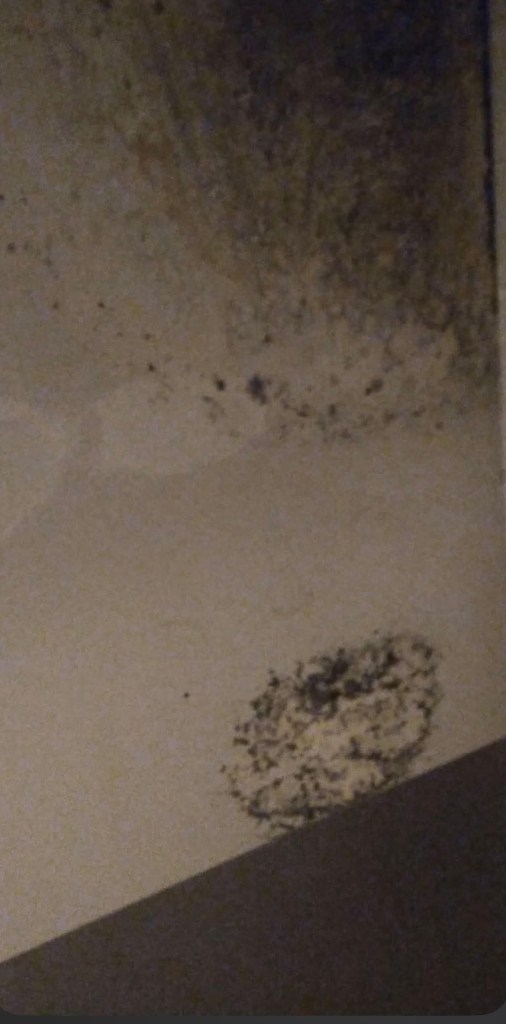
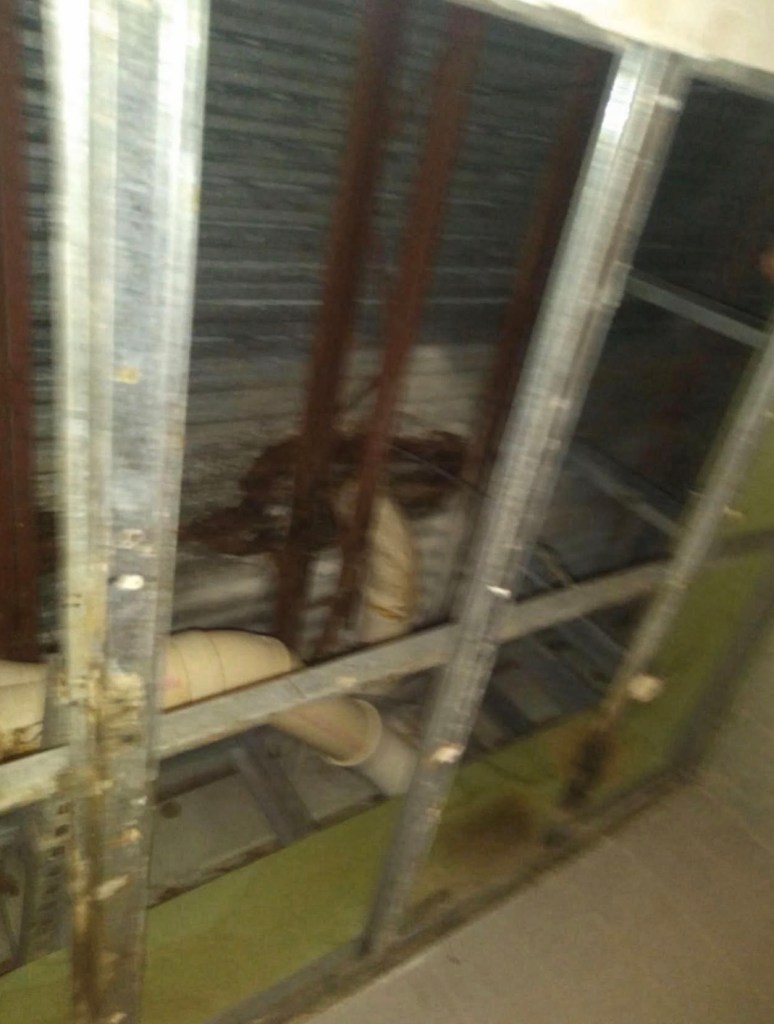
Reporting received includes photographs depicting apparent water intrusion above occupied areas, exposed overhead piping, deteriorating ceiling materials, and extensive staining consistent with prolonged moisture exposure. Additional photographs appear to show widespread discoloration and suspected mold-like growth on walls and ceilings, raising concerns regarding environmental conditions within the institution.
The reporting raises broader questions regarding roof integrity, moisture intrusion, preventative maintenance, and the condition of institutional infrastructure. If accurate, prolonged water intrusion may contribute to structural deterioration and environmental conditions that warrant inspection and remediation.
The reporting is particularly notable given the Bureau of Prisons’ July 1, 2026 announcement identifying FCI Big Spring and its Satellite Camp among the institutions selected for permanent closure as part of an agency-wide effort to address decades of deferred maintenance and staffing challenges. While the Bureau publicly acknowledged significant infrastructure deficiencies across portions of the federal prison system, Loved Ones Coalition continues to receive reporting from numerous institutions describing conditions that appear comparable—or, in some cases, more severe.
Taken together, the reporting raises broader questions regarding the criteria used to identify facilities for closure, the condition of aging Bureau infrastructure nationwide, and how limited maintenance resources are being prioritized.
2. Key Concern Table
| Concern Area | Description | Potential Concern Area |
| Water Intrusion | Photographs reportedly depict ongoing water intrusion and leaking infrastructure. | Facility Maintenance |
| Environmental Health | Images appear to show extensive staining and suspected mold-like growth associated with prolonged moisture exposure. | Environmental Health |
| Infrastructure | Reporting raises concerns regarding deteriorating ceilings, exposed piping, and deferred maintenance. | Facility Infrastructure |
| Building Maintenance | Recurring moisture intrusion raises questions regarding preventative maintenance and repair practices. | Institutional Maintenance |
| Facility Closure | FCI Big Spring has been identified by the Bureau of Prisons for permanent closure as part of a system-wide infrastructure initiative. | Institutional Planning |
3. Direct Testimony
Photographs submitted during this reporting period appear to depict water intrusion, deteriorating overhead infrastructure, exposed piping, and extensive staining consistent with prolonged moisture exposure.
Additional photographs appear to show suspected mold-like growth affecting walls and ceiling surfaces.
4. Systemic Concerns
The reporting received regarding FCI Big Spring raises broader questions regarding facility maintenance, environmental health, infrastructure preservation, and the Bureau of Prisons’ long-term facility planning.
The submitted photographs appear to document conditions consistent with recurring water intrusion, deteriorating overhead infrastructure, exposed piping, and suspected mold-like growth. While the precise cause of the moisture cannot be determined from the photographs alone, the reported conditions appear consistent with infrastructure requiring significant maintenance and repair.
The Bureau of Prisons has publicly acknowledged that FCI Big Spring is among the institutions scheduled for permanent closure, citing decades of deferred maintenance and staffing challenges across the federal prison system. The reporting received by Loved Ones Coalition appears generally consistent with the Bureau’s acknowledgment that substantial infrastructure deficiencies exist at the institution.
At the same time, Loved Ones Coalition continues to receive reports from numerous other Bureau facilities documenting extensive roof leaks, failing climate control systems, water intrusion, deteriorating housing units, chronic staffing shortages, and other serious operational concerns. This reporting raises broader questions regarding how facilities were evaluated for closure, how infrastructure conditions were assessed across the Bureau, and how decisions were prioritized among institutions experiencing significant maintenance challenges.
Loved Ones Coalition appreciates the Bureau’s recognition that substantial infrastructure investment is necessary throughout the federal prison system. Continued transparency regarding facility assessments and the criteria used to identify institutions for closure may help families, staff, and incarcerated individuals better understand these significant operational decisions.
5. Questions for Clarification
- Have the areas depicted in the submitted photographs been inspected for ongoing roof leaks, plumbing failures, or other sources of water intrusion?
- Have environmental assessments been conducted to evaluate the reported moisture damage and suspected mold-like growth?
- What remediation efforts have been completed or are planned while the institution remains operational?
- What specific infrastructure, maintenance, or operational factors led to FCI Big Spring being selected for permanent closure?
- How did the Bureau evaluate infrastructure conditions across institutions when determining which facilities would be recommended for closure?
- Will the Bureau make public additional information regarding the facility assessment process and the criteria used in selecting institutions for closure?
- What measures are being implemented to ensure the health and safety of incarcerated individuals and staff while FCI Big Spring remains in operation pending closure?
SOUTH CENTRAL REGION
FCI LA TUNA SATELLITE CAMP
Staffing, Leadership Vacancies, Case Management, Communication, and Reentry Concerns
1. Summary of Concerns
Loved Ones Coalition received reporting during this reporting period regarding staffing shortages, leadership vacancies, case management, institutional communication, and reentry planning at the FCI La Tuna Satellite Camp.
According to the reporting received, the institution has reportedly operated without a permanent Warden presence, with day-to-day oversight allegedly being managed by the Associate Warden. The reporting further alleges that the camp has been without a Unit Manager for approximately two months, leaving a single Case Manager responsible for a reported population of approximately 150 incarcerated individuals.
The reporting raises concerns regarding delayed communication, limited access to case management services, and difficulties obtaining information regarding halfway house referrals, release planning, and institutional processes. Reporting further alleges that many incarcerated individuals feel they are not receiving consistent guidance or timely communication regarding their cases.
The reporting is particularly notable given the Bureau of Prisons’ July 1, 2026 announcement identifying FCI La Tuna, the Federal Satellite Low (FSL), and the Satellite Camp among the institutions selected for permanent closure as part of an agency-wide effort to address decades of deferred maintenance and staffing challenges. According to the reporting received, portions of the camp have reportedly remained closed for approximately three years, creating additional questions regarding staffing, resource allocation, and long-term operational planning.
Taken together, the reporting raises broader questions regarding institutional leadership, staffing adequacy, case management resources, communication practices, and the Bureau’s transition planning for facilities identified for closure.
2. Key Concern Table
| Concern Area | Description | Potential Concern Area |
| Leadership | Reporting alleges the camp has operated without a permanent Warden presence. | Institutional Leadership |
| Staffing | Reports indicate the camp has been without a Unit Manager for approximately two months and has limited case management staffing. | Institutional Operations |
| Case Management | Reporting raises concerns regarding one Case Manager serving approximately 150 incarcerated individuals. | Unit Management |
| Communication | Reports allege inconsistent communication regarding release planning, halfway house referrals, and institutional processes. | Institutional Accountability |
| Facility Closure | FCI La Tuna, the FSL, and Satellite Camp have been identified by the Bureau for permanent closure. | Strategic Planning |
3. Direct Testimony
“The Warden hasn’t been here, only the Associate Warden.”
“There has been no Unit Manager at the camp for about two months.”
“There is one Case Manager at the camp for 150 inmates.”
“Nobody communicates with anyone. We are all on our own.”
“Halfway houses are backed up.”
“Half of the camp has been closed for three years already.”
4. Systemic Concerns
The reporting received regarding the FCI La Tuna Satellite Camp raises broader questions regarding leadership continuity, staffing levels, case management capacity, institutional communication, and transition planning.
According to the reporting received, prolonged leadership vacancies and limited unit team staffing may be affecting incarcerated individuals’ ability to obtain timely information regarding release planning, halfway house referrals, programming, and routine case management matters. If accurate, a single Case Manager serving a reported population of approximately 150 incarcerated individuals may present operational challenges that affect communication and service delivery.
The Bureau of Prisons has publicly announced that FCI La Tuna, its Federal Satellite Low, and the Satellite Camp are scheduled for permanent closure as part of an agency-wide effort to address deferred maintenance and staffing challenges. The reporting received raises additional questions regarding how staffing resources are being managed during this transition and how incarcerated individuals will continue to receive consistent case management and reentry services while the institution remains operational.
Loved Ones Coalition recognizes that facility closures present significant logistical challenges. Continued communication with incarcerated individuals and their families regarding staffing, release planning, and institutional changes may help reduce uncertainty during the transition process.
5. Questions for Clarification
- What is the current leadership structure at the FCI La Tuna Satellite Camp, and are there plans to permanently fill any vacant leadership positions?
- Has the institution operated without a Unit Manager for an extended period, and if so, when is that position expected to be filled?
- What is the current Case Manager-to-incarcerated individual ratio at the camp?
- What measures are being implemented to ensure incarcerated individuals receive timely communication regarding halfway house referrals, release planning, and case management while staffing vacancies exist?
- How has the Bureau’s decision to close FCI La Tuna, the FSL, and the Satellite Camp affected staffing levels and institutional operations?
- What transition plan has been developed to ensure incarcerated individuals continue receiving adequate case management, programming, and reentry services throughout the closure process?
- Given reports that portions of the camp have remained closed for several years, what operational factors contributed to that decision, and how did those conditions influence the Bureau’s decision to permanently close the facility?
SOUTH CENTRAL REGION
FCI FORREST CITY
Staffing Shortages, Facility Maintenance, Food Service, Environmental Health, and Institutional Safety Concerns




1. Summary of Concerns
Loved Ones Coalition received extensive reporting during this reporting period regarding staffing shortages, deteriorating facility conditions, environmental hazards, food service, emergency preparedness, sanitation, and institutional operations at FCI Forrest City Medium.
Reporting received from multiple incarcerated individuals alleges chronic staffing shortages have significantly impacted daily operations. According to the reporting, housing units are frequently operated with limited staff coverage, incarcerated individuals are routinely confined to their rooms because of staffing shortages, and access to counselors, unit team staff, and other institutional personnel has reportedly become increasingly limited.
Additional reporting raises significant facility maintenance concerns. One incarcerated individual reports that a toilet remained inoperable for approximately three weeks and was allegedly only repaired after incarcerated individuals paid another inmate assigned to facility maintenance to fix it. Reporting also alleges exposed electrical wiring where an emergency call button had previously been installed, creating both an electrical hazard and eliminating the ability to summon staff during a medical emergency.
Further reporting describes recurring roof leaks, broken showers, standing water, excessive humidity, and deteriorating infrastructure throughout portions of the institution. Several family members also report prolonged air conditioning outages at the adjacent Low facility, with excessive indoor heat, high humidity, wet floors, and limited access to ice. Multiple reporting parties describe conditions severe enough that incarcerated individuals reportedly sleep on mattresses placed directly on the floor in an attempt to escape the heat.
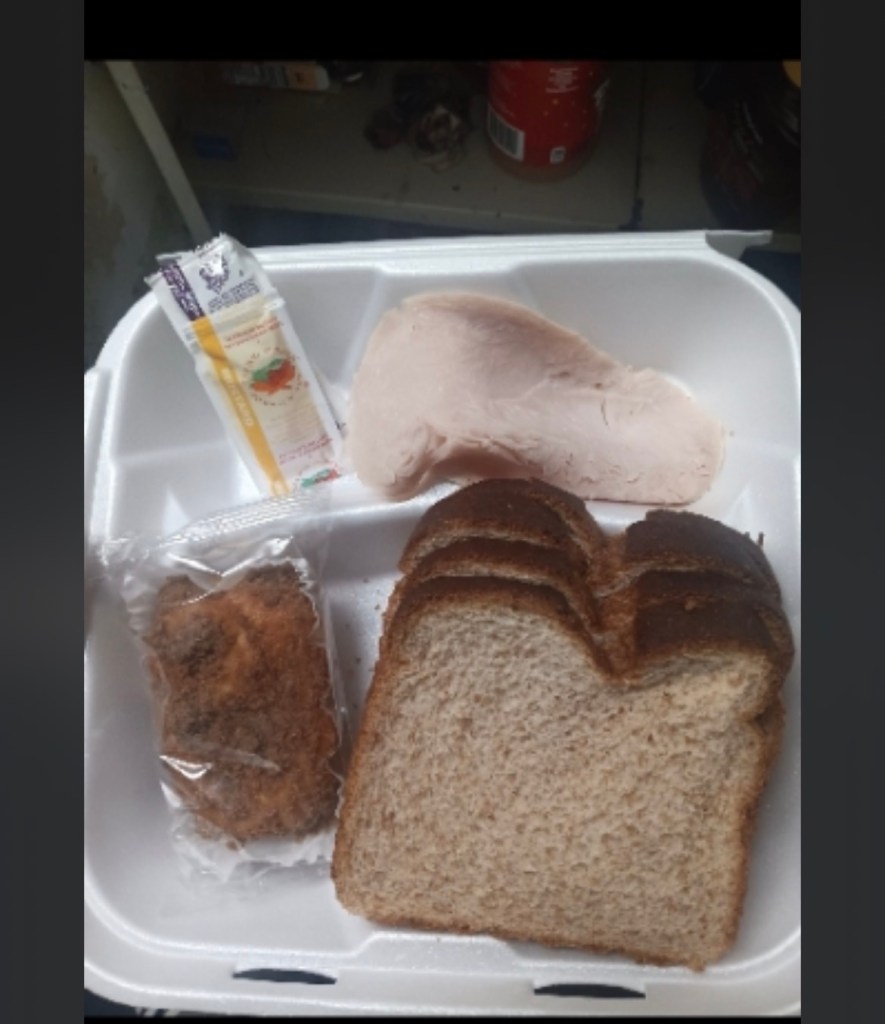
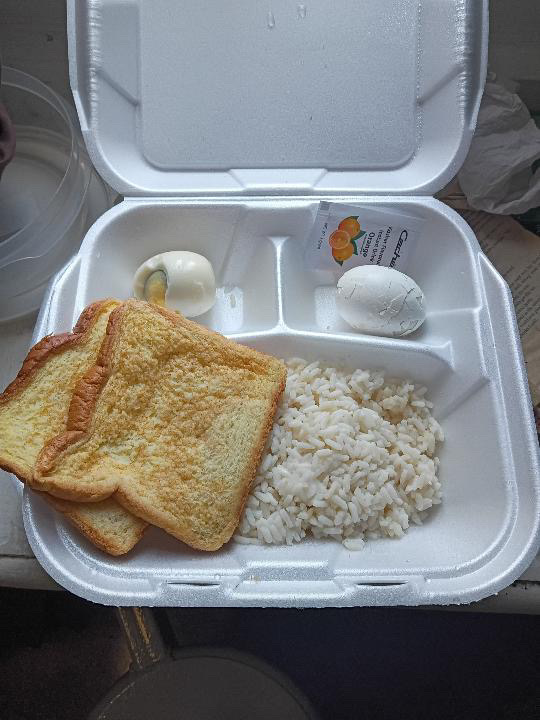
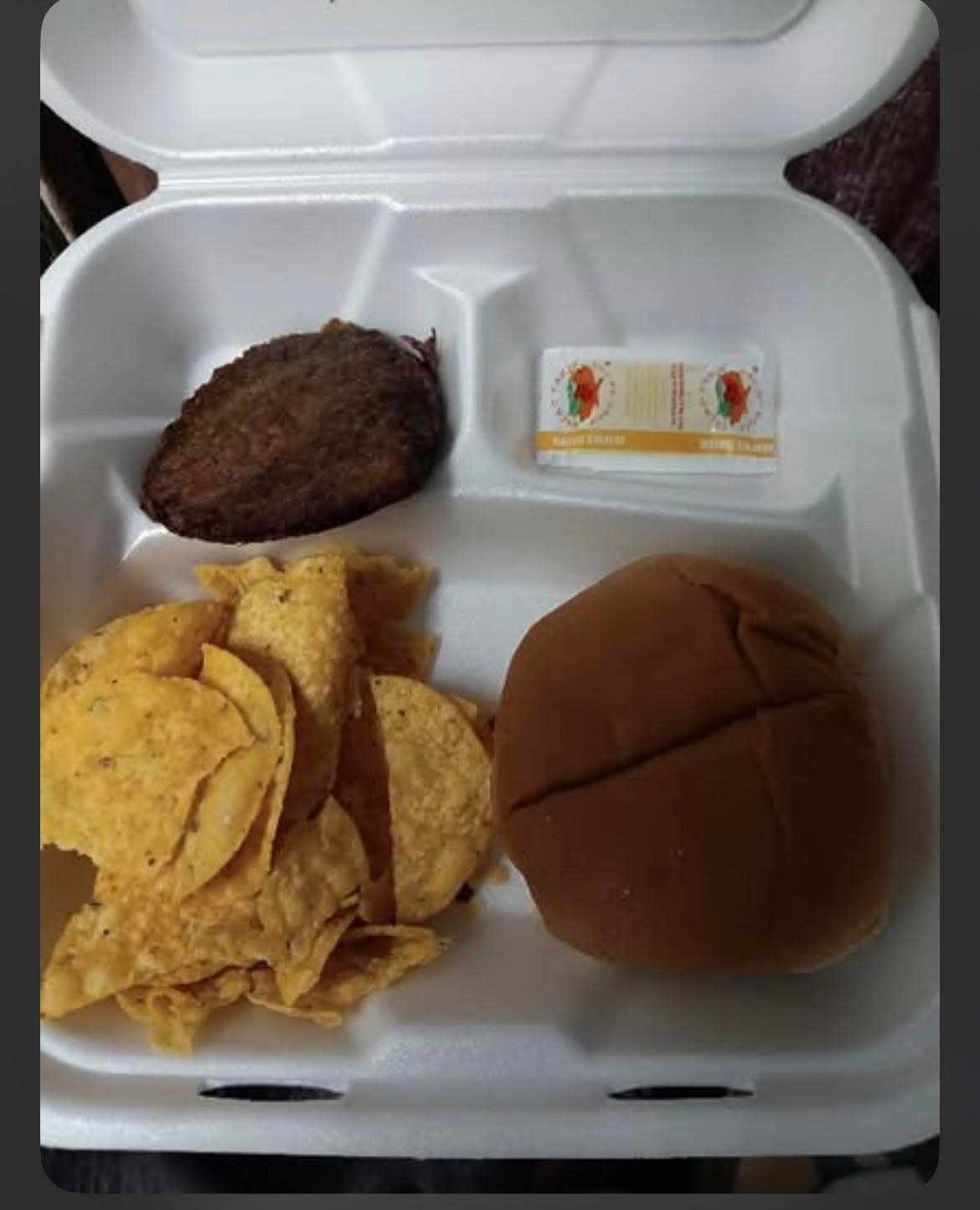
Loved Ones Coalition also received numerous photographs depicting meals reportedly served during recent institutional modifications. The submitted photographs appear to show repetitive meals consisting of limited portions, minimal protein, few fresh fruits or vegetables, and concerns regarding food quality. Additional reporting alleges mold was observed on hot dog buns served during one meal.
Taken together, the reporting raises broader questions regarding staffing adequacy, infrastructure maintenance, environmental health, emergency preparedness, food service operations, and overall conditions of confinement.
2. Key Concern Table
| Concern Area | Description | Potential Concern Area |
| Staffing | Reporting alleges chronic staffing shortages affecting institutional operations and access to staff. | Institutional Operations |
| Emergency Preparedness | Reports allege missing emergency call buttons and exposed live electrical wiring within housing units. | Life Safety |
| Facility Maintenance | Reporting describes broken plumbing, roof leaks, deteriorating infrastructure, broken showers, and deferred maintenance. | Facility Maintenance |
| Environmental Conditions | Reports describe excessive heat, humidity, wet floors, and prolonged air conditioning outages. | Environmental Health |
| Food Service | Photographs and testimony raise concerns regarding meal quality, nutritional adequacy, and food safety. | Food Service |
| Access to Staff | Reporting alleges limited access to counselors, unit team staff, and institutional personnel. | Unit Management |
| Institutional Security | Reporting alleges limited staff presence and reduced supervision because of staffing shortages. | Institutional Operations |
3. Direct Testimony
“Our toilet wouldn’t flush for three weeks.”
“We finally had to pay someone to fix it because facility crews wouldn’t.”
“The emergency button has been removed and there are live wires hanging where it’s supposed to be.”
“If a medical emergency happened, we couldn’t get the attention of a staff member.”
“Most of the time we don’t even have staff in the building.”
“We are constantly locked down because of lack of staff.”
“The dining hall doesn’t follow the BOP national menu.”
“The hot dog buns were covered in mold.”
“When it rains, there is a little waterfall from leaks in the roof.”
“Several showers have been running nonstop for years.”
“I’ve only seen my counselor one day the entire time I’ve been here.”
“This facility is horrible and dirty.”
4. Systemic Concerns
The reporting received regarding FCI Forrest City Medium raises concerns extending well beyond isolated maintenance issues and instead presents a pattern involving staffing shortages, deferred maintenance, environmental conditions, institutional accessibility, and daily operations.
Multiple reports describe staffing shortages affecting nearly every aspect of institutional life, including emergency response, counselor availability, movement, recreation, and routine access to unit staff. If accurate, reduced staffing levels may limit the institution’s ability to promptly respond to emergencies, maintain consistent supervision, and provide timely case management services.
The reporting further raises concerns regarding facility maintenance and life safety. Allegations involving exposed electrical wiring where emergency call buttons should be located, prolonged plumbing failures, leaking roofs, broken showers, and standing water suggest infrastructure deficiencies that may warrant further inspection. Reports that incarcerated individuals allegedly paid another incarcerated worker to complete repairs also raise questions regarding maintenance response procedures and oversight.
Food service reporting similarly reflects concerns extending beyond individual meals. The submitted photographs appear to depict multiple meals served over several days with limited variety and modest portions. Allegations of mold on bread products, if accurate, raise additional questions regarding food safety, quality control, and compliance with Bureau food service standards.
Loved Ones Coalition also received multiple reports regarding excessive heat and humidity affecting the Forrest City complex, particularly at the Low facility. Families described prolonged air conditioning outages, wet floors caused by condensation, limited access to ice, and temperatures severe enough that some incarcerated individuals reportedly slept on mattresses placed on the floor in an effort to find cooler air. These reports suggest that environmental conditions within the complex may warrant continued review.
Collectively, the reporting raises broader questions regarding whether current staffing levels and facility resources are sufficient to safely operate the institution while maintaining appropriate standards for sanitation, maintenance, emergency preparedness, food service, and access to staff.
5. Questions for Clarification
- What is the current correctional staffing level at FCI Forrest City Medium, and how are staffing shortages affecting daily institutional operations?
- Have housing units been inspected for reported life-safety concerns, including missing emergency call buttons, exposed electrical wiring, and non-functioning plumbing?
- What procedures are in place to ensure maintenance requests involving sanitation, plumbing, and electrical hazards are addressed in a timely manner?
- Have the reported roof leaks, broken showers, and recurring water intrusion been evaluated for potential environmental or structural concerns?
- What quality assurance measures are in place to ensure meals served during institutional modifications comply with Bureau nutritional and food safety standards?
- Have concerns regarding excessive heat, humidity, air conditioning outages, and limited access to ice within the Forrest City complex been evaluated by institution leadership?
- What measures are being implemented to improve incarcerated individuals’ access to counselors, unit team staff, and emergency assistance while staffing shortages persist?
SOUTHEAST REGION
FCI ALICEVILLE
Retaliation, Staff Conduct, Medical Care, Classification, Administrative Remedy, and Institutional Accountability Concerns
1. Summary of Concerns
Loved Ones Coalition received extensive documentation during this reporting period alleging ongoing concerns regarding retaliation, staff conduct, access to medical care, classification practices, administrative remedy procedures, housing decisions, and institutional accountability at FCI Aliceville.
According to the documentation received, multiple incidents spanning several years raise concerns that incarcerated individuals who filed administrative remedies, reported alleged staff misconduct, or participated as witnesses may have experienced increased disciplinary scrutiny, adverse work assignments, delayed camp placement, disputed classification decisions, housing changes, and other actions perceived as retaliatory. The reporting further raises questions regarding the consistency of disciplinary decision-making, application of management variables, camp eligibility determinations, and safeguards intended to protect incarcerated individuals who utilize the Bureau’s administrative remedy process.
Additional documentation raises concerns regarding continuity of medical care, including reported delays in diagnostic imaging, specialty consultations, outside medical appointments, prescribed medications, medically necessary equipment, and treatment planning. The reporting also raises questions regarding medical transportation practices, coordination between Health Services and outside providers, protection of confidential medical information, and whether clinical recommendations were implemented in a timely manner.
The reporting further alleges concerns regarding staff professionalism, including inappropriate comments, intimidation, selective enforcement of institutional rules, workplace conduct within UNICOR, housing reassignment decisions, mail processing, and interactions that reporting parties perceived as discouraging the filing of grievances or complaints.
Taken together, the reporting received regarding FCI Aliceville raises broader questions regarding institutional culture, staff professionalism, medical continuity of care, classification practices, protection from retaliation, administrative remedy procedures, and the Bureau’s ability to ensure institutional accountability when allegations of staff misconduct are reported.
2. Key Concern Table
| Concern Area | Description | Potential Concern Area |
| Retaliation | Reporting alleges adverse institutional actions following grievance activity and reports of staff misconduct. | Institutional Accountability |
| Staff Conduct | Documentation raises concerns regarding intimidation, professionalism, selective enforcement, and inappropriate staff interactions. | Staff Professionalism |
| Medical Care | Reporting alleges delays involving diagnostic testing, specialty care, medications, medical equipment, and continuity of treatment. | Health Services |
| Classification & Camp Placement | Documentation raises questions regarding management variables, custody classification decisions, and camp placement eligibility. | Classification |
| Housing Decisions | Reporting alleges housing changes and bunk assignments inconsistent with documented medical accommodations. | Conditions of Confinement |
| Administrative Remedies | Reporting raises concerns regarding retaliation following grievance activity and access to administrative remedies. | Due Process |
| Mail Processing | Documentation raises concerns regarding mail handling and communication related to legal and administrative matters. | Mail Operations |
| UNICOR Operations | Reporting alleges concerns regarding workplace supervision, employment actions, and staff conduct within UNICOR. | Institutional Operations |
3. Direct Testimony
“We have control over your lives, transfers, clemencies, and camp assignments.”
“The good old boys stick together.”
“We will make … lives as uncomfortable and miserable as we can.”
“Let’s harass all the inmates and make their remaining days miserable.”
“On your next medical trip… we hope you fall and break your neck.”
“I feel intimidated and unsafe around staff members.”
4. Systemic Concerns
The reporting received regarding FCI Aliceville raises concerns extending beyond individual allegations and instead presents broader questions regarding institutional accountability, staff professionalism, medical continuity of care, classification practices, and protection against retaliation.
The documentation submitted alleges that incarcerated individuals who reported staff misconduct or utilized the Bureau’s administrative remedy process experienced increased disciplinary scrutiny, adverse employment actions, housing changes, classification decisions, and other institutional actions perceived as retaliatory. If accurate, such reporting raises important questions regarding the safeguards in place to ensure incarcerated individuals can report concerns without fear of adverse consequences.
The reporting also raises broader concerns regarding medical services. Allegations involving delays in diagnostic imaging, specialty referrals, outside consultations, prescribed medications, medical equipment, and implementation of treatment recommendations raise questions regarding continuity of care, coordination between Health Services and outside providers, and timely access to medically necessary treatment.
Additional documentation raises concerns regarding classification practices, including the application and continuation of management variables, camp placement eligibility, housing assignments, and consistency in custody decision-making. Reporting also alleges selective enforcement of institutional rules, inconsistent disciplinary practices, and staff conduct that may warrant administrative review.
Finally, the documentation raises broader questions regarding institutional culture, workplace professionalism, mail handling, administrative remedy procedures, supervisory oversight, and accountability mechanisms designed to ensure staff conduct remains consistent with Bureau policy. Collectively, the reporting received raises broader questions regarding transparency, due process, institutional accountability, and the Bureau’s ability to maintain an environment in which incarcerated individuals can report concerns without fear of retaliation.
5. Questions for Clarification
- Has institution leadership reviewed the reported allegations regarding retaliation following grievance activity and reports of staff misconduct?
- What safeguards are currently in place to ensure incarcerated individuals may utilize the administrative remedy process without fear of retaliation or adverse institutional action?
- Have the reported concerns regarding staff conduct, professionalism, and selective enforcement of institutional rules been reviewed by institution leadership?
- What procedures are in place to ensure timely access to diagnostic testing, specialty consultations, prescribed medications, medical equipment, and continuity of medical care?
- How are management variables, custody classification decisions, housing assignments, and camp placement determinations reviewed to ensure consistency with Bureau policy?
- Has the institution reviewed the reported concerns regarding UNICOR employment practices, housing decisions, mail processing, and administrative remedy procedures?
- What corrective actions, if any, have been implemented or are planned to strengthen institutional accountability, staff professionalism, medical continuity of care, and protections against retaliation at FCI Aliceville?
WESTERN REGION
VICTORVILLE WOMEN’S CAMP
Staffing, Reentry Programming, Case Management, Institutional Culture, and Accountability Concerns
1. Summary of Concerns
Loved Ones Coalition received reporting during this reporting period regarding staffing shortages, institutional culture, case management, reentry programming, medical services, and institutional accountability at the Victorville Women’s Camp.
According to the reporting received, incarcerated individuals allege the institution continues to experience significant staffing shortages affecting daily operations, communication, programming, and access to unit team services. The reporting describes concerns that incarcerated individuals experience difficulty obtaining timely responses from counselors and unit staff, receive limited guidance regarding release planning, and encounter inconsistent communication regarding First Step Act Earned Time Credits, programming requirements, and camp processes.
Additional reporting raises concerns regarding limited availability of rehabilitative programming, alleging that several recommended classes have not been offered for extended periods despite being identified as necessary for release planning or reentry needs. The reporting further alleges that many available classes are facilitated by incarcerated individuals rather than institution staff, raising questions regarding program oversight, instructional consistency, and the availability of evidence-based programming.
The reporting also raises concerns regarding institutional culture and staff professionalism. According to the reporting received, incarcerated individuals perceive staff interactions as dismissive, unapproachable, and discouraging, creating an environment in which some individuals reportedly fear retaliation for raising concerns or asking questions. Additional concerns were raised regarding limited medical services, delayed placement decisions, and individuals reportedly remaining beyond anticipated placement dates without receiving clear communication regarding their status.
Taken together, the reporting received regarding the Victorville Women’s Camp raises broader questions regarding staffing adequacy, institutional culture, access to rehabilitative programming, case management services, reentry preparation, and the Bureau’s ability to provide a supportive environment that promotes successful reintegration into the community.
2. Key Concern Table
| Concern Area | Description | Potential Concern Area |
| Staffing | Reporting alleges staffing shortages affecting daily institutional operations and responsiveness. | Institutional Operations |
| Reentry Programming | Reporting alleges limited availability of required programming and extended periods without certain classes being offered. | Reentry & Programming |
| Case Management | Reports raise concerns regarding communication, release planning, placement decisions, and First Step Act guidance. | Unit Management |
| Staff Conduct | Reporting alleges dismissive interactions, limited accessibility, and concerns regarding professionalism. | Staff Professionalism |
| Medical Services | Reporting raises concerns regarding limited access to medical care and institutional health services. | Health Services |
| Institutional Culture | Reporting raises broader concerns regarding morale, accountability, communication, and fear of retaliation for raising concerns. | Institutional Accountability |
3. Direct Testimony
“The Counselors and Unit Team… treat you like you are less than nothing.”
“There are no staff members with integrity.”
“The class has not been offered for at least two years.”
“There are several women here held past their placement date.”
“No one is denying our crime, but we are being denied proper treatment, proper programming, and a little respect.”
“Most people here are afraid to stand up for themselves.”
4. Systemic Concerns
The reporting received regarding the Victorville Women’s Camp raises concerns extending beyond individual experiences and instead presents broader questions regarding staffing levels, institutional culture, access to rehabilitative programming, case management practices, and reentry preparation.
Reports alleging limited staff availability, delayed communication, and difficulty obtaining guidance from counselors and unit team staff raise questions regarding whether current staffing levels are sufficient to provide consistent case management and individualized reentry planning. Allegations that incarcerated individuals receive recommendations for programming that is reportedly unavailable further raise concerns regarding the institution’s ability to provide meaningful rehabilitative opportunities necessary for successful release planning.
The reporting also raises broader questions regarding the administration and oversight of institutional programming. Allegations that many classes are facilitated by incarcerated individuals rather than staff, combined with reports of limited oversight and infrequent availability of certain recommended courses, may affect the consistency, quality, and effectiveness of programming intended to support rehabilitation and reduce recidivism.
Additionally, the reporting raises concerns regarding institutional culture and staff professionalism. Allegations describing dismissive interactions, limited responsiveness, fear of retaliation, and communication barriers suggest a need to review whether institutional practices support constructive engagement between staff and incarcerated individuals. Reports involving delayed placement decisions, limited medical services, and uncertainty regarding First Step Act Earned Time Credits further raise questions regarding transparency, accountability, and consistency in institutional operations.
Collectively, the reporting received raises broader questions regarding staffing adequacy, access to programming, case management effectiveness, institutional culture, and the Bureau’s ability to prepare incarcerated individuals for successful reentry into the community.
5. Questions for Clarification
- What is the current staffing level at the Victorville Women’s Camp, and how are staffing shortages affecting institutional operations and case management services?
- What rehabilitative and reentry programming is currently available, and have any required or recommended classes been unavailable for extended periods?
- How does the institution ensure incarcerated individuals receive timely guidance regarding First Step Act Earned Time Credits, release planning, and placement decisions?
- What oversight measures are in place to ensure institutional programming is delivered consistently and meets Bureau standards?
- Has institution leadership reviewed the reported concerns regarding staff professionalism, communication practices, and interactions between staff and incarcerated individuals?
- What procedures are in place to ensure timely placement decisions and effective communication regarding release planning?
- What corrective actions, if any, have been implemented or are planned to improve staffing, programming, case management services, institutional culture, and reentry preparation at the Victorville Women’s Camp?
WESTERN REGION
SHERIDAN FEDERAL PRISON CAMP
Medical Care, Reentry Planning, First Step Act, Residential Reentry Center Placement, and Institutional Accountability Concerns
1. Summary of Concerns
Loved Ones Coalition received reporting during this reporting period regarding access to medical care, First Step Act Earned Time Credits, Residential Reentry Center (RRC) placement decisions, case management practices, and institutional accountability at the Sheridan Federal Prison Camp.
According to the reporting received, multiple incarcerated individuals and family members raised concerns regarding delays in medical evaluation, specialty care, diagnostic testing, and continuity of treatment. Reports describe prolonged waits for cardiology, dermatology, gastroenterology, and neurology-related care, delayed diagnostic imaging, repeated episodes of loss of consciousness, untreated chronic medical conditions, delays in obtaining medically necessary equipment, and concerns regarding follow-up after significant cardiac history. Additional reporting alleges delays in receiving test results, vision care, treatment for hernias, breast abnormalities, sleep apnea equipment, and other ongoing medical needs.
Separate reporting raises concerns regarding the administration of First Step Act Earned Time Credits, Residential Reentry Center placement recommendations, and release planning. Multiple reporting parties allege incarcerated individuals have reportedly lost First Step Act credits without receiving clear explanations, have received significantly shorter halfway house placements than anticipated, and have experienced inconsistent communication regarding eligibility, placement decisions, and the calculation of earned credits. Additional reporting suggests some incarcerated individuals seek transfers to other institutions because of perceived concerns regarding release planning and reentry decisions.
Taken together, the reporting received regarding the Sheridan Federal Prison Camp raises broader questions regarding access to medical care, continuity of treatment, case management practices, First Step Act implementation, Residential Reentry Center placement decisions, and institutional accountability.
2. Key Concern Table
| Concern Area | Description | Potential Concern Area |
| Medical Care | Reporting alleges delays in specialty care, diagnostic testing, treatment, and continuity of medical services. | Health Services |
| Specialty Referrals | Reports raise concerns regarding prolonged waits for cardiology, dermatology, neurology, gastroenterology, and specialty follow-up care. | Specialty Medical Care |
| Chronic Medical Conditions | Reporting alleges delays in evaluating serious and ongoing medical conditions, including repeated loss of consciousness and untreated chronic illnesses. | Patient Safety |
| First Step Act | Reports allege inconsistent application of Earned Time Credits and limited communication regarding credit calculations. | Reentry & Programming |
| Residential Reentry Center Placement | Reporting raises concerns regarding abbreviated halfway house placements and release planning decisions. | Reentry Planning |
| Case Management | Reports allege limited communication regarding release planning, earned credits, and transition services. | Unit Management |
| Institutional Accountability | Reporting raises broader questions regarding transparency, consistency, and oversight of medical and reentry-related decision-making. | Institutional Accountability |
3. Direct Testimony
“He has passed out multiple times now.”
“They didn’t do any testing.”
“The ultrasound still hasn’t been done.”
“People are losing their FSA and not being told why or how to get it back.”
“They’re giving minimum halfway house.”
“Giving people like one month of halfway house.”
4. Systemic Concerns
The reporting received regarding the Sheridan Federal Prison Camp raises concerns extending beyond individual medical cases and instead presents broader questions regarding continuity of health care, specialty medical access, release planning, and institutional administration.
Multiple reports describe prolonged delays in specialty consultations, diagnostic imaging, treatment for chronic medical conditions, and follow-up care despite ongoing symptoms. Reporting also raises questions regarding continuity of care for individuals with significant medical histories and whether serious or worsening medical concerns are being evaluated and treated in a timely manner.
Separate reporting raises concerns regarding implementation of the First Step Act and Residential Reentry Center placement decisions. Allegations that incarcerated individuals have experienced unexplained reductions or loss of Earned Time Credits, limited halfway house placements, and inconsistent communication regarding release planning raise broader questions regarding transparency, consistency, and oversight of reentry decision-making. Reports indicating that some incarcerated individuals have sought transfers because of concerns surrounding release planning further warrant review of institutional practices.
Collectively, the reporting received raises broader questions regarding access to medical services, continuity of specialty care, case management practices, First Step Act implementation, Residential Reentry Center placement decisions, and the Bureau’s ability to ensure consistent, transparent, and equitable reentry planning for incarcerated individuals.
5. Questions for Clarification
- What procedures are currently in place to ensure timely access to specialty medical care, diagnostic testing, and follow-up treatment at the Sheridan Federal Prison Camp?
- Has institution leadership reviewed the reported concerns regarding delays involving cardiology, dermatology, neurology, gastroenterology, diagnostic imaging, and treatment for chronic medical conditions?
- What policies govern the evaluation and follow-up of incarcerated individuals experiencing repeated episodes of loss of consciousness or other potentially serious medical symptoms?
- How are First Step Act Earned Time Credits calculated, reviewed, and communicated to incarcerated individuals at the Sheridan Federal Prison Camp?
- Has the institution reviewed the reported concerns regarding loss of Earned Time Credits and communication surrounding those decisions?
- What factors are considered when determining Residential Reentry Center placement recommendations, and how does the institution ensure those decisions are applied consistently?
- What corrective actions, if any, have been implemented or are planned to improve medical continuity of care, First Step Act administration, release planning, and institutional accountability at the Sheridan Federal Prison Camp?